


By Benson Daniel
A newly formed far right group has intensified anti migrant protests in southern England, with hundreds of black clad men descending on Portsmouth in an organised attempt to prevent asylum seekers from leaving a marina.
The group, known as Patriot Platform, emerged in recent months under the leadership of Daniel “Danny Tommo” Thomas and describes itself as a Christian “army of patriots”. Its activities have raised fresh concerns over the growing organisation and coordination of anti migrant groups in Britain.
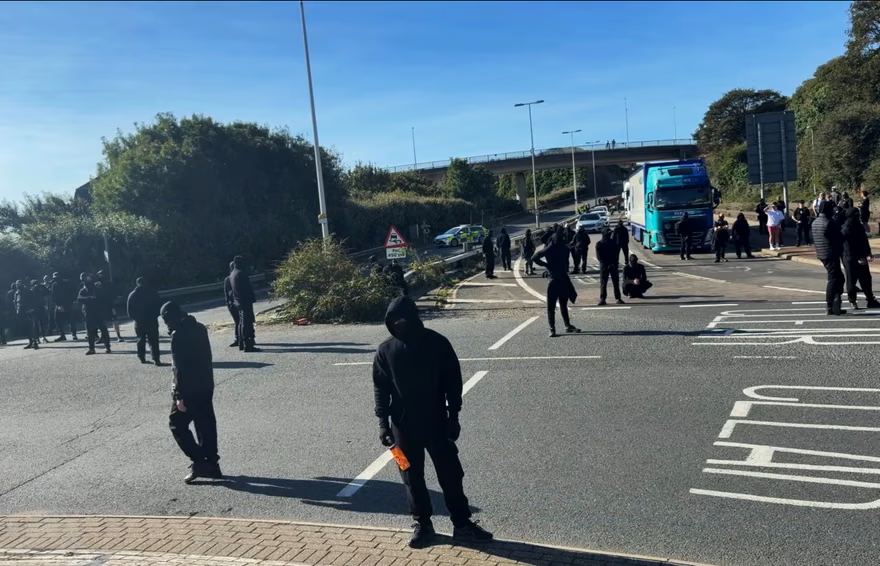
The Portsmouth demonstration followed a major protest in Dover on Saturday, where hundreds of masked men dressed in black blocked key roads leading to the port, causing significant traffic disruption.
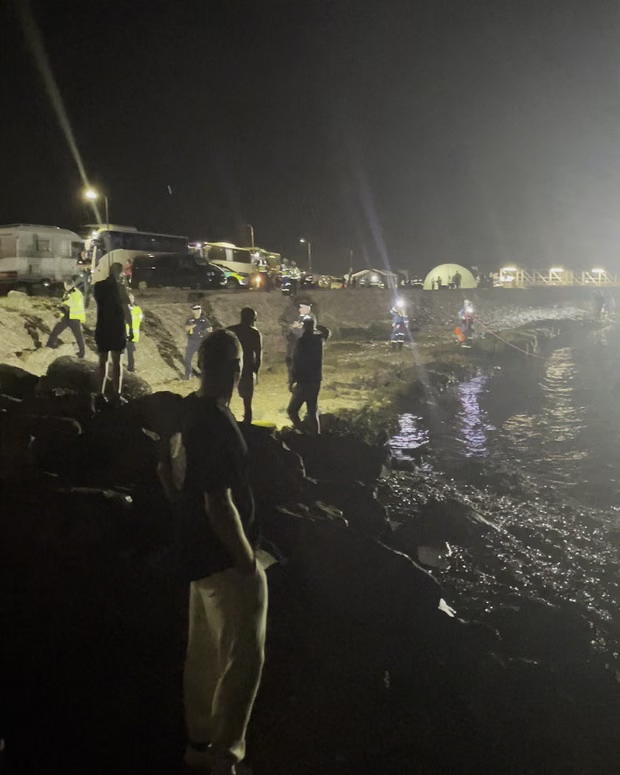
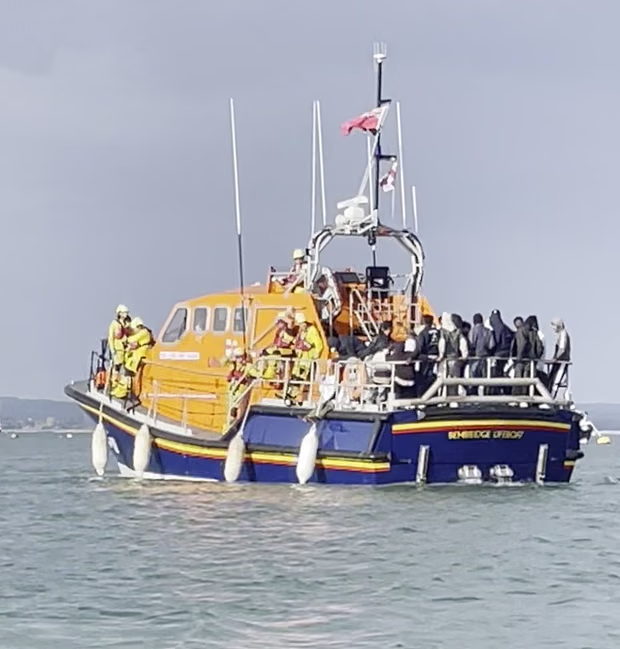
The group later turned its attention to Portsmouth after a large boat carrying asylum seekers arrived in the Solent. About 120 asylum seekers were being held at Eastney marina when Patriot Platform members joined a local demonstration and sought to prevent them from being moved away from the area.
The protesters remained at the marina for several hours, eventually facing a line of riot police deployed to prevent them from interfering with the operation.
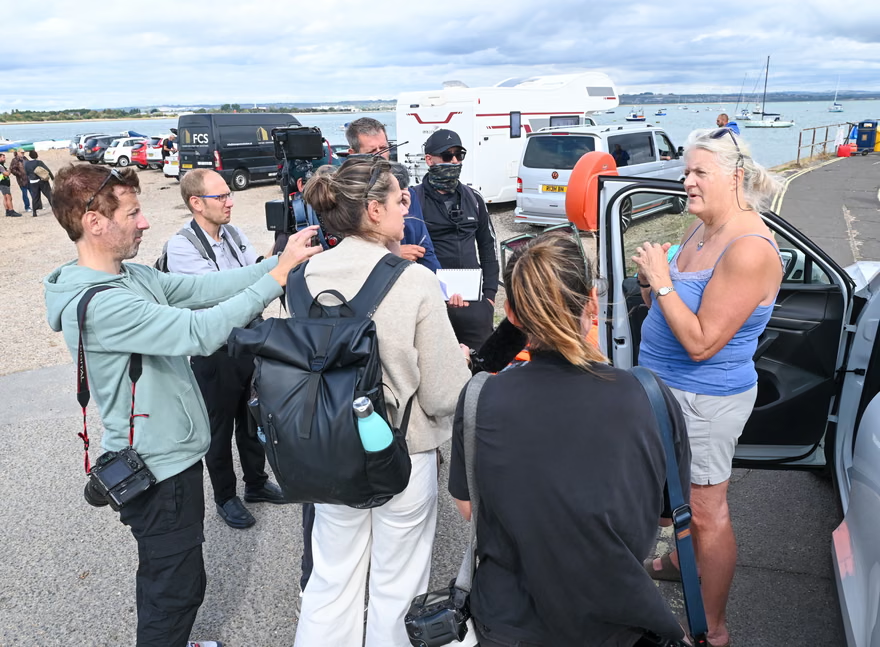
Thomas livestreamed the confrontation to thousands of online viewers and repeatedly challenged police officers over their handling of the demonstration. He also invoked provisions of the Human Rights Act while insisting that his supporters had the legal right to assemble.
Police eventually issued a dispersal order, prompting the protesters to leave the area in the early hours of the morning.
The events in Portsmouth followed the disruption caused by the group in Dover, where black clad protesters occupied major roundabouts and created a lengthy traffic queue along the A20.
The coordinated nature of the demonstrations has drawn particular attention from researchers monitoring the British far right.
Analysts say Patriot Platform has attempted to bring together a number of smaller regional anti migrant groups under a single network, using closed online communication channels to coordinate its activities.
Joe Mulhall of Hope Not Hate described the structure as resembling a network of regional groups operating under a central leadership, with similarities to the organisation of football hooligan groups.
The group has also adopted a distinctive appearance, with many participants wearing black clothing and balaclavas. Members have reportedly been instructed not to drink alcohol, use drugs or engage in violence, while organisers have emphasised discipline and an understanding of the law.
Despite those claims, the Portsmouth demonstration ended with police and coastguard vehicles damaged and a small number of officers injured by objects thrown during the unrest. No arrests were reported in connection with the incident.
The British government has condemned the disturbances, with Chief Secretary to the Treasury Emma Reynolds describing the behaviour as intimidating and thuggish.
Thomas, however, has defended the group’s activities, insisting that its members are responding to concerns over illegal immigration and public safety.
The group has increasingly used Christian language in promoting its activities, with supporters chanting “Christ is king” during the Portsmouth protest. Its stated objectives include opposing irregular migration, restoring order and promoting what it describes as Christian values.
The group’s emergence has also attracted attention from established political figures. Reform UK home affairs spokesperson Zia Yusuf met Thomas in Portsmouth and said he believed it was important to listen to people involved in the demonstrations.
The developments have raised questions about whether the latest wave of anti migrant activism represents a more organised phase of Britain’s far right movement.
Unlike many previous demonstrations, Patriot Platform has sought to coordinate rapid gatherings across different parts of the country, using private communications and regional networks to mobilise supporters.
The weekend’s events in Dover and Portsmouth have therefore put renewed pressure on police and the government to assess how the movement is developing and whether further disruptions could occur elsewhere.
For authorities, the immediate challenge is to maintain public order while dealing with protests that organisers insist are lawful but which have already disrupted transport, confronted police and targeted the movement of asylum seekers.






Leave a comment