


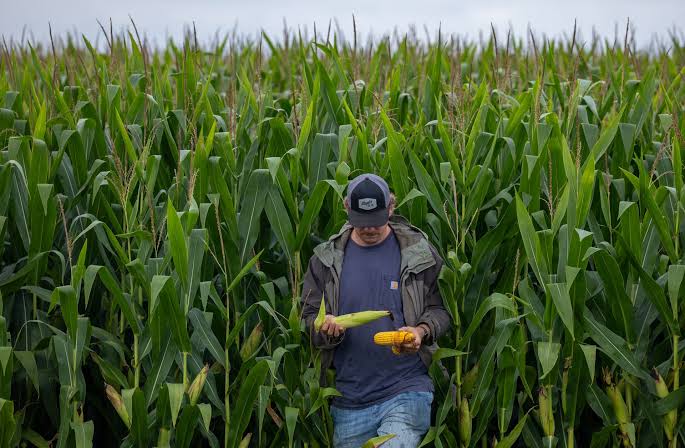
American farmers are taking on record levels of debt to keep their operations running, but the growing use of suppliers, cooperatives and other nontraditional lenders may mean the US government is underestimating the scale of farm borrowing.
US Department of Agriculture officials told Reuters that farm debt has more than doubled in inflation adjusted terms since 2000, rising from about $300 billion to more than $605 billion in 2026, the highest level on record.
Farmers are facing mounting financial pressure after years of weak commodity prices and high production costs. Trade disputes with major buyers such as China have disrupted export markets, while the US Israeli war with Iran has increased the cost of fertilizer and fuel.
The financial strain has also contributed to rising farm bankruptcies and prompted some traditional banks to tighten lending. As a result, more farmers are turning to suppliers, agricultural cooperatives, equipment manufacturers, financial technology companies and other nontraditional lenders.
Jeffrey Hopkins, acting assistant administrator at the USDA’s Economic Research Service, said the agency needs better access to data from these lenders.
Jenny Ifft, an agricultural finance professor at Kansas State University who is working with the USDA on research into nontraditional farm lending, estimates that debt in the agency’s “individual and others” category could be two to three times higher than the $45 billion reported for 2025.
The expansion of supplier financing highlights the trend. Land O’Lakes, one of the largest US agricultural cooperatives, has expanded its financing operations from about $100 million in committed loans last year to more than $1 billion for the 2027 crop year, its chief executive Beth Ford said.
USDA officials are now comparing farmer surveys with Farm Service Agency loan records and funding research into the size of the nontraditional lending market. The agency expects to have results within two years.
About half of US commercial farms relied on vendor or nontraditional lenders to finance operating expenses during the latest season, according to Wesley Davis of Meridian Agribusiness Advisors. That was about 10 percentage points higher than a year earlier.
The USDA is also examining whether rising farm debt could create wider economic risks. Hopkins said the agency wants to understand whether financial problems in agriculture could spill over into other parts of the economy, similar to how weaknesses in the housing market contributed to the 2007 to 2010 financial crisis.
The government traditionally measures farm debt using information reported by banks, Farm Credit institutions and other regulated lenders. Vendor credit is more difficult to track and is partly measured through the USDA’s Agricultural Resource Management Survey.
However, response rates for that survey have fallen sharply, from about 68% in 2009 to nearly 33% in 2025.
Reuters interviews with more than 52 commercial row crop farmers across seven Midwestern and Southern states found that most maintained between seven and 10 separate credit lines. Some had more than 30, while one Iowa family reported having 42, largely because equipment purchases and leases often involved separate financing arrangements.
A 2024 study by Kansas State University, the USDA’s Economic Research Service and the National Credit Union Administration found that equipment debt from nontraditional lenders could be as much as four times higher than USDA figures indicated.
The growing use of vendor financing could also expose agricultural suppliers and retailers to greater financial risk, particularly when loans are not backed by assets.
Davis said the potential danger therefore extends beyond farmers to the wider agricultural business sector if borrowers begin struggling to repay their debts.










Leave a comment