



By Benson Daniel
Europe’s plans to develop a new generation of fighter aircraft have been thrown into disarray following the collapse of a major Franco-German defence project, leaving governments and defence companies scrambling to determine what comes next.
The Future Combat Air System, or FCAS, which was intended to become one of Europe’s most ambitious military aviation programmes, was abandoned in June after France and Germany failed to resolve long running disagreements between their leading defence companies.
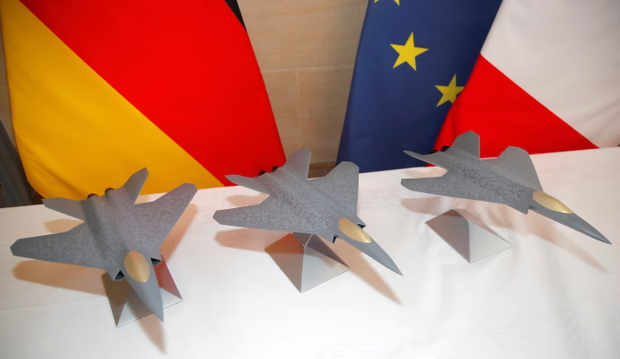
The project was designed to produce a sixth generation fighter aircraft supported by drones, sensors, artificial intelligence and a network linking different elements of the battlefield.
France, Germany and Spain had been working together on the programme, which was intended to eventually replace France’s Rafale and Germany and Spain’s Eurofighter aircraft.
However, disagreements between France’s Dassault Aviation and Airbus over industrial responsibilities, technology and the division of work ultimately proved too difficult to overcome.
The collapse has created a new challenge for European defence planners at a time when governments are under pressure to increase military spending and strengthen their ability to operate independently.
France is now expected to pursue development of a successor to the Rafale, potentially with new partners or largely on its own.
Germany, meanwhile, faces a more complicated decision. One possibility is for Berlin to seek a role in the Global Combat Air Programme, the rival sixth generation fighter project being developed by Britain, Italy and Japan.
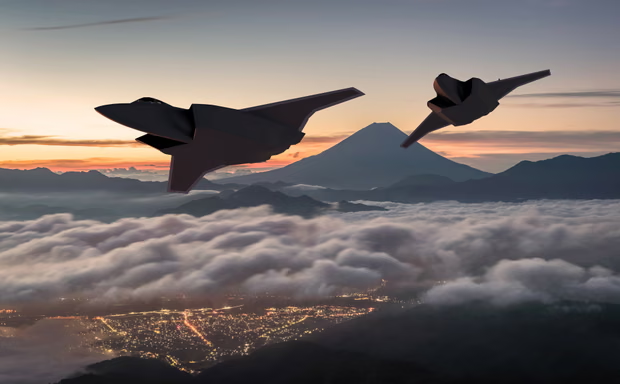
GCAP is aimed at producing an advanced fighter aircraft, known as Tempest, with an intended operational date around 2035. The programme is expected to combine advanced stealth, artificial intelligence and unmanned aircraft technologies.
Germany’s potential involvement could strengthen the European dimension of GCAP, but it could also introduce fresh complications because the programme already involves three countries with their own industrial and military priorities.
For Europe, the bigger concern is whether the continent can afford to maintain several competing fighter programmes.
Defence experts have warned that developing multiple sixth generation aircraft could divide limited European resources and reduce the economies of scale that come from building a common platform.
Europe has experienced a similar problem in the past, when disagreements contributed to separate development paths for France’s Rafale and the multinational Eurofighter Typhoon.
The failure of FCAS has therefore renewed calls for greater coordination among European governments and defence manufacturers.
Despite the collapse of the fighter component, some elements of the FCAS programme are expected to survive. Work on the so called combat cloud, which is designed to connect aircraft, drones, sensors and artificial intelligence systems, could continue through alternative partnerships.
Airbus has also been examining potential cooperation with other European defence companies, while Sweden’s Saab has emerged as a possible partner for future projects.
The wider situation reflects the difficulty Europe faces in trying to build a stronger defence industry while balancing national industrial interests.
For France, maintaining an independent ability to design and manufacture advanced combat aircraft remains a major strategic priority.
Germany, meanwhile, is increasing defence spending and wants greater access to European military technology while also maintaining interoperability with NATO allies.
Britain is pressing ahead with GCAP alongside Italy and Japan, but the project faces its own questions over funding, industrial arrangements and the timetable for delivering the aircraft.
European defence companies are consequently entering a period of intense competition and potential restructuring.
The immediate challenge for governments will be to prevent the collapse of one programme from creating a fragmented market in which several expensive aircraft projects compete for limited orders.
The choices made in the coming years could determine whether Europe develops a more integrated military aerospace industry or repeats the divisions that have historically produced separate national and multinational fighter programmes.








Leave a comment