


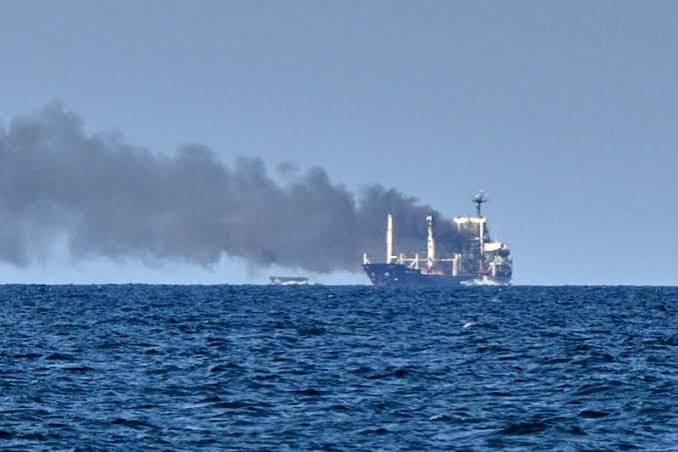
Two oil tankers carrying Saudi Arabian crude to China and India reversed course in the Red Sea on Tuesday after Yemen’s Iran aligned Houthi movement threatened to target vessels linked to Saudi ports, raising fresh concerns over global energy supplies and maritime trade.
The Very Large Crude Carrier (VLCC) Xin Long Yang, carrying about 2 million barrels of Saudi crude destined for China, turned around after departing Yanbu on Saudi Arabia’s Red Sea coast and headed toward the Suez Canal instead of continuing through the Bab al-Mandeb Strait. An Aframax tanker, Rodos, carrying around 700,000 barrels of Saudi crude for India, also changed course toward Suez.
The diversions followed the Houthis’ declaration of a naval blockade against Saudi Arabia, with the group warning shipping companies not to load or unload cargo at Saudi ports, saying vessels involved could be targeted “in any location.” The announcement opens a potential new front in the expanding regional conflict and heightens risks to one of the world’s busiest energy shipping routes.
Shipping data also showed another VLCC, New Prime, which had been due to load crude at Yanbu later this week, turned back while sailing off the coast of Oman, suggesting ship operators are reassessing risks before entering the Red Sea.
Industry analysts said rerouting cargo through the Suez Canal could increase transport costs and delay deliveries to Asian markets. While Aframax tankers can pass fully loaded through the canal, larger VLCCs may need to offload part of their cargo for transfer through Egypt’s SUMED pipeline before continuing their journey.
The disruption comes as conflict across the Middle East intensifies, with attacks affecting shipping in both the Strait of Hormuz and the Red Sea, two critical chokepoints for global oil exports. Energy markets reacted to the latest developments, with oil prices climbing more than 2% amid fears that prolonged disruption could tighten global supplies.










Leave a comment