


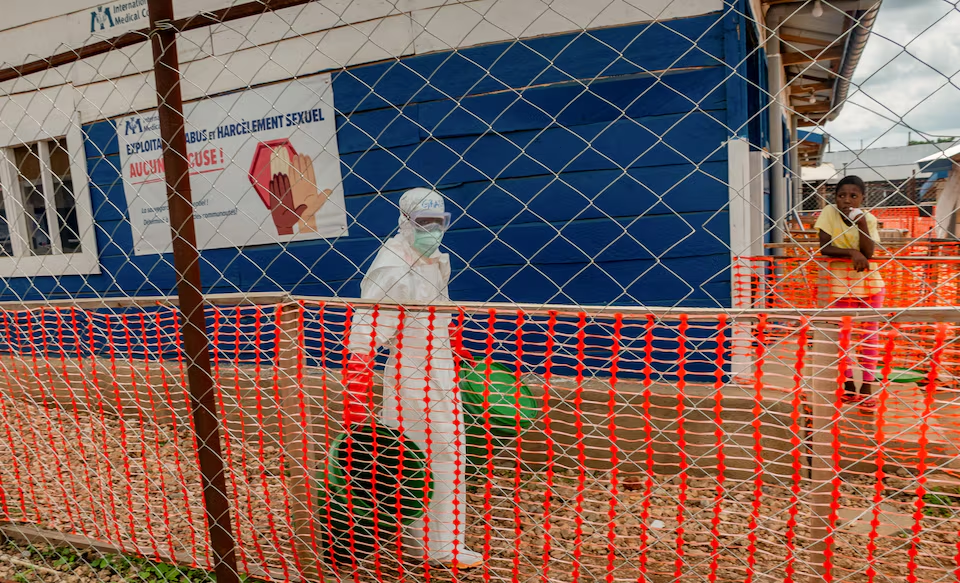
The Ebola outbreak in the Democratic Republic of Congo has surpassed 11,000 confirmed infections, with more than 5,300 deaths recorded, highlighting the growing difficulty of containing one of the deadliest Ebola epidemics in modern history.
Government data released on November 10, 2026, put confirmed infections at 11,042 and the death toll at 5,387. The outbreak, which was declared in May, has spread across eight of the country’s 26 provinces, placing additional pressure on an already strained healthcare system.
The outbreak is caused by the Bundibugyo species of the Ebola virus, a relatively rare strain for which there are currently no approved vaccines or specific treatments.
The latest figures place the epidemic as the second-largest and second-deadliest Ebola outbreak ever recorded, behind the 2014–2016 West African epidemic, which infected more than 28,600 people and killed over 11,000 across Guinea, Liberia and Sierra Leone.
A Deadly Outbreak Difficult to Contain
The speed and geographical spread of the current outbreak have complicated efforts by Congolese authorities and international health organisations to control transmission.
Delayed detection of infections, armed conflict, insecurity and weaknesses in healthcare services have contributed to the spread. Many patients have also died outside treatment centres, raising concerns about access to timely medical attention and the ability to identify infections before they become severe.
The situation is particularly concerning in eastern Congo, where insecurity has restricted access to some affected communities and complicated the work of medical teams.
Eight provinces have now recorded infections, demonstrating how difficult it has become to contain transmission within the areas where the outbreak initially emerged.
The absence of an approved vaccine or specific treatment for the Bundibugyo strain presents another challenge. Although supportive medical care can improve patient outcomes, early detection, isolation, infection prevention and effective contact tracing remain essential to controlling transmission.
Ebola’s Spread Raises Wider African Health Concerns
The outbreak has developed into a regional public health concern, with cases reported beyond the Democratic Republic of Congo.
Uganda, Kenya and Nigeria have recorded infections linked to the wider outbreak, although the situation differs across the affected countries.
Nigeria confirmed an imported case on October 20 involving a traveller who had arrived from Uganda after travelling through Ethiopia. The patient was subsequently medically evacuated to Switzerland for treatment.
The Nigerian authorities identified 62 contacts for monitoring, while health officials strengthened surveillance and response measures to prevent further transmission.
By November 9, European health surveillance data indicated that seven of the identified contacts had completed the required 21-day follow-up period.
Kenya has also reported infections linked to the outbreak, prompting contact tracing, isolation and other containment measures.
The geographical spread is significant because it demonstrates how international travel can connect outbreaks across countries, making coordinated surveillance and rapid information sharing essential.
However, the detection of imported cases does not automatically mean that widespread community transmission is occurring in every affected country.
Why the Bundibugyo Strain Presents a Challenge
Unlike some other Ebola species, the Bundibugyo virus has no approved vaccine or specific antiviral treatment.
This makes the outbreak particularly difficult for health authorities because they cannot rely on an established, approved vaccine programme specifically designed to protect against this strain.
The response therefore depends heavily on identifying suspected infections quickly, isolating patients, monitoring people who have been exposed and ensuring that healthcare workers have adequate protective equipment.
Health facilities also need sufficient capacity to manage patients safely without exposing other patients, medical personnel or surrounding communities.
The high number of deaths outside treatment centres highlights another problem: many infected people may not receive timely medical attention.
Improving community awareness and public trust is therefore as important as strengthening hospital capacity. People must be encouraged to report symptoms early and seek medical attention rather than avoid treatment facilities because of fear, misinformation or limited access.
Implications for Nigeria and Regional Health Security
For Nigeria, the outbreak reinforces the importance of maintaining effective disease surveillance, particularly at international airports, land borders and other entry points.
The country’s confirmed imported case demonstrates that geographical distance alone cannot eliminate the risk of infectious diseases entering through international travel.
The Nigeria Centre for Disease Control and Prevention and other relevant agencies must sustain contact tracing, laboratory preparedness and coordination with international health organisations.
The wider challenge also concerns the preparedness of African healthcare systems to respond to infectious disease emergencies that cross national boundaries.
Countries need stronger laboratory capacity, trained healthcare personnel, reliable emergency communication systems and sufficient medical supplies to identify and contain infections before they spread further.
The World Health Organization has emphasised coordinated international surveillance and response, while advising against unnecessary travel and trade restrictions on affected countries.
Congo’s Ebola outbreak has become a major public health emergency, with more than 11,000 confirmed infections and over 5,300 deaths recorded by November 10.
The absence of an approved vaccine or specific treatment for the Bundibugyo strain, combined with insecurity, delayed detection and overstretched healthcare services, continues to complicate containment efforts.
For Africa, the outbreak is a reminder that infectious disease threats cannot be managed effectively through isolated national responses.
Nigeria and other countries must maintain strong surveillance, invest in emergency healthcare preparedness and strengthen cross-border cooperation to reduce the risk of further transmission.
Ultimately, containing the outbreak will depend on how quickly health authorities can identify infections, reach affected communities and interrupt transmission before the epidemic spreads further.









Leave a comment