


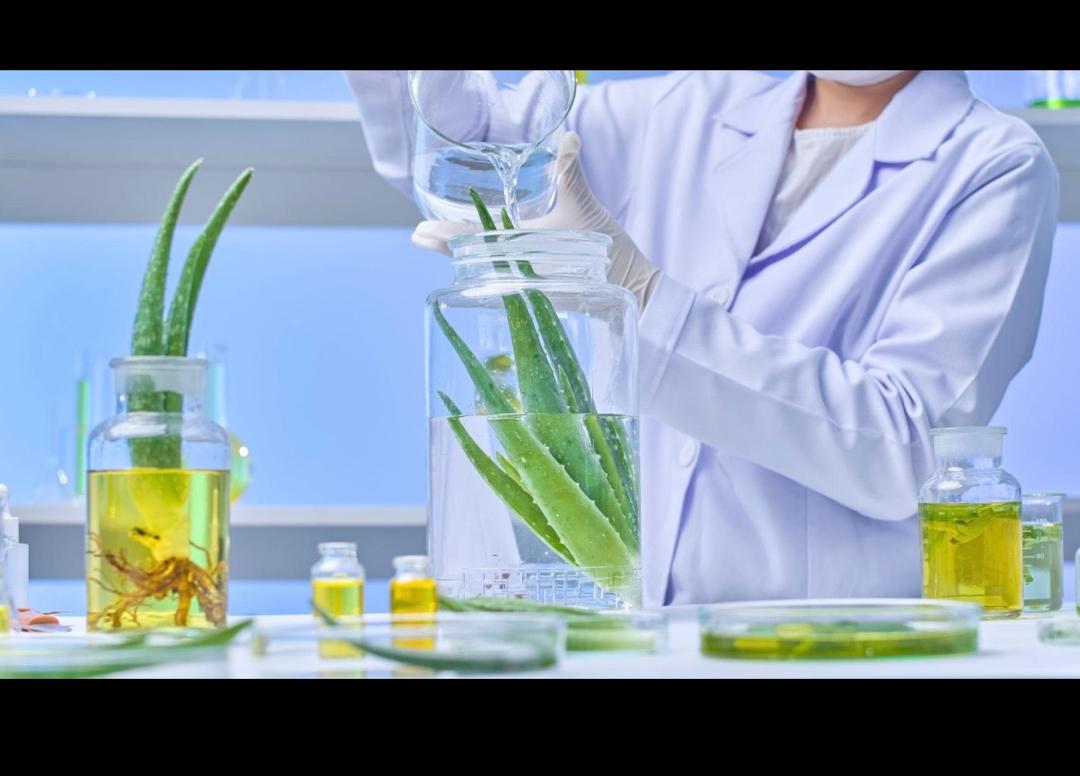
Have you ever wondered whether the aloe vera plant growing in someone’s compound could be useful for your skin? Or why turmeric, honey, shea butter, and other natural ingredients have been used in skincare for generations?
Many people are familiar with these ingredients, but not everyone understands the science behind their potential benefits. Some use them because they have heard about their effectiveness from family and friends, while others rely on traditional knowledge passed down through generations.
But how much of what we hear about natural skincare is supported by science?

This is where Plant Science becomes important.
Plant Science is not just about growing crops or studying the structure of plants. It also involves understanding the compounds plants produce, how these compounds function, and how they may be useful to humans. Through scientific research, plant scientists can help us understand which plant-derived ingredients have potential skincare benefits and which claims require further investigation.
Plants We Apply to Our Skin
1. Aloe Vera: More Than Just a Plant in the Compound
Aloe vera is one of the most familiar plants used in natural skincare. Its thick, fleshy leaves contain a clear gel that is commonly applied to the skin.
The gel is widely used in products intended to soothe and moisturize the skin. Research has also investigated its potential role in wound healing and certain skin conditions, although its effectiveness depends on the application and condition being treated.
However, using aloe vera does not guarantee that every skin problem will disappear. Some people may experience irritation, and fresh plant material can become contaminated if it is handled or stored improperly.
2. Turmeric: The Yellow Plant With Interesting Properties
Turmeric is commonly used in cooking and has a long history of traditional use. It contains curcumin, a compound studied for its antioxidant and anti-inflammatory properties.
Researchers have investigated turmeric and curcumin for possible applications in skin health, including inflammatory skin conditions and pigmentation. However, evidence supporting particular treatments is still developing.
Turmeric can also stain the skin and may cause irritation in some people. Therefore, its traditional popularity should not be confused with proof that every homemade turmeric mixture is safe or effective.
3. Shea Butter and Coconut Oil: Supporting the Skin Barrier
Shea butter and coconut oil are familiar ingredients in many Nigerian households.
Shea butter helps soften the skin and reduce moisture loss. Coconut oil can also help moisturise dry skin and support the skin barrier in some people.
The skin barrier is the outer protective layer that helps retain moisture and protect the body from external irritants.
However, different skin types respond differently to oils and butters. Heavy products may not suit everyone, particularly people who find that certain oils worsen their acne.
The goal is not simply to use natural ingredients, but to understand which ingredients are appropriate for a particular skin type and concern.
Plants We Consume and Their Relationship With Skin Health
Skincare is not limited to what we apply externally. The foods and drinks we consume also matter because the body needs adequate nutrients to maintain healthy skin.
1. Hibiscus: More Than Just Zobo
Hibiscus, commonly used to prepare zobo in Nigeria, contains plant compounds called anthocyanins, along with other polyphenols that have antioxidant properties.
Antioxidants can help protect cells against damage caused by certain reactive molecules. Hibiscus has therefore attracted interest in research on its potential health benefits.
However, the presence of antioxidants does not prove that drinking zobo will clear acne, remove dark spots, or make someone’s skin glow. More research is needed to establish specific skin benefits from drinking hibiscus preparations.
The important point is that a familiar Nigerian drink can also be a subject of scientific investigation.
2. Oranges and Guavas: The Importance of Vitamin C
Oranges and guavas provide vitamin C, an essential nutrient that the body needs to produce collagen.
Collagen is a structural protein that helps support the skin and other tissues. Adequate vitamin C intake is therefore important for normal skin function.
Eating vitamin C-rich fruits contributes to a balanced diet, but consuming more vitamin C than the body needs does not automatically result in clearer or brighter skin.
What Does Plant Science Have to Do With Skincare?
You might wonder why a student studying Plant Science would be interested in skincare.
The answer is that plants produce a wide variety of chemical compounds, some of which have useful biological properties. Scientists investigate these compounds to understand their structures, functions, safety, and potential applications.
For example, a plant scientist may identify a plant species, examine its chemical composition, or investigate how environmental conditions influence the compounds it produces.
Other researchers may then investigate whether particular compounds have beneficial effects on human skin. This work can involve collaboration between plant scientists, chemists, pharmacologists, toxicologists, pharmacists, and dermatologists.
It is important to recognize that these professionals have different responsibilities. Plant scientists contribute knowledge about plants and their compounds, while dermatologists are medical doctors who specialize in conditions affecting the skin, hair, and nails.
A Plant Science degree alone does not qualify someone to practise as a dermatologist. Becoming one requires medical training followed by specialist postgraduate training.
From Traditional Knowledge to Scientific Evidence.
Many natural ingredients have been used for generations, and traditional knowledge can provide valuable starting points for scientific investigation.
However, scientists must ask important questions.
Which compounds does the plant contain? Are those compounds present in sufficient quantities to have an effect? Is the ingredient safe for human use? Does it work when applied to the skin, or is there evidence that consuming it produces a benefit? Could it cause irritation or interact with medication?
Researchers may use laboratory analyses, chemical tests, safety assessments, and clinical studies to investigate these questions. This process helps distinguish between ingredients with demonstrated benefits, ingredients that show promise but require more research, and claims that are not adequately supported by evidence. It also explains why natural does not automatically mean safe. Some plants contain harmful substances, and even familiar ingredients can cause unwanted reactions.
People with persistent acne, severe irritation, unusual rashes, or other ongoing skin concerns should seek appropriate medical advice rather than relying entirely on homemade remedies. By connecting traditional knowledge with scientific research, Plant Science can contribute to a better understanding of natural ingredients and their possible applications in skin health.










Leave a comment