


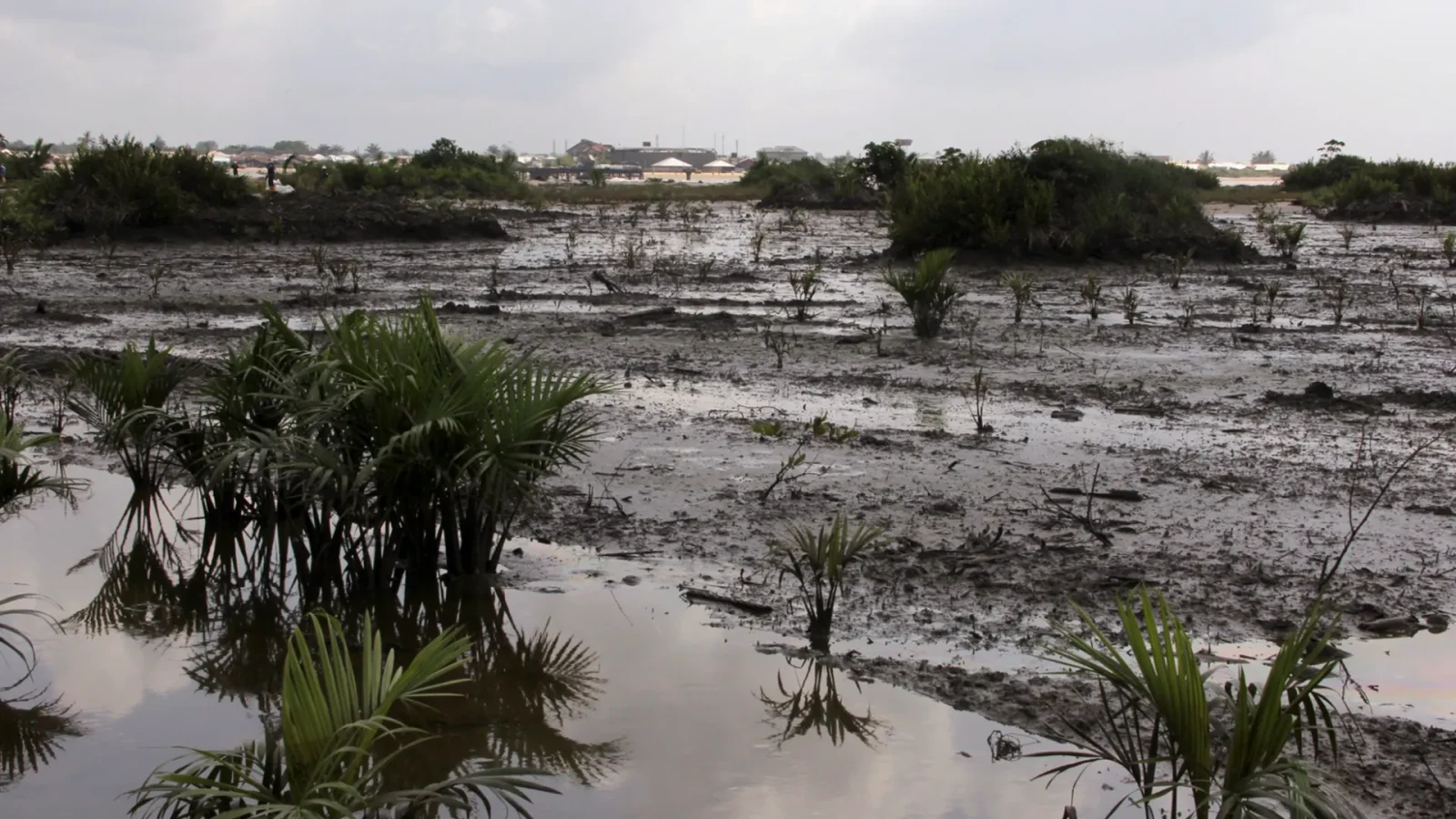
Nigeria’s Niger Delta remains central to the country’s petroleum industry, but decades of oil exploration have left an environmental burden that continues to affect communities, natural resources and local economies. While crude oil production contributes significantly to government revenue and foreign exchange earnings, the communities surrounding oil facilities face persistent challenges involving polluted waterways, damaged farmland, declining fishing opportunities and concerns about public health.
The problem is not limited to occasional pipeline leaks or oil spills. It involves a wider environmental crisis driven by petroleum operations, gas flaring, illegal refining, inadequate infrastructure maintenance and weaknesses in environmental regulation. More importantly, the consequences extend beyond the immediate areas of contamination, affecting food security, household incomes and the long-term economic prospects of communities.
Recent oil spill records demonstrate that the challenge remains unresolved. Between August and September 2026, nine incidents across Delta, Bayelsa and Rivers states released an estimated 129,855 litres of crude oil. Delta State accounted for nearly 90 per cent of the reported volume, including a major incident involving approximately 112,016 litres at a wellhead in Ughelli South Local Government Area.
The incidents were attributed to different causes, including corrosion, equipment failures, operational errors, sabotage and oil theft. This distinction is important because addressing the problem requires more than tackling pipeline vandalism. It also demands improved infrastructure management, operational discipline and effective environmental oversight.
Environmental Damage Beyond Oil Spills
The Niger Delta contains extensive mangrove forests, wetlands, rivers and coastal ecosystems that support fishing, agriculture and biodiversity. These natural resources are essential to the livelihoods of millions of people and provide important ecological services, including coastal protection and fish breeding habitats.
Repeated oil contamination threatens these ecosystems. When crude oil enters waterways and wetlands, it can damage aquatic organisms, contaminate sediments and destroy vegetation. On agricultural land, petroleum hydrocarbons can affect soil quality and reduce the productivity of farmland.
Mangrove forests are particularly vulnerable. Oil deposits can coat their roots, interfere with normal plant functions and prevent affected areas from recovering naturally. Their destruction also threatens fish populations and other organisms that depend on mangrove ecosystems.
The problem is further complicated by illegal refining, which introduces additional sources of pollution. Waste from crude oil processing can contaminate surrounding land and waterways, while burning activities contribute to air pollution.
A scientific study published in July 2026 examined petroleum-related chemical contamination in mangrove sediments in Nembe Local Government Area of Bayelsa State. Researchers detected 14 types of polycyclic aromatic hydrocarbons in samples collected from three locations. Their risk assessment indicated serious potential ecological and human health concerns.
Although the findings do not establish actual disease cases among residents, they provide further evidence that contamination in the Niger Delta requires continuous environmental monitoring and targeted remediation.
Public Health and the Growing Human Cost
Environmental pollution becomes particularly serious when it affects the water and food sources on which communities depend.
Residents of contaminated areas may be exposed to petroleum-related chemicals through drinking water, polluted soil, food sources and industrial emissions. The potential health consequences include respiratory problems and other health risks associated with exposure to hazardous substances.
A major environmental assessment of Ogoniland published by the United Nations Environment Programme in 2011 remains one of the most important scientific examinations of the crisis.
The investigation analysed more than 4,000 samples collected from over 200 locations and reviewed more than 5,000 medical records. It found serious groundwater contamination in several communities.
One of its most disturbing findings concerned Nisisioken Ogale, where benzene concentrations in drinking water exceeded World Health Organization guidelines by more than 900 times. Benzene is a recognised human carcinogen.
The assessment warned that restoring the environment in Ogoniland could take between 25 and 30 years, highlighting the difficulty of reversing decades of contamination.
More recent research published in 2025 also examined the relationship between oil exploitation, environmental degradation, health and socioeconomic conditions. Its review of 28 scientific studies identified connections between pollution, damaged food systems, disrupted livelihoods and health risks, while highlighting the need for further research into long-term health consequences.
The Economic Consequences for Local Communities
The environmental crisis also has significant economic implications, particularly for households that depend on fishing and agriculture.
For many residents, rivers, creeks and farmlands are essential sources of income rather than simply natural resources. When fishing grounds become contaminated, fishermen face difficulties maintaining their catches and sustaining their businesses. Farmers may also lose productive land, reducing agricultural output and household earnings.
These disruptions affect more than individual families. They can weaken local markets, reduce food availability and increase the cost of living in affected communities.
A 2024 qualitative study examining the experiences of Ogoni residents identified damaged livelihoods, reduced family incomes, limited access to healthcare and insufficient economic opportunities among the consequences associated with oil-industry activities.
The findings illustrate a wider economic contradiction: communities located around valuable petroleum resources can experience economic vulnerability when environmental damage undermines the traditional activities on which their livelihoods depend.
Consequently, the cost of oil pollution should not be measured only by the volume of crude oil lost during spills. It must also include agricultural losses, declining fishing opportunities, healthcare expenses and the economic disruption experienced by affected households.
Ogoniland Cleanup: Progress and Outstanding Questions
Nigeria’s response to the crisis includes the Hydrocarbon Pollution Remediation Project (HYPREP), established to coordinate the environmental restoration of Ogoniland following the 2011 UNEP assessment.
The programme covers contaminated land, groundwater, shorelines and mangrove ecosystems, alongside interventions intended to improve community livelihoods.
There have been measurable developments in its restoration activities. HYPREP reports that the first phase of its mangrove restoration programme, covering 560 hectares, was completed in December 2025, with approximately 1.53 million mangrove seedlings planted.
A second phase covering another 438 hectares has also commenced across seven communities.
These interventions represent important steps towards restoring damaged ecosystems. However, planting seedlings and completing remediation contracts do not automatically establish that contaminated environments have recovered. The survival of planted mangroves, the quality of restored soil and water, and the return of biodiversity must be independently monitored.
A 2025 United Nations evaluation of the HYPREP programme examined its implementation between 2018 and 2023, focusing on effectiveness, efficiency, sustainability and long-term environmental outcomes.
The broader challenge is ensuring that cleanup activities translate into lasting improvements in environmental conditions and the economic wellbeing of affected communities.
Corporate Responsibility and Government Oversight
Oil companies operating in the Niger Delta have responsibilities to prevent pollution, maintain infrastructure, respond promptly to spills and remediate contaminated environments.
However, effective environmental protection also depends on the strength of government institutions responsible for monitoring petroleum operations.
The National Oil Spill Detection and Response Agency plays an important role in investigating spill incidents, coordinating responses and monitoring compliance with environmental requirements.
Yet, the persistence of oil spills raises questions about the effectiveness of enforcement, infrastructure maintenance and accountability.
Nigeria must ensure that companies responsible for environmental damage meet their obligations, including compensation where appropriate and the restoration of affected sites. Changes in ownership of petroleum assets must also not create uncertainty over responsibility for historical pollution and outstanding environmental liabilities.
Affected communities should have access to reliable information about spill investigations, cleanup schedules, compensation arrangements and environmental assessments.
What Must Change?
Addressing the Niger Delta’s environmental crisis requires a shift from responding to individual incidents towards preventing pollution and ensuring long-term environmental recovery.
Oil companies must strengthen pipeline inspections, maintenance programmes and emergency response systems. Government regulators must improve independent monitoring, investigate incidents transparently and enforce environmental standards.
Cleanup programmes should be assessed through scientific evidence rather than the number of projects announced or funds allocated. Communities must also participate meaningfully in decisions affecting their environment, health and economic future.
Investment in agriculture, fisheries, clean water infrastructure and alternative employment opportunities is equally important. Environmental restoration cannot be considered successful if residents continue to struggle with damaged livelihoods and limited economic opportunities.
The Niger Delta’s oil pollution crisis reveals the wider cost of petroleum production when environmental protection and community wellbeing do not receive sufficient attention.
Nigeria’s dependence on crude oil revenue makes the region economically important, but its long-term development cannot be separated from the condition of its land, rivers, forests and people.
The challenge is no longer simply to reduce the number of oil spills. It is to prevent further contamination, restore damaged ecosystems, protect public health and ensure that communities benefit from sustainable economic opportunities.
Ultimately, the success of Nigeria’s environmental response should be measured by whether affected communities can safely access drinking water, cultivate their land, sustain fishing activities and rebuild their local economies.
The Niger Delta needs more than repeated cleanup commitments. It needs lasting environmental recovery and an oil industry that accepts responsibility for the communities and ecosystems on which its operations depend.









Leave a comment