


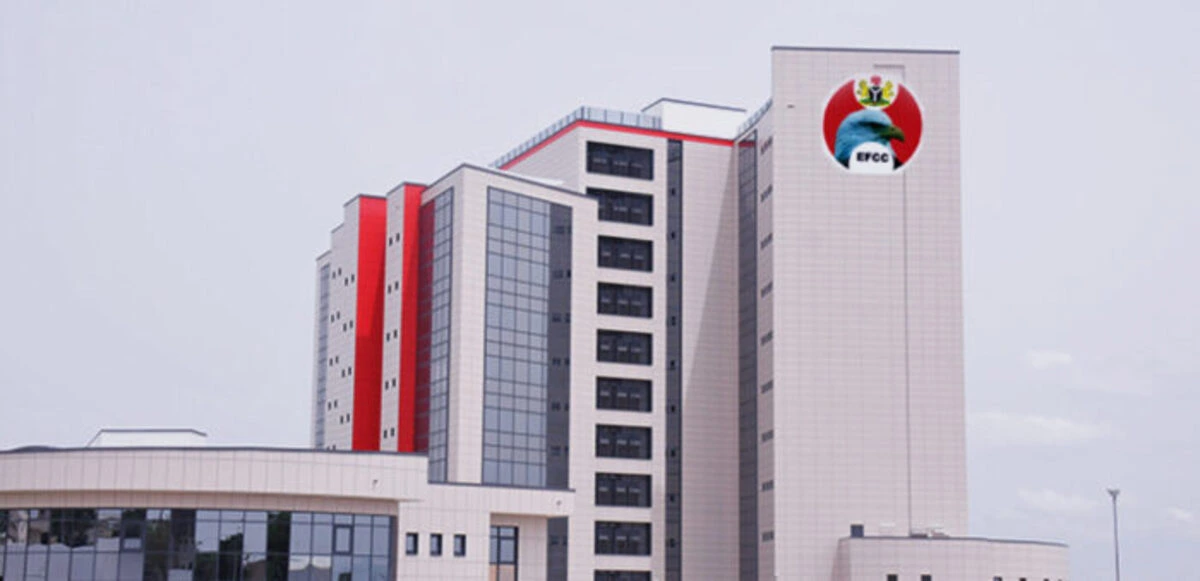
The Economic and Financial Crimes Commission (EFCC) has filed an appeal against a Federal High Court ruling that overturned the interim forfeiture of properties and funds linked to Jimoh Olasunkanmi Yisawu, a former Managing Director of the Warri Refining and Petrochemical Company (WRPC).
The appeal reopens a legal dispute over the source of assets belonging to the former refinery chief, after the court ruled that the anti-graft agency failed to establish that the properties were proceeds of unlawful activities.
The notice of appeal, filed by the commission’s lawyer, E.E. Iheanacho, SAN, challenges the decision delivered by Justice James Omotosho, who dismissed the EFCC’s application for the final forfeiture of the disputed assets.
The commission is asking the appellate court to set aside the ruling and grant its application for the forfeiture of the funds and properties to the Federal Government.
Why the EFCC is challenging the ruling
In its appeal, the commission argued that the trial judge failed to properly evaluate evidence concerning Yisawu’s financial transactions and his ability to acquire the assets through legitimate earnings.
One of its central arguments concerns alleged cash payments totalling $912,550 made to two Bureau de Change operators, Samaila Bala and Rasheed Yusuf, between 2021 and 2025.
The EFCC contends that the payments, which it valued at more than ₦1.5 billion, could not be linked to Yisawu’s lawful income during the period. It maintains that the former managing director did not provide a satisfactory explanation for the source of the money used to develop the properties and purchase treasury bills under investigation.
The commission also challenged the trial court’s consideration of his income and asset declaration records.
It argued that although Yisawu completed an asset declaration form in 2020, the Code of Conduct Bureau allegedly had no record of receiving it. The EFCC maintains that the distinction between completing the form and formally submitting it was important to determining whether he fulfilled the relevant declaration requirement.
The commission further cited records showing that Yisawu received gratuity of ₦368.89 million after his retirement, which it said was used to acquire other properties and Federal Government savings bonds. It argued that the gratuity did not account for the foreign-currency payments at the centre of its investigation.
These are allegations and arguments contained in the appeal. They have not been established as findings of the appellate court.
What the former refinery chief told the court
Yisawu has maintained that his assets were acquired through legitimate earnings accumulated during 32 years of service at the Nigerian National Petroleum Corporation (NNPC).
His defence at the Federal High Court was that he purchased the two Lagos properties between 2015 and 2020, several years before he became managing director of the Warri refinery in November 2022.
He also argued that he held the position for only about ten months, leaving him with a limited period in office compared with the decades he spent working in the oil and gas industry.
Through his lawyer, Wale Balogun, SAN, he maintained that salaries, allowances, estacodes, loans and other lawful income provided the resources used to acquire the properties and investments.
The court accepted his explanation, finding that the financial evidence presented by the former managing director weighed more heavily than the commission’s case in the forfeiture proceedings.
The Warri refinery investigation remains relevant
The dispute is connected to an EFCC investigation into the handling of funds earmarked for the quick repair of the Warri refinery in 2022.
The commission alleged that a provisional sum of $56 million was set aside for the project and that Yisawu, who chaired the provisional sum tender board, oversaw its execution.
It accused him of awarding contracts to more than 20 local companies that were allegedly not qualified under the terms of the arrangement. The agency also alleged that funds paid through Bureau de Change operators were used to acquire properties in Lagos.
Yisawu denied wrongdoing and argued that neither the NNPC, its successor company, the refinery nor the contractor had lodged a complaint against him over his conduct or the execution of the project.
The criminal case has not ended
The appeal over the properties is separate from the criminal proceedings against Yisawu.
He is facing an eight-count money-laundering charge involving ₦1.339 billion, to which he pleaded not guilty. The criminal case is before Justice Inyang Ekwo, with proceedings scheduled to begin on January 18, 2027.
The distinction is important. The decision to set aside the interim forfeiture and dismiss the final forfeiture application does not amount to an acquittal in the separate criminal case. Equally, the allegations in that case remain subject to proof before the court.
The EFCC’s appeal will now give the appellate court an opportunity to examine the grounds on which the commission believes the trial judge reached the wrong conclusion.
For now, the central question remains whether the evidence can establish a sufficient link between the disputed assets and alleged unlawful proceeds. The outcome will determine whether the commission can revive its bid to secure their forfeiture, while the separate criminal trial continues.









Leave a comment