


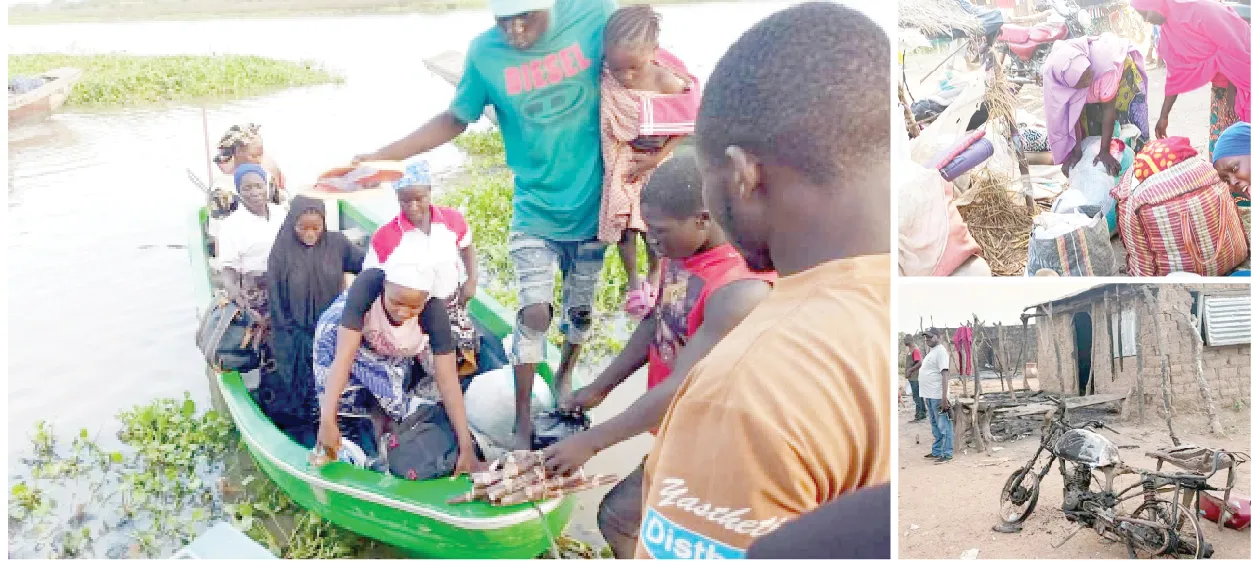
No fewer than 40 people have been reported killed after suspected bandits attacked Binnari community in Karim Lamido Local Government Area of Taraba State, turning a busy market day into a scene of bloodshed, destruction and mass displacement.
The attack occurred on Friday, October 23, 2026, shortly after Muslim worshippers observed Jumu’ah prayers, when gunmen reportedly stormed the community and opened fire on residents and traders.
The incident triggered panic as people fled in different directions in an attempt to escape the attackers. Some residents ran into nearby forests, while others rushed towards a river, where several people reportedly drowned while trying to flee.
According to reports by Daily Trust and Amnesty International, the death toll remained disputed as more bodies were recovered and families continued searching for missing relatives.
While Amnesty International reported that at least 40 people were killed, the Taraba State Police Command initially confirmed 10 fatalities. Subsequent reports indicated that the number of victims had risen significantly.
A boat operator in Binnari, Jibri Dabo, told Daily Trust that he participated in efforts to recover bodies from the river, where many people had drowned while escaping the gunmen.
Dabo said the attackers began shooting shortly after Friday prayers, causing widespread confusion among residents and visitors attending the market.
He explained that some people ran directly into the attackers, while others jumped into the river in desperation.
According to him, the gunmen operated for several hours, killing residents and looting shops before leaving the community.
The attack also affected traders and farmers who had travelled from neighbouring states to conduct business or work on farms in the area.
Adama Rayyanu, the mother of a six-month-old baby, recounted how she attempted to escape with her child when the gunmen pursued people towards the river.
She said her baby sustained a gunshot wound to the foot during the escape but survived the incident.
Rayyanu added that her husband escaped, while she had to leave three other children behind before moving to a nearby village.
Another survivor, Saidu Ali, a trader, said he ran through the forest for almost an hour while fleeing the attackers.
Ali explained that he initially believed the people running behind him were the gunmen pursuing him, forcing him to continue running until he became exhausted.
He said he spent the night in the forest and later discovered that his goods and money had been stolen when he returned to the market.
A private clinic operator in Nahuta village, Adams James, said 15 victims with gunshot wounds were brought to his facility for treatment. Those with serious injuries were referred to hospitals in Mutumbiyu and Jalingo.
Community residents also reported the destruction of homes, shops and other property, while the attackers allegedly stole motorcycles, cash and food supplies.
Tanko Andami, a community leader, called on the Taraba State Government and security agencies to strengthen protection for communities in Karim Lamido, particularly those close to the borders with Plateau and Bauchi states.
He said repeated attacks had left residents increasingly concerned about their safety and livelihoods.
Another resident, Bello Lawal, said the latest incident was the third attack in the area within two years, describing the scale of the latest killings as particularly devastating.
He noted that determining the exact number of casualties had been difficult because many victims were visitors and workers from other states.
Meanwhile, Amnesty International condemned the killings and called for an impartial investigation, justice for the victims and stronger protection for vulnerable rural communities.
The human rights organisation said reports of additional bodies being discovered and families searching for missing relatives raised serious concerns about the security situation in the affected area.
It also urged Nigerian authorities to move beyond issuing condemnations and demonstrate a commitment to protecting lives and property.
Security analyst Kabiru Adamu blamed inadequate intelligence sharing, poor forest surveillance and weak coordination among neighbouring states for the security challenges affecting the area.
Adamu said Karim Lamido’s location and difficult terrain could make it vulnerable to armed groups moving across state boundaries.
He advocated a coordinated security arrangement involving Taraba, Bauchi, Gombe and other neighbouring states, alongside stronger community-based early warning systems.
He also called for improved surveillance technology and better intelligence sharing to enable security agencies to detect and respond to threats before attacks occur.
Another analyst, Iliyasu Gadu, identified poor road networks, extensive forests and the area’s remoteness as factors that could make it difficult for security agencies to reach affected communities quickly.
Gadu urged the government to strengthen collaboration among traditional rulers, religious leaders, community representatives and security agencies to prevent further violence.
In response to the attack, Taraba State Governor Agbu Kefas directed security agencies to take urgent measures to restore calm, protect residents and apprehend those responsible.
In a statement issued through his media aide, Emmanuel Bello, the governor condemned the killings and assured residents that efforts would be made to restore lasting peace in Karim Lamido.
Kefas also expressed condolences to the families of the victims and urged residents to remain calm and cooperate with security agencies.
The Taraba State Emergency Management Agency subsequently conducted an assessment of the affected community and distributed relief materials, including foodstuffs, mattresses, blankets and other essential items, to displaced families.
Senator representing Taraba North, Shuaibu Isa Lau, also condemned the attack and called for the protection of lives and property, as well as the resettlement of displaced residents.
The killings have renewed concerns about the security of rural communities in Taraba State, particularly those located in remote areas with limited road access and communication infrastructure.
For survivors who lost relatives, homes, goods and livelihoods, the tragedy has left painful questions about how such violence could occur during a busy market day and what measures will prevent another attack.
As security agencies continue their response, residents and human rights advocates are calling for a thorough investigation, accountability for the perpetrators and sustained protection for communities at risk.
ALSO READ:https://vistaonenews.com/2026/10/25/fg-moves-to-resolve-zaria-railway-compensation-disputes/









Leave a comment