


By Benson Daniel
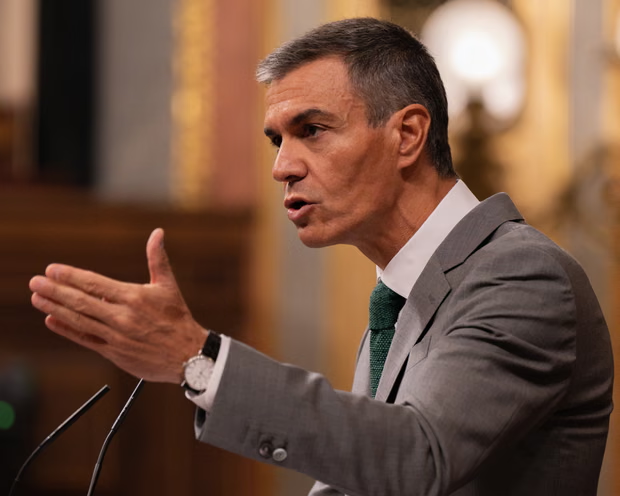
Spanish Prime Minister Pedro Sánchez has rejected allegations that Morocco was behind the mass breach of the border into Ceuta, saying there is no evidence that Moroccan authorities orchestrated the movement of tens of thousands of migrants into the Spanish enclave.
Speaking in parliament on Thursday, Sánchez said neither Spanish intelligence agencies nor international institutions had produced conclusive evidence linking the Moroccan government to the operation.
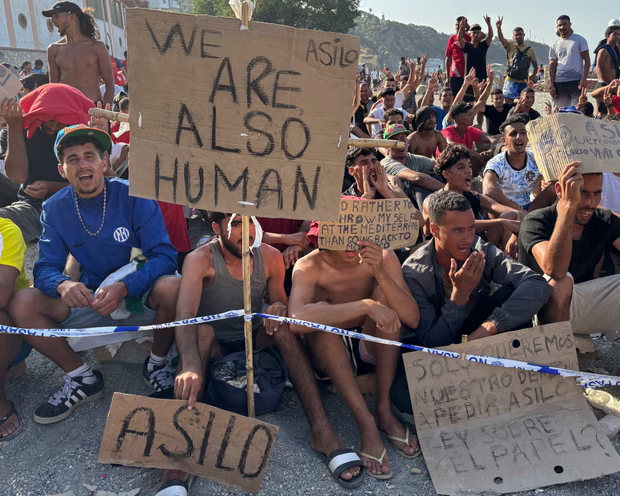
His comments come as pressure mounts on the Spanish government over the events of July 30 and 31, when an estimated 72,000 people attempted to enter Ceuta from Morocco in one of the largest migration surges the territory has experienced.
The incident resulted in deaths and injuries, with Spanish authorities estimating that about 141 people died during the crisis. Most of those who entered were subsequently returned to Morocco, although thousands remain in Ceuta, including a significant number of unaccompanied minors.
Sánchez acknowledged that Moroccan security forces appeared to have allowed people to approach and cross the border for several hours during the height of the crisis. However, he questioned whether the situation reflected deliberate cooperation with the migrants or an inability by Moroccan authorities to contain the rapidly developing movement.
His position has been challenged by a leaked report prepared by Spain’s National Immigration and Border Centre. The report describes what it calls an unusually permissive response by Moroccan police and suggests that some security personnel may have facilitated the movement of migrants towards the border.
The document reportedly draws on video footage, social media material and other evidence gathered during investigations into the incident. It has intensified political criticism of Sánchez, with opposition parties demanding greater transparency over what Spanish authorities knew before the border breach and how they responded.
The report does not, however, establish conclusively that the Moroccan government ordered or coordinated the mass movement. Spanish authorities have maintained that the evidence available does not justify making such a direct accusation.
Morocco has rejected suggestions that it deliberately opened the way for the migrants. Its officials have instead pointed to social media activity, people traffickers and misleading information as factors behind the sudden mobilisation.
Spanish police investigations have found extensive use of social media to encourage people to travel towards Ceuta. One report said a large proportion of the telephone numbers involved in organising the movement had Moroccan prefixes, although that finding by itself does not demonstrate involvement by Moroccan state authorities.
The dispute has created fresh tension between Madrid and Rabat. Spain has previously relied heavily on cooperation with Morocco to control migration routes into its North African territories and has sought closer relations with Rabat in recent years.
Sánchez has also criticised recent statements by Moroccan ministers questioning Spanish sovereignty over Ceuta and Melilla. He said Spain had summoned Morocco’s ambassador following those comments, while stressing that the two countries still needed to maintain cooperation.
The political consequences inside Spain are also growing. Opposition parties have accused the government of failing to anticipate the border crisis and have questioned why authorities did not prevent such a large movement of people from reaching Ceuta.
Sánchez, however, has defended the response of Spanish security forces, arguing that officials were confronted with a humanitarian emergency and had to act within the law while attempting to prevent further loss of life.
The government is expected to release additional information and reports relating to the crisis, although the precise timetable remains unclear.
For now, the central dispute remains unresolved. Spanish authorities acknowledge that Moroccan forces were unusually passive during crucial hours of the border crisis, while Sánchez insists there is no evidence proving that Rabat organised the operation.
The disagreement is likely to remain a major issue in Spain’s domestic politics and could further test relations between the two neighbouring countries.








Leave a comment