


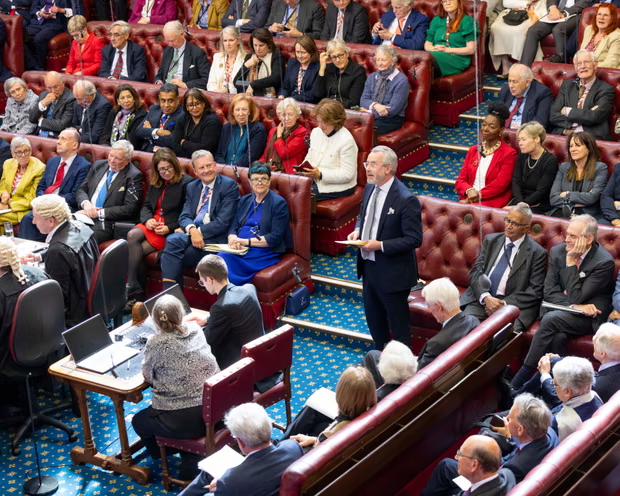
The traditional necktie is facing another challenge after the House of Lords relaxed its dress expectations, allowing members greater freedom over whether to wear one in the chamber.
The change has reignited a wider debate about the future of the tie, a piece of clothing that has long been associated with formal British dress, business meetings and political institutions.
Under the updated approach, members of the House of Lords can attend without a tie in certain circumstances, reflecting a broader shift towards more relaxed standards of formal clothing.
The development has divided opinion among fashion enthusiasts and those who regard the tie as an important part of traditional dress.
For supporters of the change, removing the requirement reflects the way workplaces and public institutions have become less formal in recent years. Business leaders, politicians and professionals increasingly appear in open-necked shirts, polo necks and other alternatives that would once have been considered too casual for formal settings.
But for some fashion connoisseurs, the tie remains an important element of a well-dressed appearance.
The accessory has a long history in European clothing, evolving from earlier forms of neckwear into the modern tie. It became particularly associated with men’s formal and business clothing during the 20th century.
Its importance has declined as dress codes have changed.
The rise of business-casual clothing has already reduced the number of occasions when men are expected to wear ties. Many companies no longer require employees to wear them, while technology and creative industries have helped normalise more informal styles.
Political institutions have also gradually followed the trend.
The House of Lords’ decision therefore reflects a change that has been taking place beyond Westminster. Formal clothing is increasingly being judged according to context rather than strict rules.
However, the tie continues to have symbolic value. Supporters argue that wearing one can signal respect for an occasion and create a clear distinction between everyday clothing and formal dress.
Some designers and fashion enthusiasts also view the tie as an opportunity for personal expression through colour, fabric, pattern and style.
The debate is consequently less about whether ties will disappear altogether and more about where they will remain relevant.
Even as workplaces become more relaxed, ties continue to appear at weddings, diplomatic events, formal ceremonies, court proceedings and other occasions where traditional dress remains important.
The changing rules at the House of Lords may therefore mark another step in the decline of compulsory formalwear rather than the end of the tie itself.
For fashion lovers hoping to preserve the accessory, there may still be plenty of reasons to keep it in the wardrobe.







Leave a comment