


By Benson Daniel
The Nigerian Air Force (NAF) has inspected the Bell Textron production facility in Amarillo, Texas, as manufacturing begins on the first batch of AH-1Z Viper attack helicopters ordered for Nigeria.
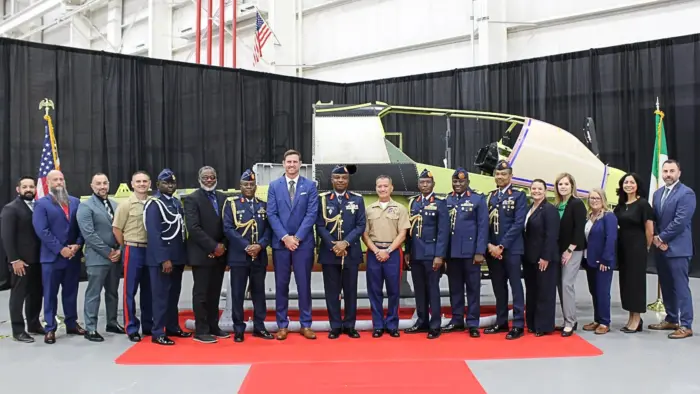
The Nigerian delegation toured the assembly facility and observed the helicopter production line before taking part in a ceremony to mark the beginning of production. The delegation also ceremonially signed the frame of the first Viper aircraft destined for service with the Nigerian Air Force.
The visit was led by Air Marshal Sunday Kelvin Aneke, Chief of the Air Staff, as Nigeria moves closer to adding the Viper to its attack helicopter fleet.
The AH-1Z Viper is designed for a range of combat missions and can employ both precision-guided and unguided weapons. Nigerian military authorities have said the aircraft will strengthen the country’s counterterrorism and counterinsurgency capabilities and improve its ability to conduct operations against armed groups.
Under the agreement, Bell will manufacture and deliver 12 AH-1Z Viper helicopters to Nigeria through the United States Foreign Military Sales programme. The package also includes engineering services, programme management and logistics support.
Bell said production of the aircraft is expected to be completed in early 2029.
The commencement of production represents a major step in Nigeria’s acquisition programme, moving the Viper order from the contractual and planning stages into physical aircraft assembly.
Air Commodore Ehimen Ejodame, the NAF spokesperson, said the service was pleased with the aircraft’s capabilities and interoperability and expected the helicopters to become an important component of Nigeria’s attack helicopter fleet.
The acquisition forms part of Nigeria’s wider effort to modernise its military aviation capabilities as the country continues to confront terrorism, insurgency and other security challenges.
For the Nigerian Air Force, the introduction of the AH-1Z is expected to provide an additional specialised platform for close air support and other combat missions. The aircraft’s integration will also require training, maintenance capacity, logistics support and other infrastructure to sustain operations after delivery.
The Texas inspection therefore provides the Nigerian military with an opportunity to monitor progress on the aircraft being produced for its fleet while engaging directly with the manufacturer on the programme.
With production now underway, attention will shift toward completing the 12-aircraft order and preparing the personnel and support systems required for their eventual induction into Nigerian service.







Leave a comment