


By Benson Daniel
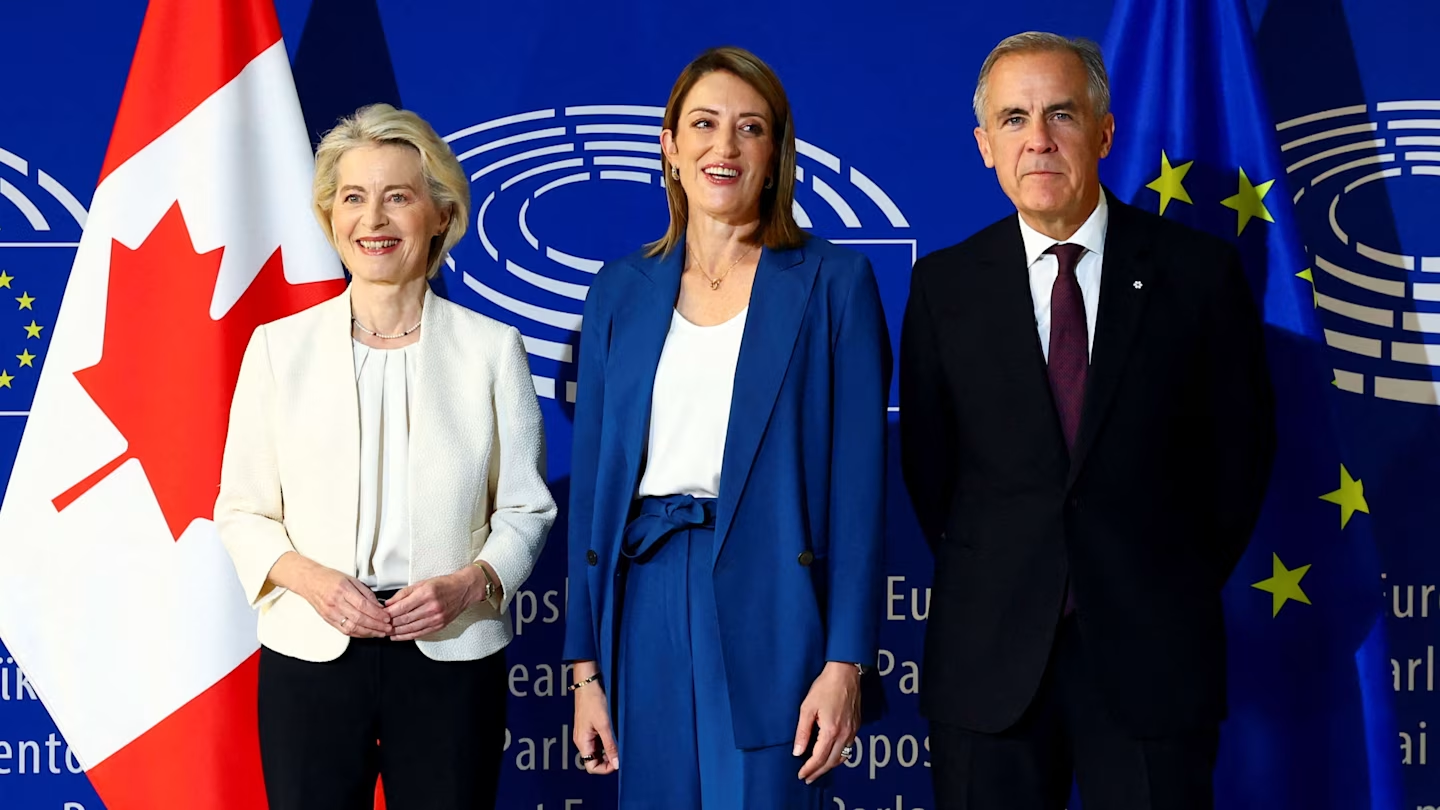
European Commission President Ursula von der Leyen has backed Canada’s push for a closer relationship with the European Union, proposing that the country become the bloc’s first “associate member” as Ottawa seeks to deepen economic and strategic ties with Europe.
Von der Leyen made the proposal on Wednesday during her annual State of the Union address to the European Parliament in Strasbourg, where Canadian Prime Minister Mark Carney was present.
She said the EU wanted to take its relationship with Canada to the highest level possible and work towards opening the door for Canada to become the bloc’s first associate member.
The proposal represents a new form of partnership between the EU and a non-member country. However, the precise rights, obligations and institutional arrangements that would come with associate membership have yet to be established.
The initiative comes as Canada seeks to diversify its economic and strategic relationships amid growing trade tensions with the United States. Canada remains heavily dependent on the US market, making stronger commercial links with Europe increasingly important to Ottawa’s efforts to broaden its international economic partnerships.
For the European Union, closer cooperation with Canada could strengthen access to critical raw materials, energy resources and other strategic supplies. The two sides could also expand cooperation in areas including technology, defence, clean energy and Arctic development.
The EU and Canada already have a major trade framework through the Comprehensive Economic and Trade Agreement, known as CETA. However, the agreement has not yet been fully ratified by all EU member states, creating another institutional hurdle for any deeper arrangement.
The proposed associate membership would therefore require negotiations among Canada and the EU institutions and member states before any formal structure could be established.
The announcement also reflects a wider shift in international economic relations as major economies seek to strengthen supply chains and reduce vulnerabilities in areas such as energy, technology and critical minerals.
Von der Leyen has emphasised that stronger partnerships are becoming increasingly important as Europe faces pressure from geopolitical tensions, competition for resources and changes in global trade patterns.
For Canada, closer integration with Europe could provide additional opportunities for exporters and investors while creating stronger links with one of the world’s largest economic blocs.
For the EU, Canada offers access to significant natural resources and a major advanced economy with which it already shares extensive commercial and diplomatic ties.
The proposal is still at an early stage, and its practical implications will depend on negotiations over the coming months. Carney is expected to address the European Parliament as both sides explore how the proposed relationship could be developed.










Leave a comment