


By Benson Daniel
Historical ties with Russia, economic frustrations and opposition to Germany’s current policy towards Moscow are helping drive strong support for the Alternative for Germany (AfD) in the country’s eastern states.
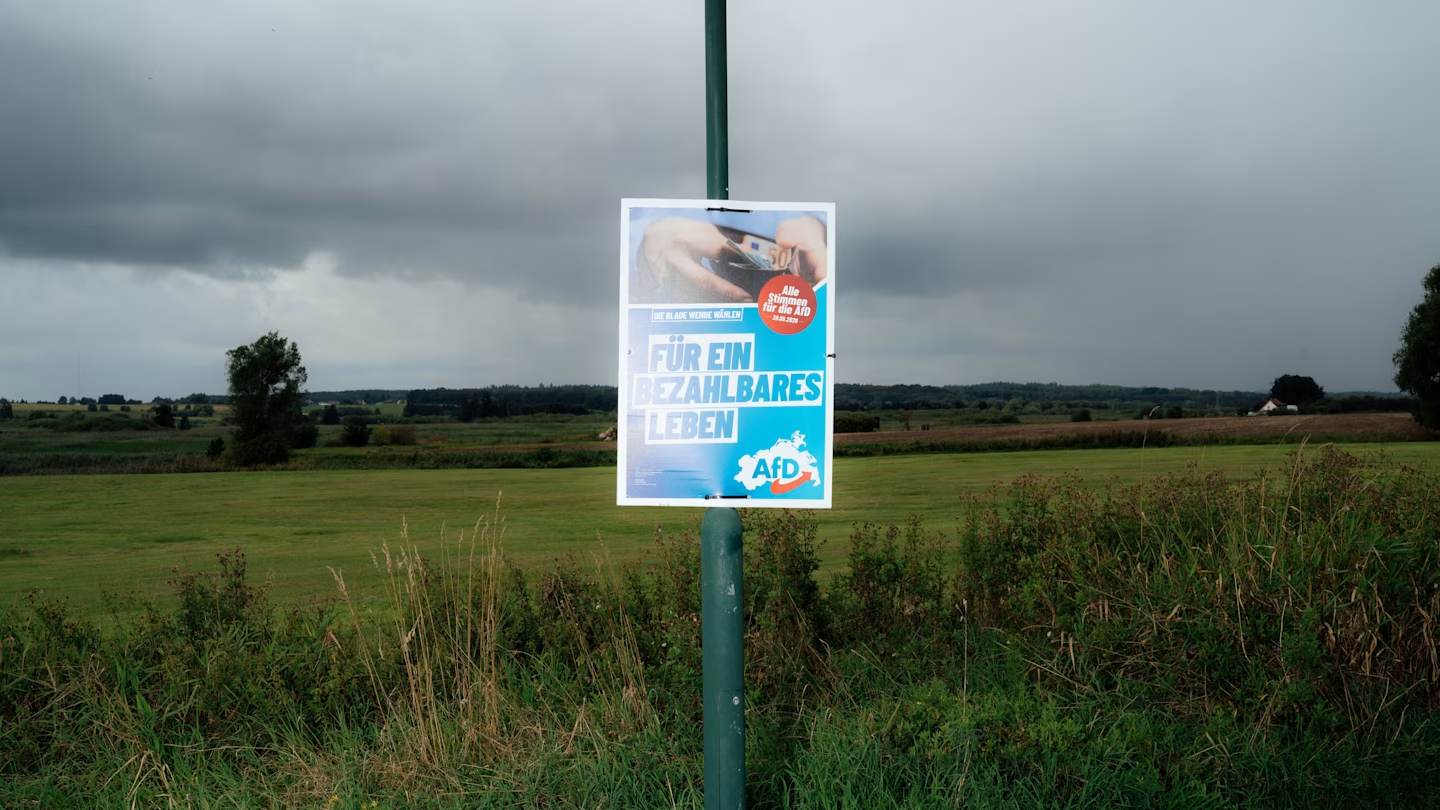
The issue has become particularly visible in Mecklenburg-Vorpommern, a former East German state where the AfD is leading ahead of a regional election scheduled for Sunday. Recent polling has placed the party at about 37 per cent, while the governing Christian Democratic Union (CDU) has fallen to around 7 per cent.
The political divide reflects differences that have persisted since German reunification in 1990. Many people in the former German Democratic Republic (GDR) grew up with close cultural and economic links to the Soviet Union, and some remain more sceptical of NATO and Germany’s confrontation with Moscow than voters in western Germany.
That sentiment has become more pronounced since Russia launched its full-scale invasion of Ukraine in 2022. While Germany has become one of Ukraine’s major military supporters in Europe, sections of the eastern population continue to oppose the reduction of economic and diplomatic ties with Russia.
A recent regional poll found that almost two-thirds of voters in Mecklenburg-Vorpommern considered Russia to pose little or no threat. By comparison, a national survey found that 59 per cent of western German voters viewed Russia as a strong or very strong threat.
Economic concerns are also contributing to the political mood. The end of Germany’s reliance on relatively cheap Russian energy has been accompanied by higher energy costs and broader economic pressures. Eastern Germany has also continued to experience the effects of industrial decline and population loss that followed reunification.
The AfD has used these concerns to argue for a fundamental change in Germany’s relationship with Moscow. The party has called for restoring closer economic ties with Russia, regaining access to Russian energy supplies and ending military support for Ukraine.
The party’s growing strength in the east follows its recent breakthrough in Saxony-Anhalt, where it secured 44 per cent of the vote in the state election, becoming the largest party in the state parliament. The result has intensified concerns within Germany’s established parties about the AfD’s expanding electoral support.
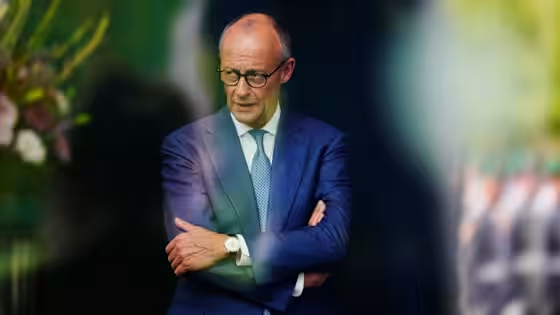
The developments have also put pressure on Chancellor Friedrich Merz and his CDU. The party is struggling to maintain its position in Mecklenburg-Vorpommern, while the AfD seeks to build on its success in other eastern states.
The debate over Russia has become particularly sensitive because Germany remains a major European supporter of Ukraine. Merz has rejected calls to reverse Berlin’s current policy, arguing that European security depends on resisting Russian aggression.
At the same time, some voters in eastern Germany say their position is driven less by support for Moscow than by concerns about living costs, energy prices, economic decline and the fear that Germany could become more deeply involved in the war.
The coming regional elections will provide another indication of how these competing views are shaping Germany’s political landscape, particularly in the former East.








Leave a comment