


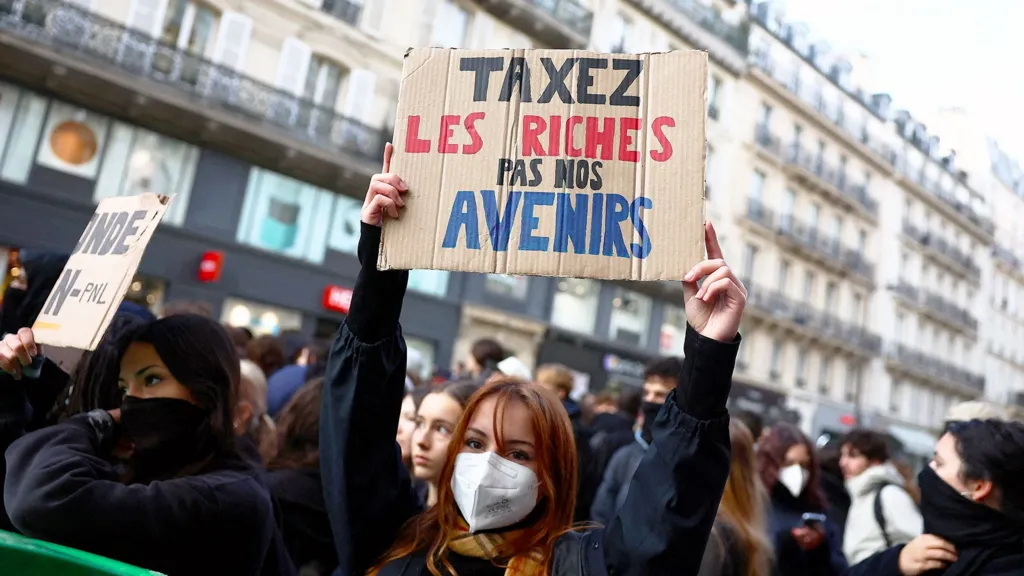
Hundreds of thousands of people are expected to participate in nationwide strikes and demonstrations across France as five trade unions join forces to demand higher wages and improved public services. The protests, which began in September with high school students raising concerns about poor educational conditions and inadequate resources, have expanded to include workers and members of the Yellow Vest movement.
Authorities estimate that between 500,000 and 700,000 people could take part in demonstrations across the country, with tens of thousands expected in Paris. The five unions, representing workers in both the public and private sectors, are demanding better wages to address rising living costs and stronger protection for public services. Interior Minister Laurent Nuñez announced that approximately 70,000 police officers and gendarmes would be deployed nationwide. He also warned that security forces would respond firmly to any outbreak of violence.
More than 250 protest activities have been planned for November 5, with disruptions already reported in schools, hospitals and public transportation. Workers have also been encouraged to suspend operations at oil refineries. Disruptions at nuclear power facilities are expected to reduce electricity production, forcing France to import more electricity than it generates on Thursday. The unions are calling for an increase in the national minimum wage, currently set at €12.31 per hour. They have also demanded an additional €100 in monthly take-home pay.
CFDT union leader Marylise Léon said wage increases should not be limited to workers earning the minimum wage, stressing the need for broader improvements in workers’ incomes. Another union leader, Sophie Binet, described the planned demonstrations as a major day of unity among different groups and urged workers to intensify the strike action. The French government has introduced measures to address public concerns over rising prices, including releasing 10 million barrels of diesel from strategic reserves to reduce fuel costs.
Authorities have also promised students reforms to the Parcoursup university admission system, with plans to eventually replace the platform by 2028. According to the Education Ministry, 81 high schools were closed on Thursday morning, while approximately 17.5 per cent of primary schools were affected by the industrial action. The Yellow Vest movement, which previously organized protests against the rising cost of living, has also called for additional demonstrations and blockades on Friday and Saturday.
Union leaders have criticized restrictions placed on previous demonstrations, particularly those keeping protesters away from central Paris. Earlier violence on October 17 reportedly resulted in more than 2,000 shops being looted and historic buildings set on fire. Thursday’s demonstration has been authorized to pass through central Paris, although authorities rejected the unions’ proposed route from Place de la Bastille to Place de la Concorde.
Instead, protesters will march from Place de la République to Place de la Nation. The CFDT union expressed dissatisfaction with the late approval of the alternative route, saying it made preparations more difficult. Interior Minister Nuñez said security arrangements would be similar to those used during the previous weekend’s demonstrations, which experienced relatively little violence. He identified potential security threats, including confrontations involving radical left-wing groups known as black blocs, looting and unauthorized marches.
Five French trade unions are organizing nationwide strikes and demonstrations to demand higher wages and better public services amid rising living costs. The protests are expected to disrupt schools, hospitals, transport and energy production, while authorities prepare a major security operation.









Leave a comment