



The Universal Basic Education Commission (UBEC) has partnered with traditional rulers and religious leaders to address the growing number of out-of-school children in Nigeria. The initiative aims to use the influence of community leaders to identify children who are not attending school, encourage their enrolment and monitor their attendance to prevent them from dropping out.
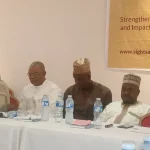
The partnership was announced on Thursday following the signing of a Memorandum of Understanding between UBEC and the Sultan Foundation for Peace and Development. Under the agreement, traditional and religious institutions will help promote basic education, particularly in underserved communities where poverty, cultural practices and other social challenges affect children’s access to schooling.
The partners will establish coordinating committees at the national, state and local government levels to organize advocacy campaigns and encourage grassroots participation. Traditional and religious leaders will also be expected to persuade parents and guardians to prioritize their children’s education. The programme will include producing and distributing educational advocacy materials in Hausa, Fulfulde and Yoruba, identifying out-of-school children at household level and helping them gain admission into nearby schools.
UBEC Executive Secretary, Aisha Garba, said addressing the problem required more than government funding and the construction of school facilities. She stressed that community leaders had an important role to play because of their influence on family decisions and community values. Garba added that the initiative would pay particular attention to girls, whose access to education remains limited by social and cultural barriers in some communities.
She said the partnership would also introduce accountability measures to recognize communities, schools and traditional leaders that make measurable progress in improving school enrolment and attendance. According to her, the success of the programme would be assessed through increased enrolment, improved attendance and retention, better learning outcomes and a sustained reduction in the number of children outside the education system.
The partnership comes as Nigeria continues to face significant challenges in basic education. UNICEF’s 2025 Nigeria Annual Report identified 10.2 million out-of-school children, with 45 per cent in the North-West and 28 per cent in the North-East. In May 2026, the Minister of Education, Dr Tunji Alausa, said government interventions had returned more than one million children to classrooms within 30 months. He also disclosed that the Federal Government was conducting a nationwide mapping exercise, including geotagging, to establish more accurate figures and identify where out-of-school children were located.
The Ministry of Education has also highlighted its Back2School Drive and interactive out-of-school children dashboard as part of efforts to identify affected children and support their enrolment. UNICEF further reported that only 70 per cent of Nigerians aged three to 24 attended school in 2025. Attendance was 51 per cent in rural communities, compared with 75 per cent in urban areas. Garba disclosed that UBEC, in collaboration with the Federal Ministry of Education and State Universal Basic Education Boards, had facilitated the construction of more than 4,900 classrooms and the renovation of existing school facilities.
She said the commission had also provided water, sanitation and hygiene facilities, with its infrastructure projects benefiting more than 2.3 million learners by the end of 2025. Other interventions include community-led school improvement programmes and professional development initiatives for teachers to strengthen school management and improve learning outcomes.
The Deputy Governor of Kebbi State, Senator Umar Tafida, who represented Governor Nasir Idris at the event, commended the Sultan Foundation for its contributions to healthcare and social development, particularly its support for vulnerable children. Tafida also praised the foundation’s efforts to improve educational opportunities for disadvantaged children and conveyed the governor’s goodwill to UBEC and its partners. Garba assured that the commission would continue working with state governments, traditional institutions and development partners to expand access to quality basic education across the country.
UBEC has partnered with traditional rulers and religious leaders to identify out-of-school children and encourage their enrolment in schools. The initiative will also monitor attendance and retention, with special attention to girls and underserved communities.








Leave a comment