



By Benson Daniel
Hidetaka Miyazaki, the creative force behind some of the most influential action games of the past decade, says his fascination with ruined worlds is closely tied to the possibility of rebuilding them.
The FromSoftware president and director of the upcoming multiplayer title The Duskbloods has reflected on the themes that have run through his work, including decay, uncertainty, human connection and the search for hope in bleak surroundings.
Miyazaki has built a reputation for creating games in which players are dropped into mysterious and often hostile worlds. Rather than explaining everything directly, his games leave players to piece together stories through environments, characters and fragments of information.
That approach has helped define the style associated with Demon’s Souls, Dark Souls, Bloodborne and Elden Ring, all of which have influenced a generation of developers.
But beneath the darkness, Miyazaki sees something more optimistic.
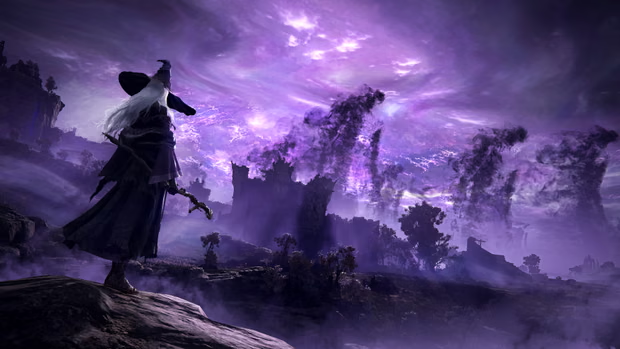
He describes himself as a pessimist and admits that, when faced with the choice between imagining a brighter or darker future, he is naturally inclined towards the latter. Yet he believes that exploring worlds shaped by ruin can also create space for renewal.
For him, destruction does not necessarily represent an ending. It can provide the conditions for something new to emerge.
That philosophy is central to The Duskbloods, a multiplayer game being developed exclusively for Nintendo Switch 2. Unlike many of FromSoftware’s previous major releases, the title places a much greater emphasis on players interacting directly with one another.
Eight players compete in a dangerous world filled with supernatural threats, with temporary alliances forming alongside direct conflict. Players can cooperate for strategic reasons before ultimately turning against one another.
Miyazaki believes those fleeting relationships can create some of the most meaningful experiences in a game.
The idea of connection is reflected in the imagery of The Duskbloods. The game opens with one hand reaching towards another, an image that Miyazaki says touches on aspects of human existence that can be difficult to describe directly.
Hands have appeared repeatedly throughout his games, sometimes as threatening creatures and sometimes in more symbolic forms. He says the recurrence may be partly subconscious, but the imagery can be understood as an exploration of human nature and relationships.
The emphasis on connection is not entirely new for Miyazaki.
Online interaction has played an important role in FromSoftware games since Demon’s Souls, where players could leave messages and summon strangers to help them overcome difficult encounters.
Miyazaki has previously explained that the idea was influenced by an experience in which his car became stuck on an icy road and strangers helped push it to safety. The brief encounter left an impression that later found its way into his approach to multiplayer design.
In The Duskbloods, however, cooperation and competition exist side by side. Players can form temporary alliances and develop relationships that provide strategic advantages, while still pursuing their own objectives.
Miyazaki describes the idea less as traditional romance and more as the desire to have someone who can ultimately be trusted and relied upon.
The game also represents another evolution of FromSoftware’s design philosophy. Miyazaki says the studio does not follow a rigid formula for making its games because doing so could eventually make its work predictable and conservative.
Instead, the developers focus on what they find interesting and allow each project to develop its own identity.
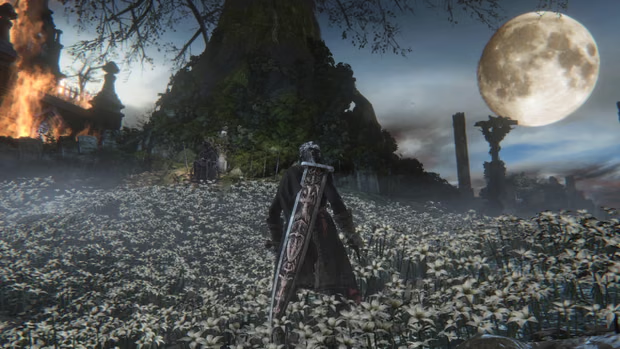
That approach has led FromSoftware from the bleak fantasy of Dark Souls and Bloodborne to the vast open world of Elden Ring and now to the competitive multiplayer structure of The Duskbloods.
Despite the shift, Miyazaki insists that the studio’s move into multiplayer does not mean it has abandoned single player games. The current projects, he says, reflect individual creative opportunities rather than a permanent change in direction.
For Miyazaki, the appeal lies in continuing to explore unfamiliar ideas rather than reproducing past successes.
His career itself reflects that philosophy. Years ago, he took over the troubled project that became Demon’s Souls. What began as a struggling game eventually transformed his career and helped create an entire genre.
That journey from failure to influence mirrors the theme that continues to appear in his work: from ruin can come rebirth.











Leave a comment