


By Benson Daniel
A fake accommodation listing for 10 Downing Street has exposed serious concerns about fraud detection and security controls on Booking.com after consumer researchers were able to create the property listing, process a test payment and publish a bogus review.
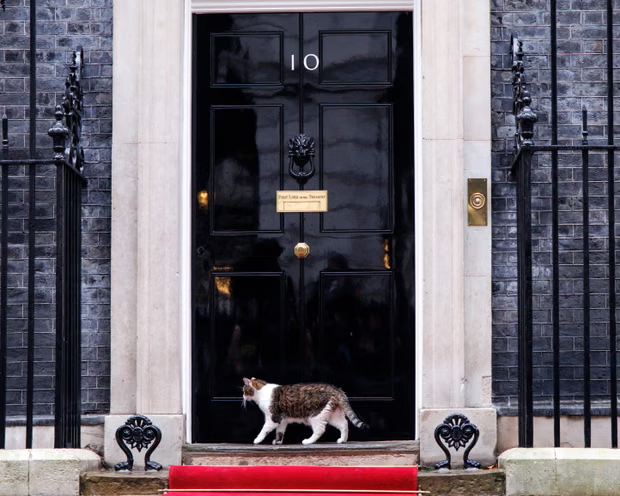
The test was carried out by consumer watchdog Which?, which created the listing in June using the address of the British Prime Minister’s official residence and a photograph of the well known property.
The accommodation was advertised as a one bedroom apartment in central London, with claims that it was only a four minute walk from the Houses of Parliament. Researchers also added features such as free parking, WiFi, air conditioning and a balcony to make the listing appear genuine.
The listing was configured to require guests to request a booking rather than allowing automatic reservations. Researchers then briefly opened the booking window to conduct a test reservation.
According to the investigation, Booking.com processed payment for a week long stay by one of the researchers. The consumer group said the money had still not been refunded more than six weeks after the test listing was created.
Researchers also managed to upload a fake positive review describing the stay as exceptional and referring to the experience of spending time with Larry, the cat associated with the Prime Minister’s residence.
The review was reportedly added almost immediately despite a message indicating that it would first be checked by moderators.
The investigation also tested the platform’s internal messaging system. Researchers were able to send an external web link requesting payment card information to confirm a booking, raising concerns about the potential for scammers to use similar methods to obtain customers’ financial details.
The fake listing remained on the platform for about six weeks before it was removed on August 27.
Which? said the findings exposed wider weaknesses in Booking.com’s fraud prevention systems and called for stronger regulatory scrutiny of the platform.
The organisation argued that if a clearly impossible property such as the Prime Minister’s official residence could be presented as holiday accommodation, criminals could potentially exploit similar weaknesses to create convincing fraudulent listings targeting genuine travellers.
Booking.com disputed the suggestion that the test represented the normal experience of users on its platform.
The company said the listing was not publicly visible or fully open for booking during the period referenced and that some of its automated fraud controls were therefore not triggered.
It said it uses a combination of verification measures, artificial intelligence and other security systems to identify and remove fraudulent listings, adding that most such listings are detected within 24 hours.
The company also said it continues to strengthen measures designed to protect customers from scams, including warnings against clicking suspicious links and additional information provided during the booking process.
The controversy comes as online accommodation scams become an increasing concern for travellers. Fraudsters can create convincing property profiles, use fabricated reviews and attempt to move conversations away from secure payment channels in order to obtain money or personal information.
For consumers, the incident highlights the importance of checking property details carefully and avoiding requests for payments or financial information through unfamiliar external links.
The case also raises broader questions about how online platforms verify property ownership and identity before allowing accommodation listings to operate.
As digital booking platforms become central to the global travel industry, stronger safeguards will be required to ensure that convenience does not come at the expense of consumer protection.
The Downing Street test has therefore become an unusual but revealing demonstration of how sophisticated online fraud can be, and the challenges platforms face in preventing fraudulent activity before consumers are exposed to it.









Leave a comment