


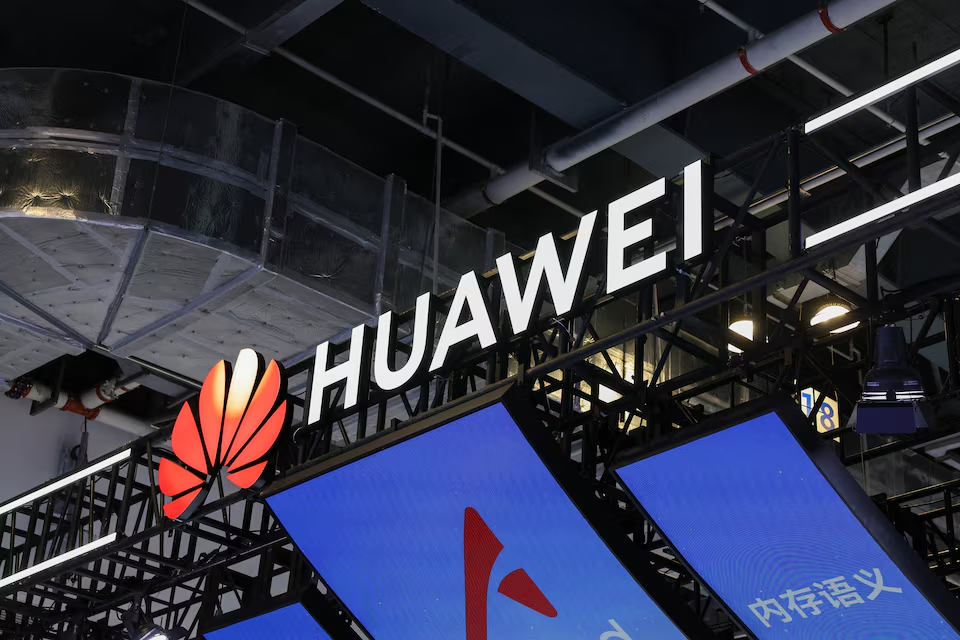
Huawei is planning to deepen its artificial intelligence partnerships with pharmaceutical companies, expanding its focus from drug research into development and clinical applications.
William Zhang, president of Huawei’s healthcare business unit, said the company expects more collaborations with pharmaceutical firms as it continues to develop AI technologies for healthcare. The partnerships are currently focused mainly on Chinese drugmakers.
Huawei already provides AI tools designed to screen potentially viable drug compounds and is integrating its Ascend and Kunpeng chips into AI-driven pharmaceutical research. The company also has existing collaborations involving clinical practice in hospitals and is exploring additional opportunities.
In May, Huawei announced that a project with state-owned Guangzhou Pharmaceutical Holdings had achieved what the company described as the pharmaceutical industry’s first production validation of independently developed AI drug-research models adapted to its Ascend and Kunpeng technologies.
The move comes as technology companies increasingly target the pharmaceutical sector, where AI is being used for tasks including molecular modelling, drug discovery and clinical-trial planning. Huawei’s expansion puts it in growing competition with companies such as Nvidia, which has established AI partnerships with major drugmakers including Eli Lilly and Novo Nordisk.
Industry forecasts indicate that machine learning could significantly reduce the time and cost required for early-stage drug development by improving target discovery, molecule design and clinical-trial planning.
Huawei’s growing healthcare push highlights its broader strategy of applying its AI hardware and software capabilities to specialized industries, with pharmaceuticals emerging as a potentially important market for the company.








Leave a comment