



Countries are falling short of international commitments to protect biodiversity, with current progress suggesting the world will miss its target of conserving at least 30 per cent of land and oceans by 2030.
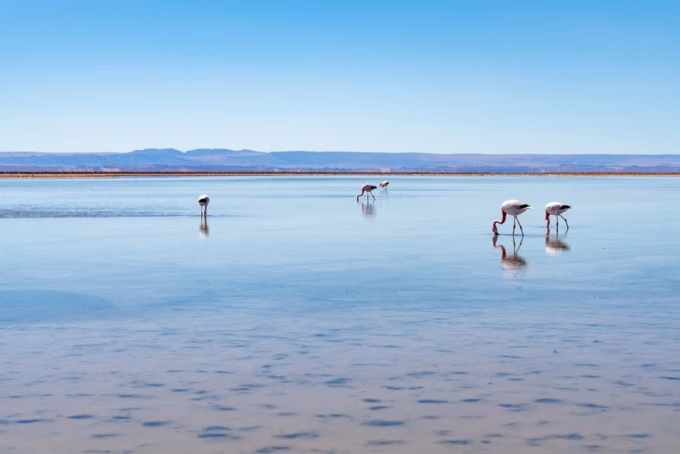
Four years after governments adopted the Kunming-Montreal Global Biodiversity Framework in 2022, protected areas cover about 20 per cent of the world’s land and inland waters. Existing commitments could raise that figure to only 27 per cent by the end of the decade. Marine conservation is further behind, with around 10 per cent of the world’s oceans currently protected and coverage projected to reach just 12 per cent by 2030.
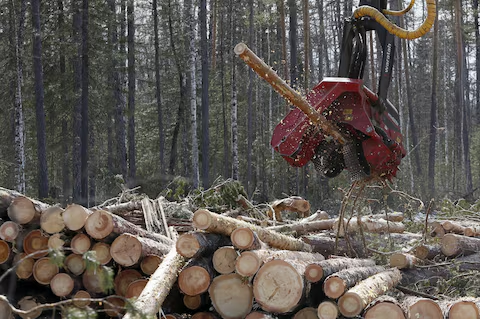
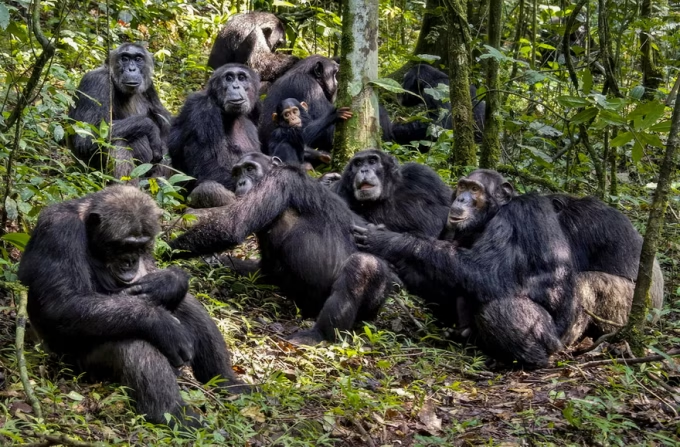
Although 50 countries have met the land-protection target, progress remains uneven across regions and ecosystems. Wildlife populations have also suffered significant declines, reflecting the continuing effects of habitat destruction, overexploitation, pollution, climate change and invasive species.
Financing remains a major obstacle. An estimated $2.6 trillion in public spending each year supports activities that harm the environment, highlighting the scale of the challenge in redirecting investment towards conservation.
Under the global biodiversity agreement, countries committed to reducing harmful incentives by at least $500 billion annually by 2030. However, only 5 per cent of governments have established national targets to meet that commitment.
As governments prepare for the next United Nations biodiversity conference, COP17, in Yerevan, Armenia, attention is turning to funding, policy reforms and stronger implementation.
Meeting the 2030 goals will require countries to accelerate conservation efforts while addressing economic activities that continue to damage natural ecosystems.






Leave a comment