


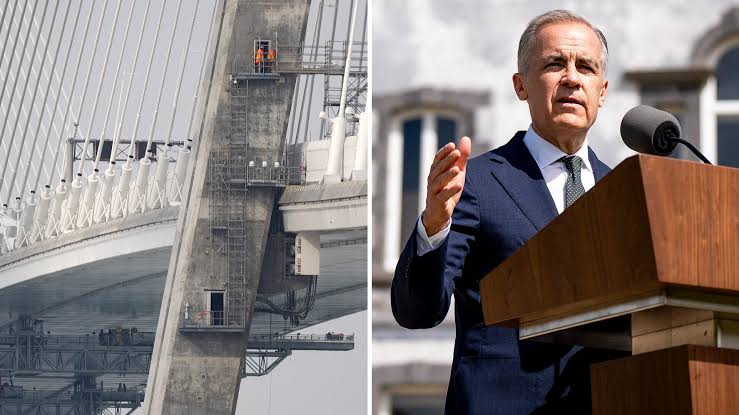
Canadian Prime Minister Mark Carney has said Canada will not share toll revenue from the newly completed Gordie Howe International Bridge with the United States until the country has fully recovered its investment in the multibillion dollar cross-border project.
Carney clarified that Canada will continue to collect toll revenues from the bridge connecting Windsor, Ontario, and Detroit, Michigan, until the costs of constructing the crossing have been repaid. The project, valued at approximately C$6.4 billion (US$4.7 billion), was financed entirely by Canada under a 2012 agreement.
Speaking to reporters, Carney rejected suggestions that Canada had agreed to immediately split toll collections with the United States following recent negotiations with President Donald Trump. He explained that the existing agreement remains unchanged, noting that any future revenue-sharing would apply only after Canada’s debt has been repaid and would involve net revenues after operating expenses such as maintenance, staffing and snow removal have been deducted.
The clarification follows comments by Trump, who last week said he had secured “a much better deal” for the United States ahead of the bridge’s planned opening on July 27. His remarks prompted criticism from opposition politicians in Canada, who questioned whether Ottawa had conceded too much during discussions with Washington.
The Gordie Howe International Bridge is expected to become one of North America’s busiest trade corridors, easing congestion at existing crossings and strengthening commercial links between Canada and the United States. However, the delayed opening has added to tensions between the two neighbours as they continue negotiations on an updated trade agreement.
Carney said the bridge agreement continues to reflect the long standing partnership between Canada and the U.S. while ensuring Canadian taxpayers recover the country’s investment before any toll revenue is shared. Analysts say the project is unlikely to generate substantial net profits during its early years because of operating costs and debt servicing, making Canada’s repayment strategy a key element of the financial arrangement.








Leave a comment