


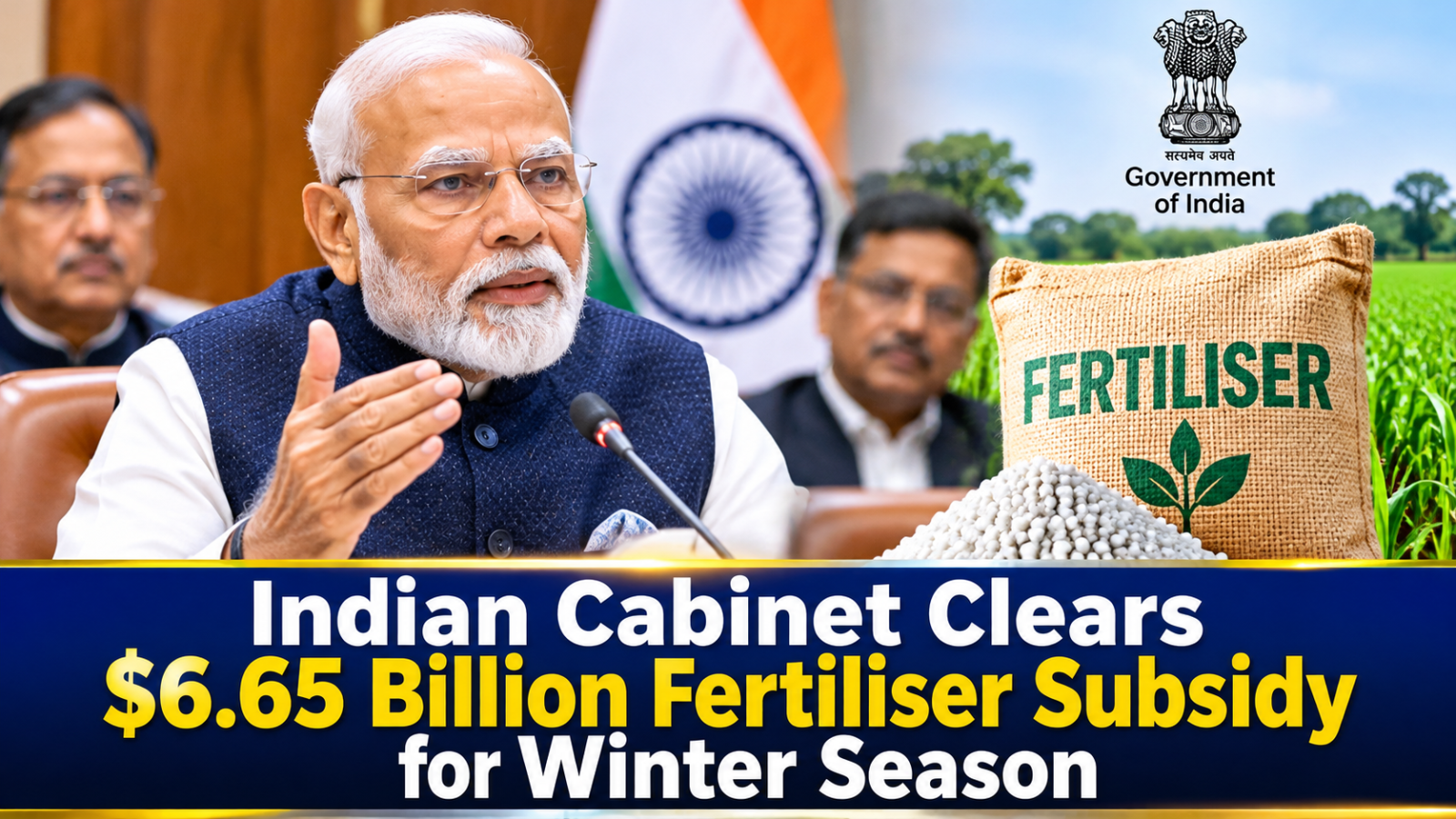
India’s cabinet has approved a fertiliser subsidy of 623.70 billion rupees ($6.65 billion) for the winter cropping season, strengthening government support for farmers amid volatility in global agricultural input prices.
Information Minister Ashwini Vaishnaw announced the approval on Wednesday, November 11, 2026, as farmers prepare for the country’s winter planting season, known as Rabi.
The subsidy is designed to maintain the affordability and availability of essential fertilisers, particularly phosphate and potash-based products, while shielding farmers from fluctuations in international prices.
The decision comes as India faces growing pressure from rising fertiliser costs and dependence on imported agricultural inputs. The country imports a substantial proportion of its fertiliser requirements and raw materials, exposing its agricultural sector to disruptions in international supply chains and price movements.
Government support for fertiliser prices remains an important part of India’s agricultural policy, helping farmers manage production costs and supporting domestic food production.
The latest allocation also highlights the increasing fiscal commitment required to protect agricultural productivity as global commodity markets remain volatile.
For developing economies, including Nigeria, India’s approach offers an important policy reference on the relationship between agricultural input affordability, government spending and food security.











Leave a comment