


By Benson Daniel
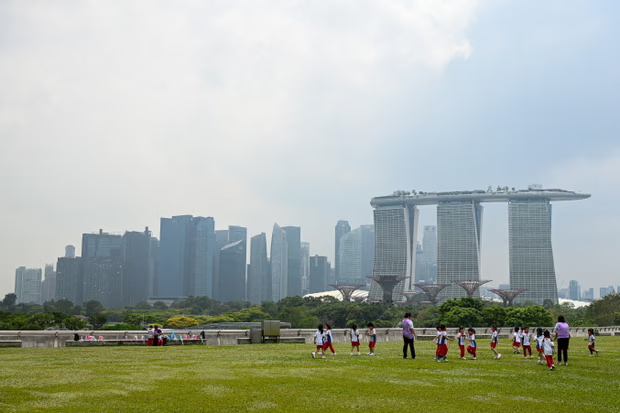
Singapore has approved a major increase in the salaries of its political office holders, raising Prime Minister Lawrence Wong’s annual pay package from S$2.2 million to S$3.6 million, equivalent to about US$2.85 million.
The increase, which takes effect from October 15, represents a 64 per cent rise in the Prime Minister’s annual remuneration and further strengthens Singapore’s position as the country with the highest paid head of government in the world.
The salary review also affects other senior political office holders, with the government approving recommendations from an independent committee that examined the country’s political remuneration framework.
Under the revised framework, the reference salary for a Ministerial Grade 4 minister will increase from S$1.1 million to S$1.8 million annually. However, existing ministers will not immediately receive the full benchmark amount.
Instead, serving political office holders will receive a one time adjustment of up to nine per cent from October 15, depending on factors including individual performance and when their salaries were last adjusted.
For a minister currently earning the S$1.1 million reference salary, the maximum initial adjustment would bring annual remuneration to about S$1.2 million.
The government said subsequent salary adjustments will be based on individual performance and responsibilities rather than automatically moving ministers to the new benchmark.
By the end of the current government term, most ministers who remain at the Grade 4 level are expected to earn about S$1.35 million, while those who perform strongly or take on greater responsibilities could earn more or move into higher grades.
The revised framework also provides greater flexibility in determining salaries, with ministerial pay ranges widened to allow the Prime Minister to appoint new office holders at different points within each grade.
Wong defended the increase, saying the issue was not simply about how much ministers earn but about ensuring Singapore continues to attract capable people into political leadership.
He acknowledged that the size of the salaries was sensitive because the amounts are significantly higher than what most citizens earn.
The government maintains that Singapore’s political salary system is designed to attract individuals with strong capabilities into public service while ensuring that political leaders receive clean and transparent remuneration.
The framework uses the earnings of the country’s top 1,000 citizens as a benchmark, while applying a 40 per cent discount to reflect the principle of public service.
Political salaries have remained unchanged for 15 years after the last major adjustment in 2012. A subsequent review in 2017 recommended an increase, but the government decided not to implement it, while another review scheduled for 2023 was deferred.
Wong has also announced that he will donate the full increase in his own salary to suitable charitable causes for the next five years, assuming he remains Prime Minister.
The government has also approved increases in allowances for members of parliament, with monthly allowances rising from S$13,750 to S$18,500 from October 15.
The latest decision is expected to generate further public debate over political pay in Singapore, particularly amid concerns over living costs and income inequality.







Leave a comment