


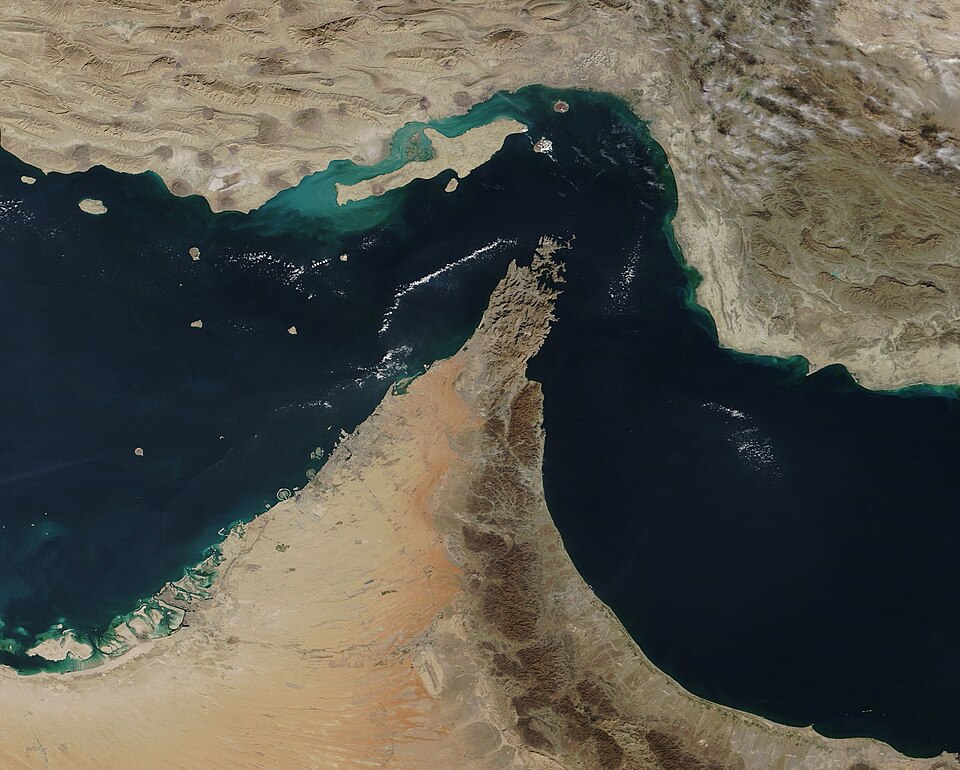
Iran widened its military campaign across the Gulf on Tuesday, July 21, launching attacks against Bahrain, Kuwait and Jordan, while reporting that two oil tankers caught fire after explosions in the Strait of Hormuz, further escalating a conflict that is threatening regional stability and global energy supplies.
The attacks came hours after U.S. forces carried out overnight strikes on military targets in southern Iran, with President Donald Trump warning that Tehran would “pay dearly” for the deaths of American soldiers. The latest exchanges mark one of the most dangerous phases of the conflict, with both sides intensifying military operations despite renewed diplomatic efforts.
Iran’s Revolutionary Guards said they targeted U.S. linked facilities in Bahrain, including infrastructure associated with Amazon, and accommodation used by American military personnel at Sheikh Isa Air Base. Iranian state media also reported drone attacks on three U.S. military bases in Kuwait, while Jordan’s military said it intercepted and destroyed five Iranian drones after Tehran claimed to have targeted a U.S. military site in the kingdom. There was no immediate confirmation from the U.S. military or Bahraini authorities regarding the reported strikes.
Maritime security concerns also deepened after the United Kingdom Maritime Trade Operations (UKMTO) said a tanker transiting the Strait of Hormuz reported being struck by an unidentified projectile, forcing its crew to abandon the vessel. Separately, Iran’s Revolutionary Guards claimed that two oil tankers caught fire after explosions while attempting to use the southern shipping route through the strategic waterway. Those claims could not immediately be independently verified.
The attacks came a day after Yemen’s Iran aligned Houthi movement announced plans to impose a naval blockade against Saudi Arabia, opening a potential new front in the conflict and raising fears of wider disruption to maritime trade through both the Strait of Hormuz and the Bab al Mandeb.
The U.S. Central Command said its latest operation struck Iranian military command centres, missile and drone launch sites, maritime capabilities and air defence systems, describing the strikes as part of efforts to reduce Tehran’s ability to threaten U.S. forces and commercial shipping. Iranian officials condemned the attacks as violations of the country’s sovereignty and vowed to continue responding to what they described as American aggression.
Despite the escalating violence, diplomats said indirect efforts to revive negotiations between Washington and Tehran remain under way, although analysts warned that the growing cycle of retaliation has significantly increased the risk of a broader regional conflict with potentially severe consequences for global energy markets.











Leave a comment