


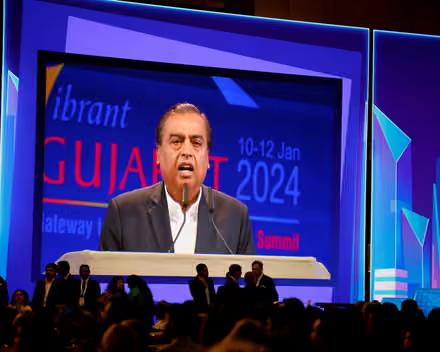
Jio Platforms, the telecommunications and digital services company backed by Indian billionaire Mukesh Ambani, is targeting a valuation of 10.3 trillion rupees (£81 billion) as it prepares for what could become India’s largest-ever initial public offering (IPO), despite a broader stock market slowdown.
The Mumbai-based company plans to raise up to 302 billion rupees (£2.4 billion) through its maiden share sale, which opens to retail investors on Wednesday, October 21, and closes on Friday, October 23, 2026.
Jio has set a price range of 1,065 to 1,119 rupees per share and plans to offer up to 270 million new shares. At the upper end of the range, the company would become India’s fourth-largest listed company, behind Reliance Industries, Bharti Airtel and HDFC Bank.
Ahead of the public offering, Jio secured commitments from 212 anchor investors on Monday, October 19. They include global investment firms BlackRock, Fidelity Investments, JPMorgan Asset Management, Franklin Templeton, Invesco and Schroders, alongside Singapore’s sovereign wealth fund and the Abu Dhabi Investment Authority.
Reliance Industries, Jio’s parent company, has also encouraged its more than 400,000 employees to purchase shares at a discount of 54 rupees per share.
Related News
- Dangote Refinery IPO Attracts Investors From Over 90 Countries https://vistaonenews.com/2026/10/19/dangote-refinery-ipo-attracts-investors-from-over-90-countries/
- Investors Reconsider Anthropic’s $2 Trillion IPO Valuation as Revenue Growth Slows https://vistaonenews.com/2026/10/16/investors-reconsider-anthropics-2-trillion-ipo-valuation-as-revenue-growth-slows/
Led by Akash Ambani, Mukesh Ambani’s eldest son, Jio launched its telecommunications services in September 2016. Its low-cost internet services helped make mobile connectivity more affordable across India by intensifying competition and triggering a price war among operators.
The company now plans to expand into artificial intelligence, cloud computing and digital infrastructure. However, its targeted valuation remains below earlier expectations of more than £110 billion, while India’s benchmark Nifty 50 index has fallen by more than 12 per cent this year.






Leave a comment