


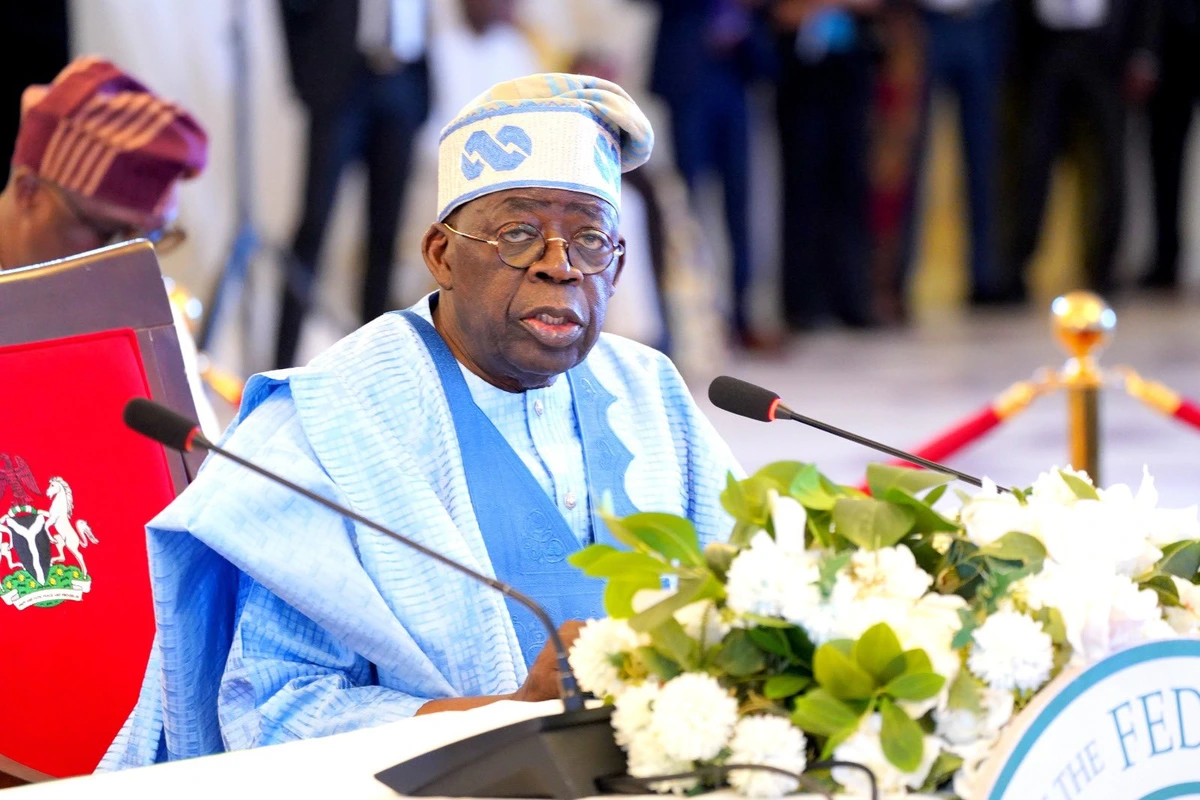
President Bola Tinubu has directed state governments and transport stakeholders to accelerate the rollout of compressed natural gas (CNG) and electric-powered transportation, with the Federal Government targeting measurable reductions in transport fares from October 1.
Tinubu said the initiative was aimed at ensuring that savings from cheaper energy are passed directly to commuters as lower transportation costs, particularly as rising petrol and diesel prices continue to put pressure on households and businesses.
The President disclosed this in a statement on Saturday, September 19, 2026, while providing an update on the National Affordable CNG Transit Programme.
He said the Federal Government and the 36 state governors had agreed during their August 27 meeting to work towards achieving measurable reductions in transportation costs from October 1. An implementation committee was subsequently established under the Nigeria Governors’ Forum to coordinate the programme.
Tinubu said the committee, the Presidential Initiative on CNG and Electric Vehicles, state governments and other stakeholders were working to identify priority transport corridors and determine the interventions required to expand affordable alternative-energy transportation.
He pointed to existing programmes in several states as evidence that lower-cost energy could translate into significant savings for commuters.
In Kaduna State, Tinubu said 100 CNG-powered buses provided free transportation on major routes and carried about 3.2 million passengers during their first year of operation. He estimated that the service saved commuters more than N3.5 billion in transportation costs.
He also cited Borno State, where CNG-powered and electric public transport services are charging between N50 and N100 on routes where commercial operators charge between N300 and N600.
In Oyo State, the President said CNG buses deployed to Pacesetter Transport reduced the Lagos-Ibadan fare from about N8,000 to N3,200 during the initial deployment.
Alternative-energy transport services in Adamawa, according to the President, have reduced fares by as much as 50 per cent, from N8,000 to N4,000, while the deployment of CNG buses in Enugu reduced the Enugu-Nsukka fare from N2,500 to N1,500.
Tinubu also highlighted fare reductions recorded on some Abuja routes, saying CNG-converted commercial vehicles had helped reduce fares through a partnership with the National Union of Road Transport Workers.
He said the Area One-Gwagwalada fare dropped from N1,500 to N900, while fares on the Nyanya and Wuse routes fell from N700 to N420 and N400 to N240 respectively.
The President said the current global energy situation had made the transition to alternative fuels more urgent, stressing that Nigeria’s gas resources could help reduce the country’s exposure to international energy price shocks.
He urged state governments to work with transport unions and commercial operators, support vehicle conversions and fleet deployment, and provide the infrastructure needed to expand CNG and electric transportation.
The Federal Government has also reported that more than 120,000 vehicles have been converted to CNG, alongside the establishment of more than 400 certified conversion centres and over 90 refuelling stations.
However, the October 1 target comes as the CNG programme continues to face challenges involving conversion costs, access to refuelling stations, financing, safety and operational capacity. Addressing those bottlenecks will be important if the projected savings are to translate into sustained fare reductions for a larger number of Nigerians.
For commuters, the success of the programme will ultimately be measured by whether lower energy costs result in cheaper and more reliable transportation across major cities and inter-state routes.







Leave a comment