


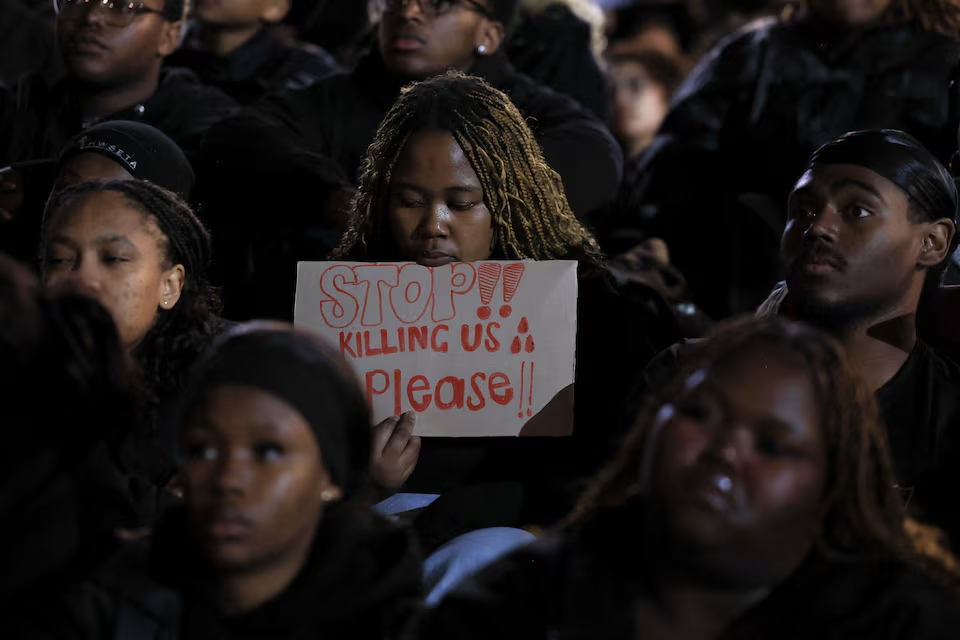
South Africans have gathered for memorial runs, vigils and protests after the deaths of nine women near Johannesburg reignited anger over gender-based violence and growing concerns about the safety of women across the country.
Police have discovered the bodies of nine women in the Ekurhuleni municipality, east of Johannesburg, over the past two months. Investigators are examining whether the killings are connected, although authorities have not confirmed that a single perpetrator is responsible.
Most of the victims were in their 20s and 30s, while some were found partially or completely undressed and showed signs of sexual assault.
On Saturday, runners in Johannesburg held a memorial run in honour of Elizabeth Moselakgomo, one of the women whose death has become a focus of the growing public campaign. Moselakgomo disappeared after going for a run and was later found dead.
Participants dressed in black, lit candles and carried a banner reading “Enough. Stop Femicide” as they called for stronger measures to protect women.
The memorial was both a tribute to the victims and a protest over the conditions that many women say leave them vulnerable while going about their daily lives.
The killings have renewed wider concerns over gender-based violence in South Africa, where the government declared gender-based violence and femicide a national disaster in 2025.
President Cyril Ramaphosa said South Africa could not become accustomed to violence against women and pledged that authorities would pursue the investigations.
Police have increased their presence in areas where the bodies were discovered and appealed to the public for information that could help identify those responsible.
The investigation has also raised questions about policing capacity. Activists and community members have called for better-resourced police services and stronger action to ensure that cases of violence against women are properly investigated and prosecuted.
The issue has extended beyond Johannesburg. Vigils have been held in other parts of the country, including Cape Town, where campaigners gathered to remember victims and demand stronger action from authorities.
Some women have also criticised advice encouraging them to take additional precautions when walking or exercising alone. Campaigners argue that responsibility for preventing violence should not be shifted onto women and that authorities must address the people and conditions that allow violent crimes to occur.
The Uyinene Mrwetyana Foundation, which campaigns against gender-based violence, said women should be able to walk, run and live without fear.
For members of the running community, the death of Moselakgomo has carried particular significance because she disappeared while doing an activity that many people undertake every day.
The demonstrations have therefore become both a mourning exercise and a demand for change, with participants calling for greater police effectiveness, safer public spaces and stronger enforcement of laws designed to protect women.
As investigators continue examining the nine deaths, authorities face renewed pressure to establish whether the cases are linked and bring those responsible to justice.
For the families of the victims and the communities affected, however, the immediate demand remains clear: women should be able to move through their communities without fear of becoming the next victim of violence.







Leave a comment