


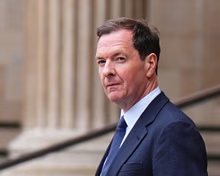
British Museum chair George Osborne has said he expected a private viewing of the Bayeux Tapestry arranged for technology billionaire Peter Thiel to remain undisclosed.
Osborne made the comments at the Big Brue festival in Somerset while discussing the controversial visit, which took place on August 18, shortly before the medieval artwork opened to the public.
Thiel was given a private viewing hosted by the museum’s director of development, Charlotte Appleyard. Osborne said he was on holiday at the time and was not present for the viewing.
“It wasn’t like we expected anyone to know about it,” Osborne said when discussing the visit.
The private access attracted attention because Thiel is a prominent figure in US conservative politics and has close connections with President Donald Trump and Vice-President JD Vance. He is also the founder of Palantir, a technology company with major contracts with governments and public institutions.
Palantir has held a £330 million contract with Britain’s National Health Service since 2023, while the company also works with the US, UK and Israeli militaries.
The museum has faced questions over why Thiel was given special access to the tapestry before its public exhibition. The artwork is particularly sensitive to exposure to light, with the museum operating a carefully managed allocation of viewing time to protect it from damage.
The museum has previously said that no viewing time allocated for members of the public was used for Thiel’s visit and that Thiel is not a donor to the institution. Osborne said Thiel had not offered the museum any money.
Asked what the museum could have received in return for the private viewing, Osborne said there had been no financial offer. He added that if such an offer were made, the museum’s board would have to consider both the potential income and any reputational risks.
The episode has also raised broader questions about how major cultural institutions balance private access, corporate relationships and public accountability.
Osborne defended the museum’s approach to corporate funding, arguing that institutions such as the British Museum need financial support from large companies to maintain free public access.
He pointed to companies such as BP and questioned whether museums could realistically reject substantial corporate contributions while also maintaining free entry and funding their operations.
The former chancellor also addressed protests surrounding the museum, saying demonstrations had increasingly focused on the war in Gaza and the political positions associated with some of the institution’s donors and visitors.
Osborne argued that the British Museum should not be treated as though it were a government foreign-policy institution, stressing that its role is primarily cultural rather than diplomatic.
The Bayeux Tapestry, an embroidered depiction of the Norman conquest of England, is being displayed at the British Museum as part of a major exhibition running from September 2026 into 2027.
Its arrival in London has generated significant public interest, with demand for tickets producing lengthy online queues when they first became available.
The controversy surrounding Thiel’s private viewing has therefore placed additional attention on how access to the historic artwork is managed and how the museum handles relationships with wealthy and politically influential figures.







Leave a comment