


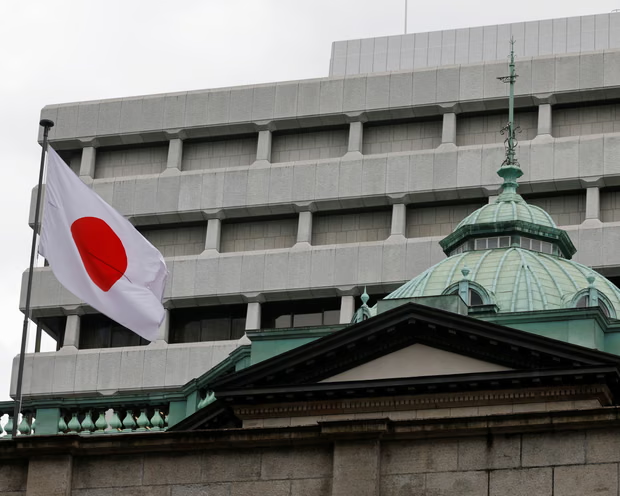
The Bank of Japan has raised its benchmark interest rate to 1.25%, its highest level in 31 years, as central banks continue to tighten monetary policy in response to persistent inflation pressures.
The increase, announced on Friday, September 18, 2026, represents a 0.25 percentage-point rise from the previous 1% rate. The decision was approved by a 7-2 vote, with two members of the policy board opposing the increase.
The move marks another step in Japan’s gradual departure from the ultra-low interest-rate policies that characterised its economy for decades. The Bank of Japan has been raising rates since ending its negative interest-rate policy in 2024.
Officials have been particularly concerned about the risk that inflation could move above the central bank’s 2% target, with higher energy costs adding to pressure on businesses and consumers.
Bank of Japan Governor Kazuo Ueda said future rate increases would depend on economic and price developments, stressing that policymakers would examine incoming data before deciding on the pace of further tightening.
Despite the rate increase, the Japanese yen weakened following the announcement, reflecting investor expectations that the central bank may not move as aggressively as some had anticipated. The yen fell beyond 157 to the US dollar after the decision.
Japan’s decision comes as other major central banks also grapple with renewed inflation risks linked partly to higher energy costs and geopolitical tensions. The European Central Bank and US Federal Reserve have also adjusted monetary policy this month.
Meanwhile, fresh data from Great Britain showed that retail activity performed better than expected in August.
Retail sales volumes increased by 0.5% in August, reversing a 0.5% decline recorded in July and exceeding economists’ expectations for a 0.2% fall. On an annual basis, sales volumes were up 2.4%.
The increase was supported by stronger sales at non-food retailers and a recovery in department-store activity. Online retailers also recorded stronger sales, while hot weather and promotions helped boost spending on food, alcohol and beverages.
However, fuel sales declined as higher petrol and diesel prices encouraged motorists to reduce non-essential journeys and limit how much fuel they purchased.
The figures also showed that retail sales volumes rose 0.9% over the three months to August, suggesting that consumer spending remained relatively resilient despite continuing price pressures.
The contrasting developments in Japan and Britain highlight the different challenges facing major economies. Japan is moving further towards higher borrowing costs to contain inflation, while stronger British retail activity provides a fresh indication of household spending conditions.









Leave a comment