


By Benson Daniel
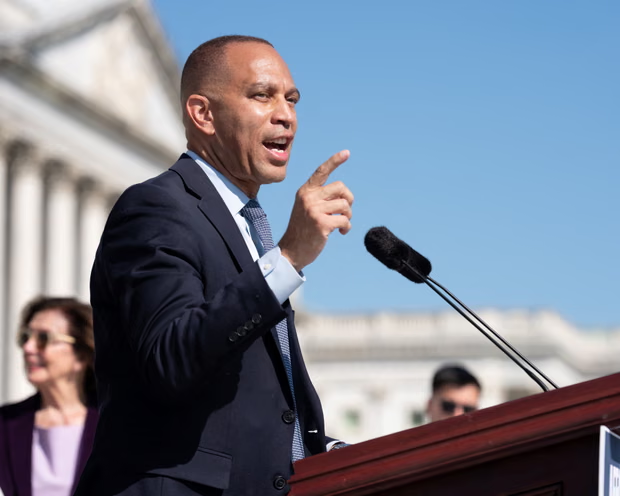
US House Democratic Leader Hakeem Jeffries has raised concerns over what he described as significant loopholes in a sweeping Russia sanctions bill passed by the House of Representatives, warning that the legislation could give President Donald Trump broad powers to impose tariffs that may have consequences for Americans.
The Lindsey O. Graham Sanctioning Russia and Iran Act of 2026 passed the House by 262 votes to 159 and now awaits Trump’s signature. The legislation is designed to increase economic pressure on Russia over its war in Ukraine by targeting Russian officials, financial institutions, energy interests and networks accused of helping Moscow evade existing sanctions.
One of the most significant provisions would give the president authority to impose tariffs of up to 100% on countries that purchase Russian oil and gas or assist efforts to circumvent US sanctions. Major buyers of Russian energy, including China and India, could therefore face additional trade pressure if the tariff powers are used.
Jeffries, who opposed the measure, questioned why Congress should grant the president such extensive tariff authority. He argued that the bill contains multiple loopholes that could undermine its stated objective of increasing pressure on Russia while leaving the United States exposed to potential economic costs.
Supporters of the legislation have argued that stronger sanctions are necessary to reduce Russia’s revenues from energy exports and make it more difficult for Moscow to sustain its war effort. The bill also targets Russia’s so-called shadow fleet of tankers, which has been used to transport oil despite existing restrictions.
The legislation has attracted bipartisan support, although it also exposed divisions within the Democratic Party over how much authority should be given to the White House. The House vote included support from 58 Democrats alongside 203 Republicans.
The potential economic impact extends beyond Russia. Countries that continue purchasing Russian energy could face higher costs if Washington applies the proposed tariffs, while disruptions to global energy trade could affect oil prices, supply chains and businesses in countries that depend on imported fuel.
Russia has already warned that the new measures could make efforts to reach a settlement in the Ukraine war more difficult. The Kremlin has described the proposed sanctions as unfriendly measures and argued that they could further complicate diplomatic efforts.
The bill’s passage therefore leaves the Trump administration with a potentially powerful new instrument for pressuring Russia and countries that maintain significant energy trade with Moscow. Whether those powers will be used, and against which countries, will depend on decisions made by the president after the legislation reaches his desk.
The debate also highlights the wider challenge facing Washington as it attempts to increase economic pressure on Russia without creating unintended costs for American consumers, businesses and international trading partners.










Leave a comment