


By Benson Daniel
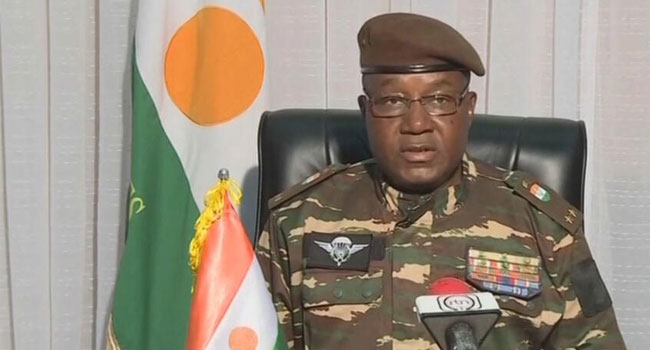
Niger’s military leader, General Abdourahamane Tiani, has appointed Brigadier General Mamane Sani Kiaou as the new Chief of Staff of the Armed Forces, following a failed military mutiny that reportedly shook the junta’s hold on power last month.
The appointment was announced on state television on Friday, September 11, 2026, following a decree signed by Tiani. Kiaou replaces General Moussa Salaou Barmou, although no reason was given for Barmou’s removal.
The leadership change comes weeks after disgruntled soldiers launched an attempted uprising in the capital, Niamey. The mutineers reportedly attacked several sensitive locations before taking refuge at a key military base near the airport.
The attempted mutiny was eventually brought under control by forces loyal to the military government, with assistance from Russian mercenaries. The confrontation involved intense fighting in parts of the capital and raised fresh questions about internal cohesion within Niger’s armed forces.
Tiani also appointed General Abdourahmane Abou Zataka to take over from Kiaou as army chief of staff.
Kiaou is regarded as an experienced field commander, having played a prominent role in military operations against jihadist groups in Niger’s western Tillaberi region and the southeastern Diffa area.
He recently completed a tour of major military garrisons across the country as part of efforts to strengthen coordination and restore cohesion among troops following the attempted uprising.
The new military chief has also been involved in negotiations that led to the withdrawal of French and United States forces from Niger after the July 2023 coup.
Niger has been under military rule since July 2023, when Tiani and his forces overthrew elected President Mohamed Bazoum. Bazoum has remained in detention since the coup.
Since taking power, Tiani’s government has significantly shifted Niger’s foreign and security partnerships, moving closer to Russia while reducing its cooperation with Western countries, particularly France, the country’s former colonial power.
The junta has accused France of involvement in efforts to destabilise the government, including allegations linking Paris to last month’s attempted uprising. France has rejected accusations of interference in Niger’s internal affairs.
The latest military appointments come at a sensitive moment for the junta as it seeks to maintain control while confronting persistent jihadist violence and internal security challenges.
Kiaou’s experience in counter-insurgency operations and his previous involvement in reorganising Niger’s military relationships could make his appointment particularly significant as the government attempts to reinforce discipline and unity within the armed forces.
The leadership changes also signal Tiani’s continued effort to strengthen control over the military following the failed mutiny and reassure the junta that the armed forces remain firmly aligned with the government.












Leave a comment