



By Benson Daniel
More than six decades after police opened fire on protesters at Sharpeville, survivors and relatives of those killed have launched a legal battle against the South African government, seeking compensation and the removal of a law that has shielded the apartheid state from civil claims.
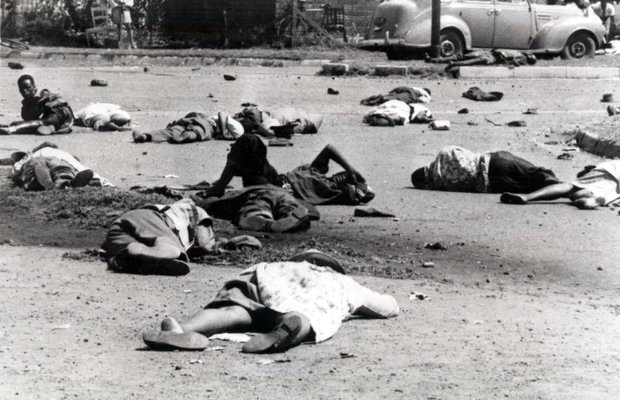
The proposed class action, filed at the Gauteng High Court, challenges the continued existence of the Indemnity Act of 1961, legislation enacted by the apartheid government in the aftermath of the massacre. The law effectively protected the government and its officials from criminal and civil proceedings arising from actions taken during the period surrounding the unrest.
The Sharpeville massacre took place on March 21, 1960, when police opened fire on people protesting against apartheid era pass laws. At least 69 people were officially recorded as having been killed, while later research based on archival records indicates that the death toll could have been as high as 91, with hundreds more injured.
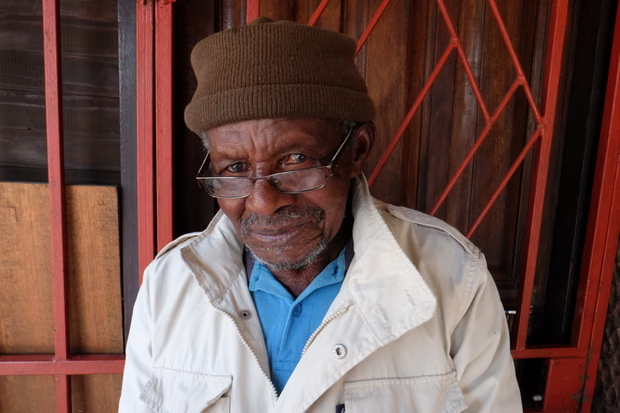
Among the lead claimants is Abraham Mofokeng, who was shot during the protest and has lived with permanent injuries for decades. His legal team argues that the scale of the harm suffered by survivors and families cannot be addressed adequately through the limited reparations that were made available after apartheid.
The case is also being brought on behalf of descendants of people who died during the massacre. More than 70 survivors and relatives have reportedly expressed interest in joining the proceedings, raising the possibility that the action could expand significantly if the court grants permission for a class action.
At the heart of the legal challenge is the argument that the Indemnity Act is incompatible with South Africa’s post apartheid constitutional order. The legislation was designed to prevent victims from pursuing claims against the state, but the claimants say its continued presence on the statute books conflicts with the constitutional right of access to justice.
The law followed hundreds of compensation claims lodged after the Sharpeville killings. Historical records indicate that 224 people filed claims for damages, prompting the apartheid government to introduce legislation that retrospectively protected the state and its officials from liability.
For the survivors, the lawsuit is about more than financial compensation. Lawyers involved in the case say the community is seeking recognition of the harm suffered and a route towards long delayed justice.
The legal action comes as South Africa continues to confront unresolved cases from the apartheid era. Families of other victims have also taken the government to court over what they describe as failures to properly investigate and prosecute serious crimes committed during the struggle against apartheid. The government has previously acknowledged the need to address outstanding demands for justice from victims and their families.
The Sharpeville massacre remains one of the defining moments in South Africa’s history. The killings drew international condemnation and became a turning point in opposition to apartheid, while March 21 is now commemorated as Human Rights Day in the country.
More than 30 years after the end of apartheid, survivors and families involved in the new case argue that the passage of time should not prevent them from seeking accountability.
If the court allows the proposed class action to proceed, the case could open a new legal avenue for dozens of people affected by one of the most notorious episodes of apartheid era violence.









Leave a comment