


By Benson Daniel
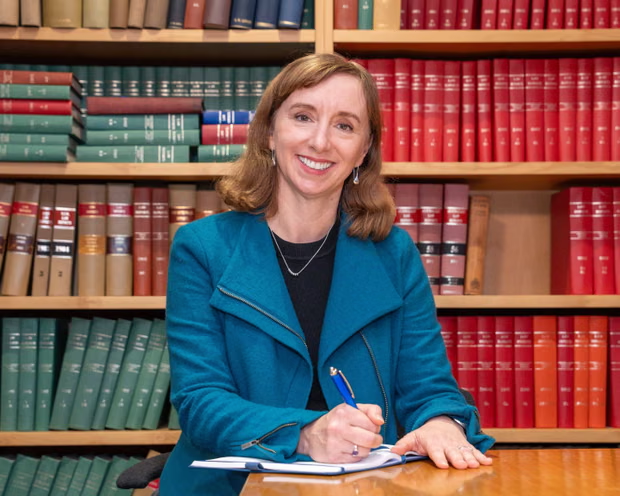
Associate Professor Helen Paterson of the University of Sydney has been recognised with a prestigious Australian science award for research examining how survivors of domestic and family violence remember and recount repeated traumatic experiences.
Paterson received the Australian Museum Eureka Prize for excellence in forensic science for work that challenges assumptions about the credibility of victim survivors whose accounts contain inconsistencies. Her research has important implications for police investigations and court proceedings, where differences in testimony can sometimes be used to question whether a person is telling the truth.
The research distinguishes between memories of a single event and those involving repeated or ongoing experiences. Paterson found that people who witness or experience repeated events tend to remember broader patterns and common details rather than every individual episode with the same level of precision.
That can mean a survivor accurately describes what happened but places a particular detail in the wrong incident or gives an incorrect sequence of events.
Paterson said such inconsistencies can become particularly damaging in court because defence lawyers may argue that an error in one part of a testimony makes the entire account unreliable. Her findings suggest that conclusion does not necessarily reflect how memory works when someone has experienced repeated traumatic events.
The research also found that repeated event witnesses can be judged more harshly than people describing a single incident. Participants in studies were perceived as less honest, less cognitively capable and less credible when their accounts contained inconsistencies.
For survivors of domestic and family violence, the consequences can be significant. Abuse frequently occurs over an extended period and can involve repeated incidents that share similar circumstances. Expecting survivors to recall every episode with the precision of a recording may therefore create an unrealistic standard for testimony.
Paterson’s work seeks to improve understanding of those limitations among people working within the justice system. A more informed approach to memory could help police and courts distinguish between genuine contradictions and the normal effects of recalling repeated traumatic experiences.
Her award was presented at an event at Sydney Town Hall as part of the Australian Museum Eureka Prizes, which recognise achievements across Australian science and science communication. The prizes were established in 1990 and cover a range of scientific disciplines and areas of public impact.
Paterson said she hoped the recognition would help draw greater attention to the experiences of victim survivors and encourage institutions to reconsider how their accounts are assessed.
Her work comes as Australia continues to confront domestic and family violence as a major social and public health issue. Research into the effects of violence has increasingly examined not only physical injuries but also the longer term consequences for survivors’ cognitive and psychological wellbeing.
Other scientists were also recognised at this year’s Eureka awards. Associate Professor Jane Tiller of Monash University received recognition for her work in securing legislative change preventing life insurers from discriminating against people based on genetic test results. Professor Georgina Long was honoured for her pioneering melanoma research.
The awards also recognised work in areas including marine heatwave forecasting, bacterial vaginosis research and the recovery of valuable materials from discarded solar panels.
For Paterson, however, the significance of the award extends beyond academic recognition. Her research points to a broader question about how society understands memory and credibility when people are recounting experiences of prolonged violence.
The central message is that an imperfect timeline does not automatically mean an untruthful account. Understanding that distinction could have lasting consequences for how survivors are treated when they seek justice.









Leave a comment