


By Benson Daniel
One Nation’s growing political influence in Australia is being linked to a deeper problem beyond traditional party politics, with experts pointing to rising social isolation and declining community engagement as factors helping the populist party connect with voters.
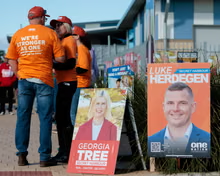
The issue has come into sharper focus following One Nation’s victory in the Western Australian seat of Secret Harbour, where the party overturned a long held Labor position in a recent byelection. The result has triggered fresh questions about whether the party’s support reflects a broader sense of disconnection among Australians who feel increasingly distant from established political institutions.
Essential Media chair Peter Lewis said One Nation was tapping into low levels of social engagement, offering supporters a sense of belonging at a time when technological change, economic uncertainty and global instability are reshaping everyday life.
The argument comes as polling shows One Nation making significant gains in national political support. A recent Guardian Essential poll recorded a decline in support for both Labor and One Nation, although the populist party remained a major force in the political landscape and continued to pressure the major parties.
One Nation’s appeal has increasingly extended beyond the traditional image of its supporters. The party, led by Pauline Hanson, has been able to attract voters who are dissatisfied with mainstream politics and frustrated by issues including immigration, the cost of living and the direction of government policy.
The Secret Harbour result provided a striking example of that shift. One Nation candidate Luke Herdegen won the seat after a substantial swing away from Labor, prompting political leaders to reassess the strength of the party’s grassroots appeal.
For Labor, the challenge is particularly difficult because simply attacking One Nation may not address the reasons some voters are turning towards it.
Lewis has argued that political parties need to rebuild connections with communities and create stronger opportunities for people to participate in collective activities. Joining organisations, community groups and other institutions can provide a sense of belonging that is increasingly difficult to find in a highly digital society.
The rise of social media has added another layer to the problem. While digital platforms allow people to communicate instantly, they can also contribute to political polarisation and create environments where anger and grievance spread rapidly.
One Nation has demonstrated an ability to use these platforms to communicate directly with supporters and bypass traditional political channels. Its messages can reach voters who may feel ignored by mainstream parties and who are receptive to arguments portraying established institutions as disconnected from ordinary Australians.
The party’s recent success has therefore become an important warning for Labor and the Liberal Party ahead of upcoming elections. Both major parties face pressure to understand why voters who once supported them are increasingly willing to consider alternatives.
Prime Minister Anthony Albanese has already warned that One Nation represents a dangerous political force and has indicated that Labor intends to confront its growing influence. However, political analysts have cautioned that focusing too heavily on the party could strengthen its profile rather than weaken it.
The debate also comes amid broader concerns about trust in political institutions. Economic pressures, housing affordability, immigration, rapid technological change and uncertainty about Australia’s future are contributing to an increasingly unsettled political environment.
For One Nation, those anxieties provide an opportunity to present itself as a movement willing to challenge the political establishment.
Whether that appeal can be sustained remains uncertain. The party’s popularity has fluctuated in previous elections, and translating protest votes into lasting political support can be difficult.
But its victory in Secret Harbour has demonstrated that the underlying frustration cannot easily be dismissed.
The latest debate suggests that the contest for Australian voters may not be determined solely by economic policies or election promises. For some voters, the search for political representation may also be driven by a desire to feel heard, recognised and connected.
That could make social isolation an increasingly important factor in Australia’s political battles, particularly as established parties struggle to rebuild the community relationships that once formed the foundation of their support.










Leave a comment