


By Benson Daniel
Drones, artificial intelligence and increasingly sophisticated monitoring systems are changing the way conservationists protect wildlife across Africa, giving rangers a faster and more precise way to track animals, respond to threats and manage vast protected areas.
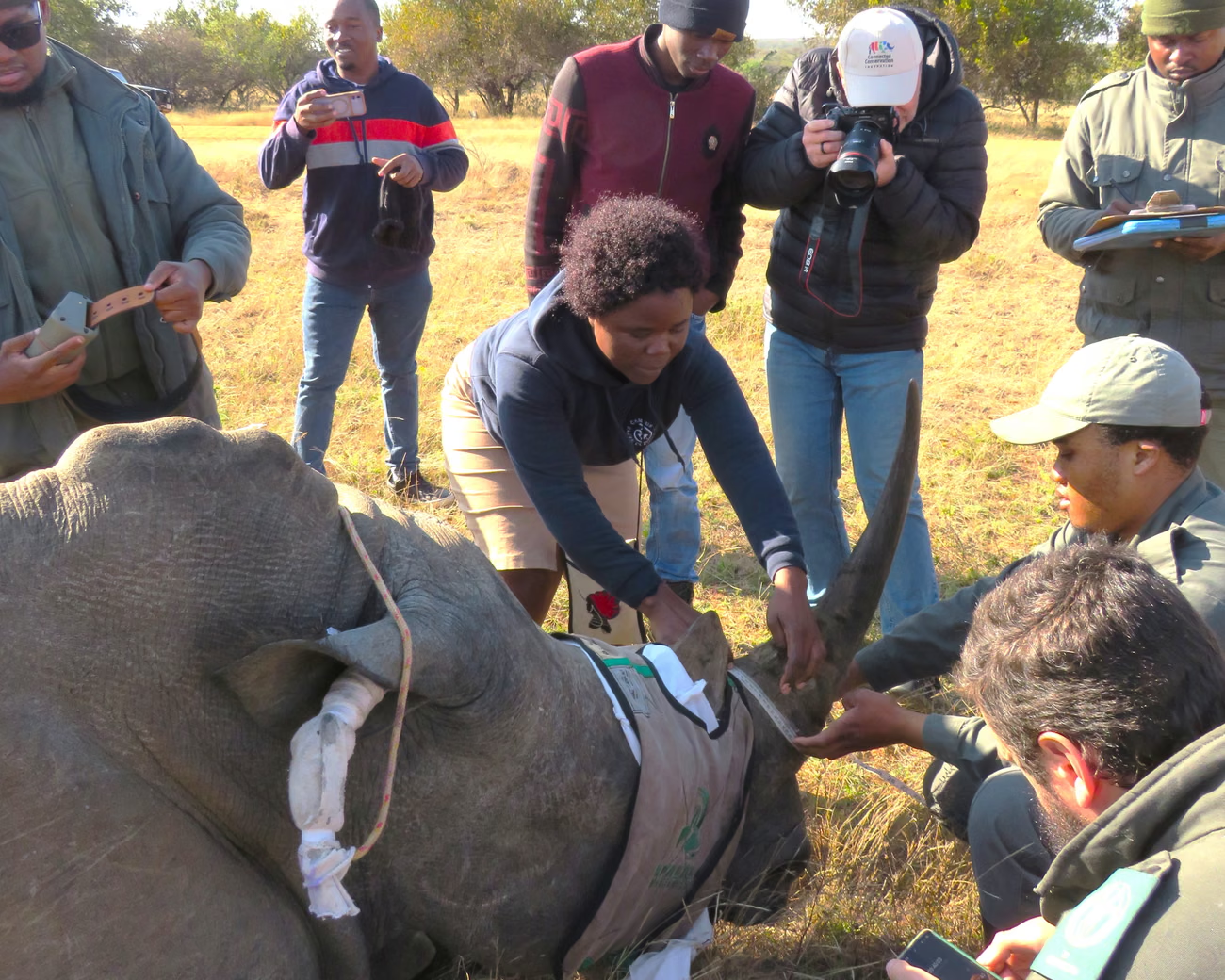
The technology is being put to practical use at Lapalala Wilderness in South Africa’s Limpopo province, where conservation professionals from 11 African countries have gathered for specialised training in the use of modern technology for wildlife protection.
The programme, organised by the Connected Conservation Foundation in partnership with Lapalala Wilderness, is designed to address a growing problem in conservation: having advanced equipment without enough people who know how to operate, maintain and integrate it effectively.
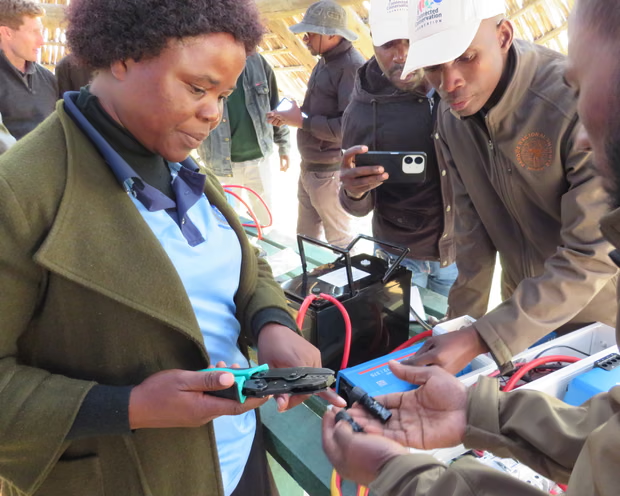
Participants have been learning how to use thermal drones, camera traps, sensors, communications systems, solar power and geographic information tools. They are also being trained to combine information from different systems so that rangers can respond more quickly to what is happening on the ground.
One demonstration showed the potential of the technology. During a night exercise, a thermal drone was deployed to search for a cheetah in the reserve. Within minutes, its heat sensor located the animal and its cubs despite the darkness, allowing the drone operator to send the location directly to field rangers.
For conservation workers operating across huge landscapes, such capabilities could significantly reduce the time needed to locate animals and respond to emerging threats.
Duncan Kanyakera, a conservation professional working across Kenya’s Tsavo landscape, said the technology could also help reduce conflict between people and wildlife.
In parts of Tsavo, elephants sometimes enter farms in search of water or food, damaging crops and creating tensions with nearby communities. Locating an elephant currently requires rangers to establish where the animal is and determine which direction it is moving before deploying a response team.
A drone could potentially locate the animal within minutes, giving rangers a much clearer picture of the situation and allowing them to intervene before the conflict escalates.
The technology is also being used to strengthen efforts against poaching and improve wildlife monitoring. Camera traps, tracking collars and platforms capable of bringing different streams of information together can give conservation teams a more detailed understanding of animal movements and threats.
Since 2015, the Connected Conservation Foundation says it has helped install technology systems across protected areas covering nearly 10 million hectares in Africa. The organisation believes parks using integrated technology can benefit from stronger security, improved biodiversity protection and better relationships with surrounding communities.
But conservationists say equipment alone cannot solve the challenges facing Africa’s protected areas.
That is why the training programme places such emphasis on technical skills. A damaged sensor, broken communications link or poorly configured camera system can leave an expensive conservation network effectively useless if there is no technician nearby who can repair it.
The programme has attracted professionals from countries including Kenya, Zimbabwe, Benin, Liberia, the Democratic Republic of the Congo and Madagascar. The participants completed an online programme before a smaller group was selected for the practical training in South Africa.
For some, the course has already changed how they view the possibilities of technology in their own parks.
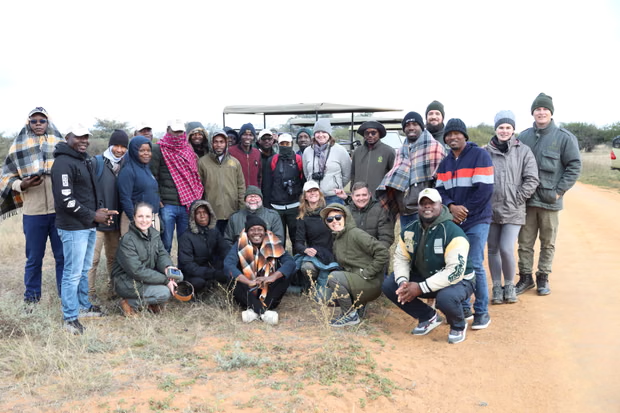
Zimbabwean conservation officials, for example, are examining ways to improve internet connectivity at remote stations and integrate existing sensors into a single operational system. Solar power is also being considered as a practical solution for remote facilities where access to conventional electricity is difficult.
The next stage will be ensuring that lessons learned in South Africa translate into lasting improvements at home.
The foundation plans to run another practical course in 2027 and provide internships or equipment support to some participants from the first programme.
As Africa’s protected areas face pressure from poaching, habitat loss, climate change and growing human wildlife conflict, conservationists are increasingly turning to technology not as a replacement for rangers, but as a force multiplier.
The drone flying silently over a reserve may be the most visible symbol of that change. Behind it, however, is a much larger technological shift involving people, data, connectivity and artificial intelligence.
For Africa’s conservation teams, the challenge now is to make those tools work reliably in some of the most remote and demanding environments on the continent.










Leave a comment