


By Benson Daniel
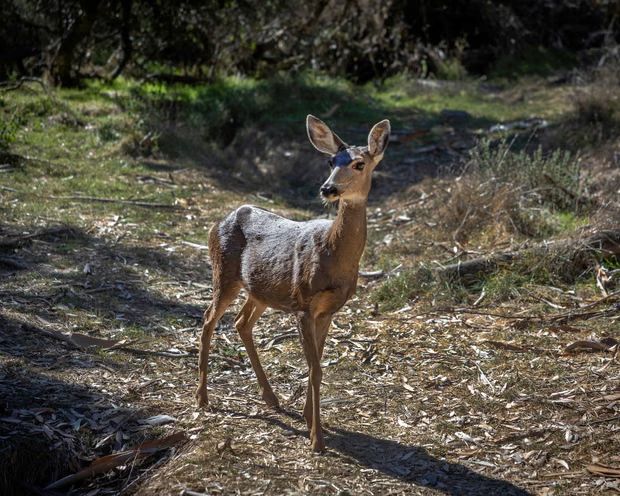
Nearly 2,000 mule deer on California’s Catalina Island could be killed under a controversial conservation programme after a judge declined to halt plans to remove the animals from the island.
The Catalina Island Conservancy, which manages about 88 per cent of the island, has argued that the deer are a non native species that are damaging the ecosystem by consuming native vegetation. A Los Angeles County judge has tentatively denied a request for an injunction that sought to prevent the programme from going ahead.
The decision allows the first stage of the removal programme to proceed while a wider legal challenge continues. About 200 deer are expected to be targeted during September and October as part of an initial assessment designed to test removal methods before the programme expands.
The long term plan is expected to take about four to five years and aims to eliminate the island’s non native mule deer population. The animals were introduced to Catalina for sport hunting in the late 1920s, when about 22 deer were brought to the island. Their population subsequently grew to roughly 2,000.
Conservation officials say the growing population has created serious environmental problems. The deer feed heavily on native shrubs and other vegetation, preventing some plants from regenerating and creating conditions in which invasive grasses can spread.
Those grasses are particularly concerning in an area increasingly exposed to wildfires. They can ignite more easily and spread flames faster than many native plants, potentially increasing the severity and speed of fires across the island.
Scientists supporting the programme also warn that continued grazing could damage habitat used by native wildlife, including the Catalina Island fox and other species found on the island.
The Conservancy says it considered alternatives before settling on large scale removal. Sterilisation was considered impractical for such a large population, while fencing would not provide a workable island wide solution. Decades of recreational hunting have also failed to bring the deer population under control.
The decision has nevertheless produced an unusual coalition of opponents. Animal advocates, some hunters, residents and other groups have challenged the plan, arguing that the deer should be managed through less drastic measures.
A petition opposing the eradication has attracted more than 32,000 signatures. Los Angeles County Supervisor Janice Hahn has also criticised the proposal and urged California Governor Gavin Newsom to intervene.
Opponents have challenged the state’s approval process as well as the ecological basis for eliminating the entire population. Their lawsuit argues that authorities failed to properly consider the environmental and social consequences of the project.
The Conservancy maintains that the deer removal is only one part of a much larger restoration programme. The initiative also includes restoring native plants, controlling invasive vegetation, protecting freshwater resources and improving the island’s resilience to climate change and wildfire.
The programme has been modified from an earlier proposal that generated particularly strong criticism because it involved shooting deer from helicopters. The current plan relies on trained wildlife professionals operating from the ground.
Residents will also have one final recreational hunting season later this year before the existing hunting system comes to an end.
Officials say deer meat recovered during the removal programme will be donated to the California condor recovery programme or to local tribal groups. Animals killed in accessible areas will be removed, while carcasses in difficult terrain may be left to decompose naturally.
The court battle is not yet completely over. The judge’s decision was a tentative ruling, with a final ruling on the injunction expected within 90 days.
For Catalina, the dispute represents a difficult conservation choice: whether removing an animal that has become familiar to generations of residents and visitors is justified to protect native species and an ecosystem under increasing pressure.
Supporters of the programme say the deer are an introduced species whose continued presence threatens plants and wildlife found nowhere else. Opponents see the planned eradication as an excessive response that could permanently change a familiar part of island life.









Leave a comment