


By Benson Daniel
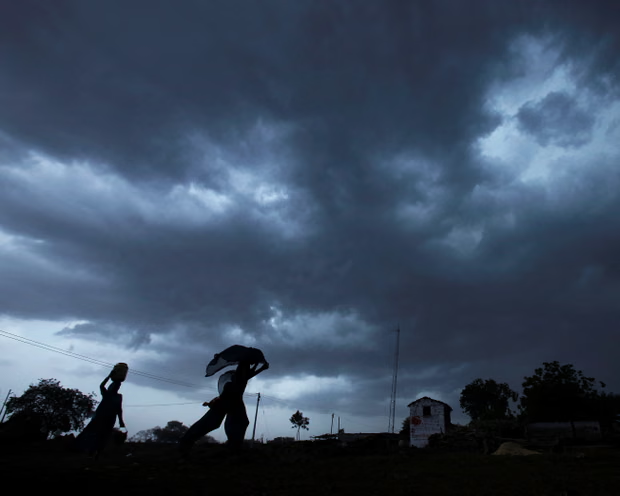
India is facing a more unpredictable monsoon season as a strengthening El Niño climate pattern reduces overall rainfall while increasing the risk of intense downpours and sudden flooding in parts of the country.
The developing El Niño, which has emerged over the Pacific Ocean, is expected to become one of the strongest such events in decades. Its influence is already being felt across India, where rainfall has become increasingly uneven, with longer dry spells interrupted by periods of exceptionally heavy rain.
El Niño is traditionally associated with weaker monsoon conditions in India. Warmer than normal waters in the central and eastern Pacific can alter atmospheric circulation, weakening the moisture carrying winds that normally bring rain to the Indian subcontinent.
That does not necessarily mean every part of the country will simply become dry.
Research into previous El Niño events has shown that while seasonal rainfall can decline, the rain that does arrive may be concentrated into fewer and more intense episodes. The result is a difficult combination of water shortages in some periods and flash floods in others.
Kerala provides a striking example of the contradiction. The southern state has recorded around 20 per cent less rainfall than normal, yet intense rainfall in early August triggered flash floods and landslides that killed 26 people.
The experience illustrates why average rainfall figures can sometimes conceal the risks faced by communities. A prolonged period without adequate rain can leave farmers and water managers struggling, but a sudden cloudburst can overwhelm drainage systems, rivers and slopes within hours.
The situation is becoming more concerning as El Niño strengthens. India’s Meteorological Department expects September rainfall to fall below 91 per cent of the long term average after August rainfall came in 16 per cent below normal. The weaker conditions could put further pressure on crops that are already at important stages of development.
Agriculture is particularly exposed because a large share of India’s farmland remains dependent on rainfall. Extended dry spells can reduce soil moisture and damage crops, while intense bursts of rain can wash away topsoil, flood fields and cause additional losses.
The changing rainfall pattern also presents challenges for reservoirs and urban infrastructure. Heavy rain arriving over a short period may generate flooding without providing the steady rainfall needed to replenish groundwater and maintain water supplies through drier periods.
Scientists say the relationship between El Niño and India’s monsoon is not straightforward. Other atmospheric and oceanic systems influence where rainfall occurs and how intensely it falls, meaning the effects can vary considerably between regions and from one year to another.
Climate change is adding another layer of uncertainty. Rising temperatures can increase the atmosphere’s capacity to hold moisture, potentially contributing to more intense rainfall when suitable weather systems develop. This can occur alongside longer dry periods, producing increasingly volatile rainfall patterns.
The current El Niño is expected to strengthen further during September and peak later in 2026, meaning its influence could become more pronounced even as India’s main monsoon season approaches its end.
For India, the immediate concern is therefore not simply whether the country receives enough rain. The timing, location and intensity of that rainfall could prove just as important.
Farmers, water authorities and emergency agencies will have to prepare for a season in which drought like conditions and destructive rainfall can exist side by side.
The emerging pattern is a reminder that a lower national rainfall total does not automatically translate into lower flood risk. In an increasingly volatile climate, less rain overall can still mean more dangerous rain when the clouds finally open









Leave a comment