



By Benson Daniel
In one of the coldest corners of the planet, an unusual patch of open water has long provided a lifeline for wildlife and the Inuit communities that depend on the Arctic environment.
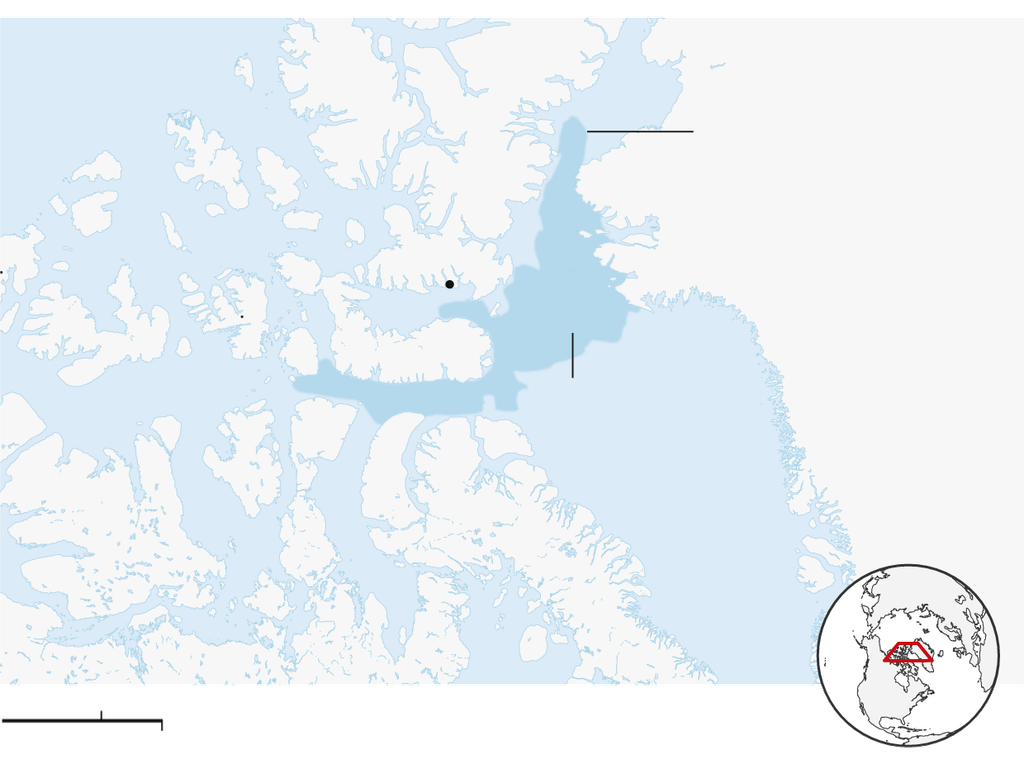
Known as Sarvarjuaq, meaning “the place that never freezes”, the region stretches across about 85,000 square kilometres between northern Canada and Greenland. Scientists now fear that climate change could produce an unexpected threat: not less ice, but more of it.
The area is also known as the North Water and Pikialasorsuaq, or “the great upwelling”. Unlike much of the surrounding Arctic, it contains a large polynya, an area of open water that persists through the winter.
That open water makes the region exceptionally productive.
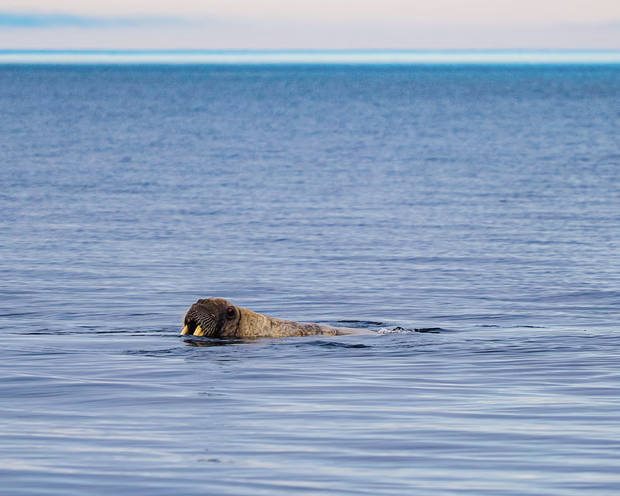
Sunlight reaching the exposed surface helps trigger algae blooms that support a wider marine food chain. Seals, walruses and whales gather in the area, while millions of seabirds have historically travelled there to feed and breed. Polar bears are also attracted by the abundance of marine life.
For Inuit communities, however, the significance of Sarvarjuaq goes well beyond its ecological value.
The waters form part of a landscape that has supported traditional livelihoods for generations. Hunting, fishing and travel have all depended on an intimate understanding of sea ice, wildlife movements and seasonal changes.
That knowledge is becoming increasingly important as the climate changes.
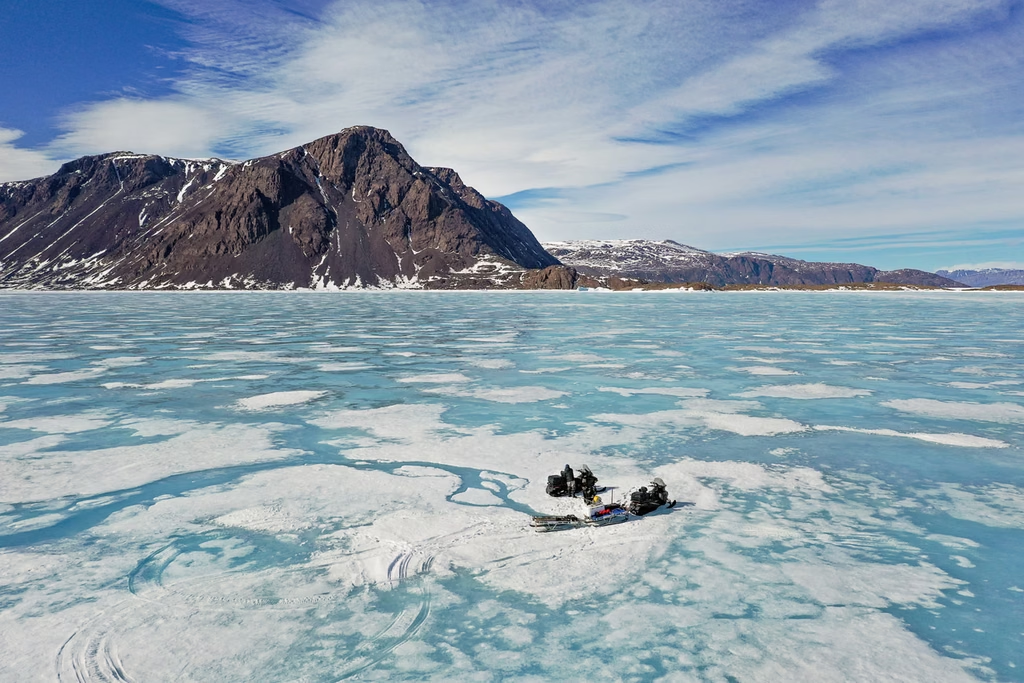
Terry Noah, an Inuk from Grise Fiord in Nunavut, is working with scientists to monitor the changing waters around Jones Sound. Using specialised equipment lowered through holes in the sea ice, Noah collects data that is transmitted to researchers, including Andrew Hamilton of the University of Alberta.
The work is intended to establish a clearer picture of how the region is changing before some of those changes become difficult to reverse.
One of the most unusual problems involves an ice arch in the Nares Strait.
The crescent shaped formation acts like a natural barrier, trapping sea ice and preventing it from drifting south into the North Water. By limiting the amount of ice entering the region, the arch helps maintain the open water that gives Sarvarjuaq its ecological importance.
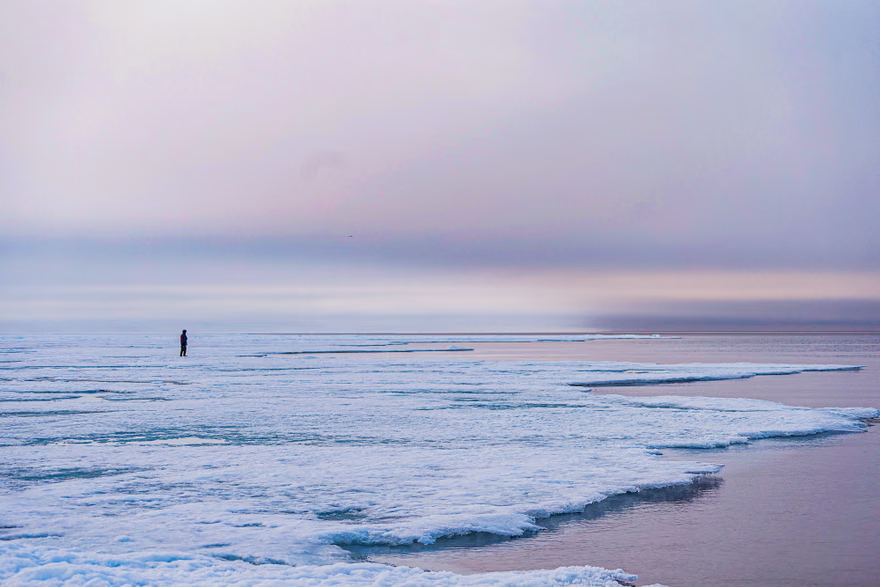
But the arch has become increasingly unreliable.
Nearly two decades ago, it failed to form for the first time in recorded observations. In recent years, it has frequently failed to develop, allowing more sea ice to move south and cover the polynya during periods when it would traditionally remain open.
That creates a striking climate paradox.
Global warming is reducing sea ice across much of the Arctic, yet in Sarvarjuaq it can disrupt the natural mechanism that keeps water open. The disappearance of the ice arch can therefore allow more ice to accumulate in the very area where open water is crucial to the ecosystem.
Scientists are racing to understand what that could mean for wildlife and communities.
The changes could affect the timing of algae blooms, the availability of food for marine animals and the movements of species that depend on the polynya during the harsh Arctic winter.
The implications extend to traditional Inuit activities as well. Changes in the location and stability of sea ice can make travel more difficult and alter established hunting patterns, increasing the importance of local observations alongside scientific monitoring.
The effort to protect Sarvarjuaq is also becoming a political issue.
A commission established to examine the future of the region recommended in 2017 that Canada and Greenland establish an Inuit managed protected area. Canada moved forward this year by designating the Sarvarjuaq marine protected area on its side of the region.
Greenland, however, has not moved at the same pace. Some Inuit representatives have urged caution, warning that conservation policies must protect Indigenous rights rather than impose restrictions without adequate local participation.
That debate is unfolding as the physical environment continues to change.
Researchers and Inuit observers are therefore trying to build a long term monitoring system that combines modern scientific instruments with traditional knowledge. The goal is not simply to document the decline or expansion of ice, but to understand how the entire ecosystem responds.
For Noah, the work represents preparation for an uncertain future.
The Arctic is changing rapidly, but Sarvarjuaq demonstrates that climate change does not always produce straightforward outcomes. A warming planet can mean disappearing ice in one location and an unexpected buildup of ice in another.
For a region whose identity, wildlife and human communities are tied to a rare patch of open water, that distinction could determine whether the “place that never freezes” can continue to live up to its name.










Leave a comment