


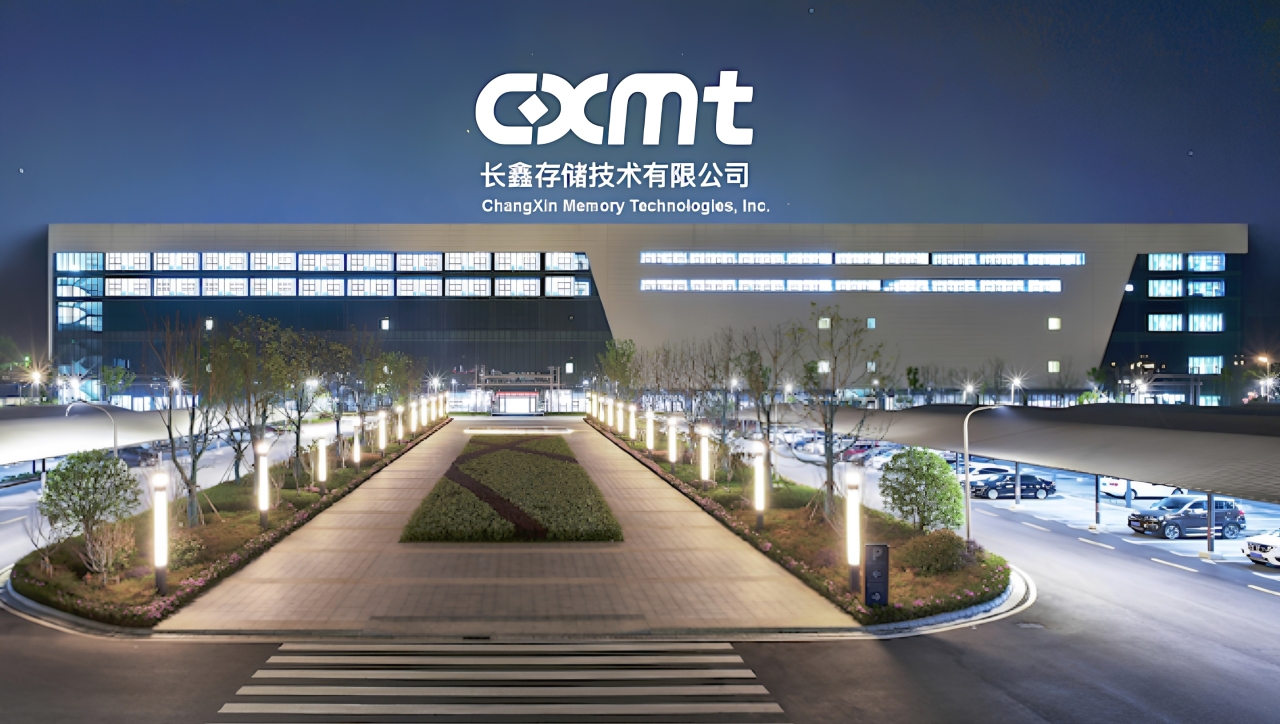
China’s largest memory chipmaker by market value, ChangXin Memory Technologies (CXMT), is considering building a second memory chip manufacturing plant in Beijing and is holding early stage financing talks with a government backed technology manufacturing hub, according to two sources familiar with the matter.
The proposed expansion comes as CXMT seeks to increase production capacity to meet rising global demand for memory chips driven by artificial intelligence infrastructure, data centres and consumer electronics. The move also reflects growing competition among Chinese local governments to attract strategic semiconductor investments.
The expansion follows CXMT’s US$8.6 billion initial public offering last month, the largest mainland Chinese semiconductor listing on record, providing the company with fresh capital to accelerate its growth plans.
Reuters previously reported that CXMT is already constructing new manufacturing facilities in Shanghai and Hefei while also holding discussions with authorities in other regions regarding additional plants. When completed, those projects could increase the company’s production capacity to more than 600,000 wafers per month, roughly doubling its current output.
The proposed Beijing facility would be located in Yizhuang, about 20 kilometres southeast of central Beijing, where CXMT already operates a 12 inch wafer fabrication plant producing dynamic random access memory (DRAM) chips, the sources said.
The company is seeking at least 60 million yuan (about US$8.9 million) in financial support from the Beijing Economic Technological Development Area, commonly known as the Yizhuang Development Zone. Other state owned technology companies have also expressed interest in participating in the financing, according to the sources.
The discussions remain at an early stage, and the size and structure of any funding package could still change. It is not yet clear whether the support would come directly from the development zone’s administrative authority or through its state-backed investment vehicles.
The planned production capacity and total investment for the new facility have not been disclosed. However, constructing a leading edge DRAM fabrication plant typically costs more than US$10 billion, industry analysts estimate.
CXMT currently operates two 12 inch DRAM fabrication plants in Hefei and one in Beijing, each capable of producing approximately 100,000 wafers per month, according to the sources.
The company has become a central pillar of China’s efforts to build a self sufficient semiconductor industry and reduce dependence on foreign technology amid intensifying competition with the United States over advanced technologies, including artificial intelligence.
Although CXMT is now the world’s fourth largest DRAM producer, it remains significantly smaller than industry leaders Samsung Electronics, SK Hynix, and Micron Technology, which together accounted for nearly 90% of the global DRAM market during the first quarter, according to Counterpoint Research.
Within China, however, CXMT’s growing market influence has enabled it to increase prices for major domestic customers, including Huawei, Reuters reported last month.
The company’s rapid expansion has been closely associated with the so called “Hefei model,” under which the capital of Anhui Province has used extensive state investment to develop strategic technology companies.
Beijing and Shanghai have also provided CXMT with funding and policy support as both cities compete to secure a greater share of the economic and technological benefits generated by China’s fast growing semiconductor sector.
CXMT’s Beijing manufacturing operation, run by Changxin Jidian, was established in 2020 with backing from E-Town Capital, the investment arm of the Yizhuang Development Zone, and its affiliate Beijing E-Town Technology, according to corporate records.
The Yizhuang Development Area has emerged as one of China’s leading technology manufacturing hubs, hosting companies including Semiconductor Manufacturing International Corporation (SMIC), Naura Technology, and Xiaomi. The zone is also positioning itself as a centre for robotics and artificial intelligence development, having hosted what organisers described as the world’s first humanoid robot half marathon last year to showcase embodied AI technologies.









Leave a comment