


By Benson Daniel
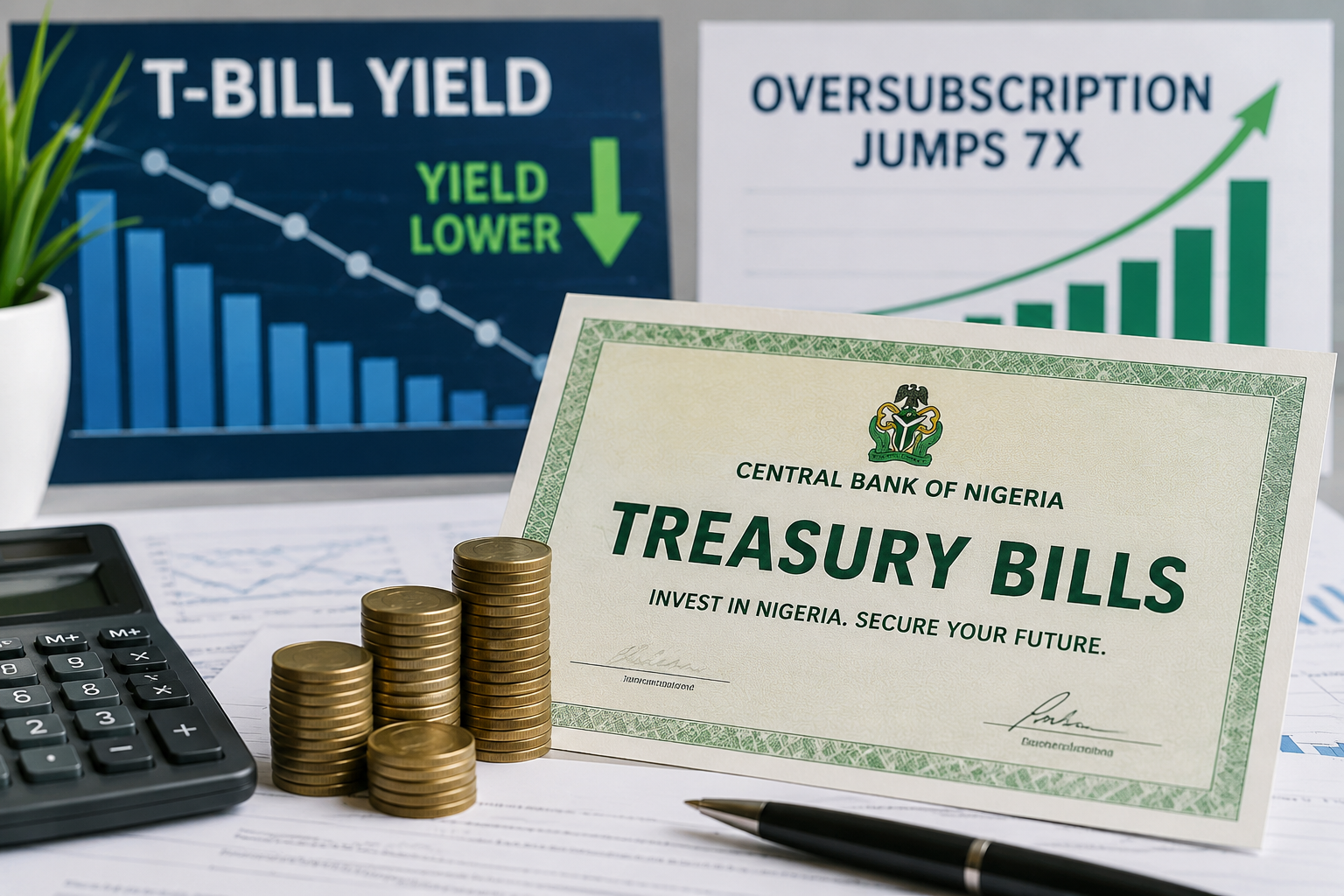
The Central Bank of Nigeria (CBN) has reduced the yield on Treasury Bills following overwhelming investor demand that pushed the latest auction to an oversubscription level of nearly seven times the amount offered.
The development reflects growing appetite for government securities as investors continue to seek relatively safe investment options amid easing inflation expectations, abundant liquidity in the financial system and changing monetary conditions.
At the latest Treasury Bills auction, total subscriptions significantly exceeded the value of securities on offer, prompting the apex bank to allot a substantial portion of bids while lowering stop rates across various maturities. The strong demand underscores renewed confidence in short term government instruments despite declining yields.
Financial market analysts attributed the surge in subscriptions to excess liquidity in the banking sector, with many institutional investors, pension fund managers and asset managers redirecting funds into Treasury Bills after recent improvements in macroeconomic indicators. The declining yields also suggest that investors are increasingly willing to accept lower returns in exchange for the security and stability offered by government backed instruments.
The reduction in Treasury Bills yields is expected to lower the Federal Government’s domestic borrowing costs while supporting efforts to manage public debt more efficiently. Economists say cheaper borrowing costs could create fiscal space for increased investment in infrastructure and other priority sectors without significantly raising debt servicing expenses.
The outcome of the auction also reflects the impact of the CBN’s monetary policy measures aimed at maintaining stability in the financial system. Although benchmark interest rates remain elevated, improving market confidence and moderating inflation have encouraged stronger participation in fixed income investments.
For investors, lower Treasury Bills yields may prompt a gradual shift toward alternative investment opportunities such as corporate bonds, equities and commercial papers in search of higher returns. Market participants believe this could stimulate activity on the Nigerian Exchange as investors rebalance their portfolios.
Despite the decline in yields, Treasury Bills remain one of the most attractive low risk investment instruments in Nigeria because they offer guaranteed returns backed by the Federal Government. Analysts expect demand to remain strong in the coming months, particularly if inflation continues to ease and liquidity conditions remain favourable.
Market observers will now closely monitor the CBN’s next auction and future monetary policy decisions to determine whether the downward trend in yields will continue or reverse in response to inflation, exchange rate movements and broader economic conditions.













Leave a comment