


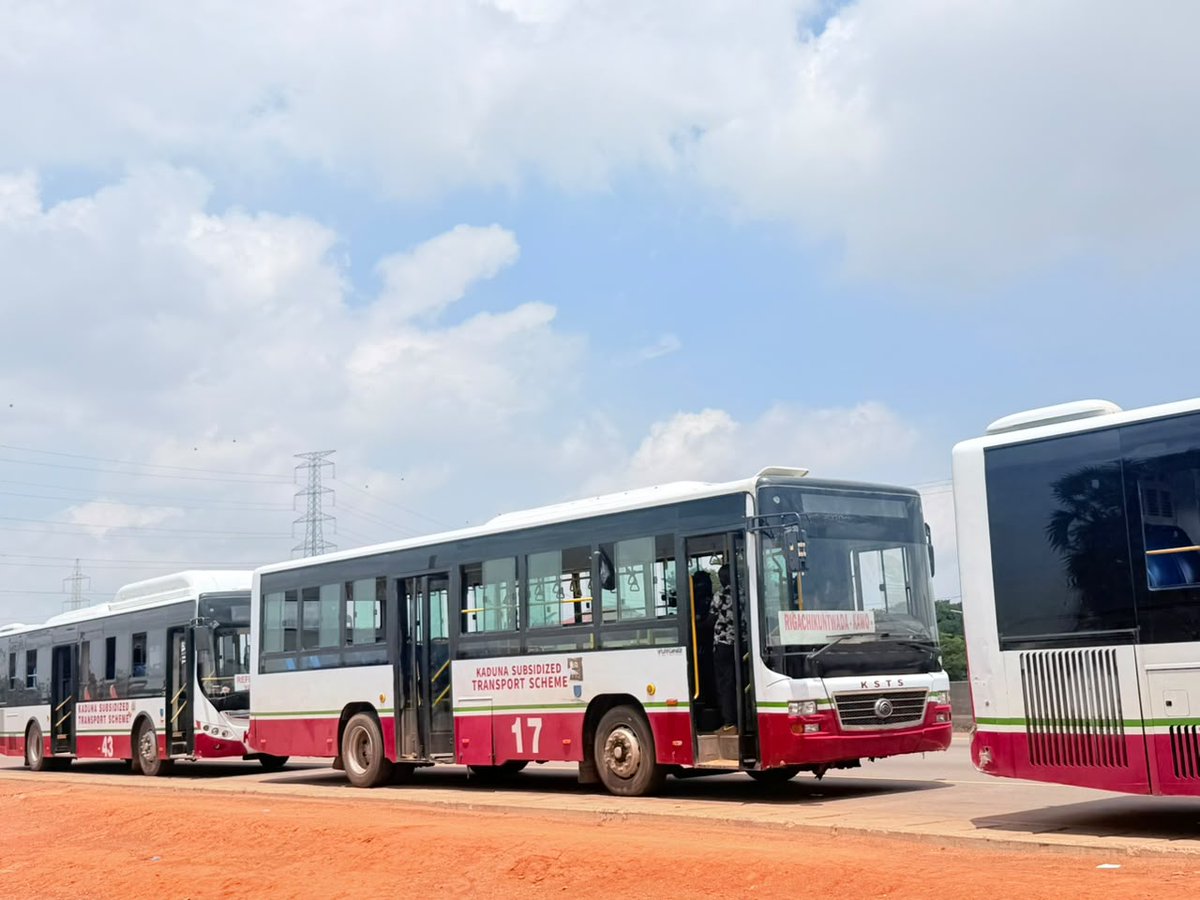
The Kaduna State Government says no fewer than 3.2 million residents have benefited from its free Compressed Natural Gas (CNG) mass transit scheme, introduced to reduce transportation costs and ease commuting across the state.
The Acting Director General of the Kaduna State Transport Regulatory Authority (KADSTRA), Engr. Inuwa Ibrahim, disclosed this during an inspection of some newly constructed bus stops in Kaduna.
According to a report by VON, Ibrahim said the transport initiative was one of the major infrastructure projects of Governor Uba Sani’s administration, designed to provide affordable, safe and efficient public transportation for residents.
He said the government was constructing 200 modern bus stops across the state to support the operation of 100 CNG powered buses currently providing free transportation services.
“We are at one of the CNG transport bus stops. So far, about 200 bus stops are under construction across the state to support the operation of the 100 CNG buses already deployed,” he said.
According to him, the buses operate daily from morning until evening, conveying passengers free of charge along designated routes.
Ibrahim said one of the major routes, running from Rigachikun through Kawo to Sabon Tasha, serves more than 30 communities and has improved residents’ access to affordable transportation.
He added that the scheme had saved commuters more than ₦3.5 billion in transportation costs within one year.
The KADSTRA acting director general said the project was progressing steadily, with more than 80 per cent of the bus stops already completed. He added that the remaining facilities would be delivered soon.
He further disclosed that the transport system had been fully digitalised to improve operational efficiency and security.
“The buses are equipped with Intelligent Transport System (ITS) devices, making them fully computerised.
“Through our control centre, we can monitor the movement of every vehicle in real time as well as activities taking place at the bus stops for effective management and security purposes,” he said.
Ibrahim added that the digital monitoring system would improve service delivery, enhance passenger safety and strengthen oversight of the state’s public transportation network.






Leave a comment