


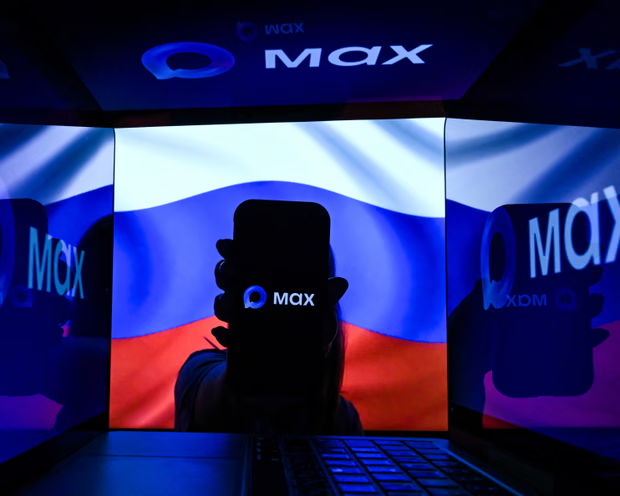
Russia’s state-backed messaging platform MAX is facing growing scrutiny over its privacy and surveillance capabilities, with researchers warning that the app’s design could give authorities extensive access to users’ digital activity.
MAX, developed by VK, has rapidly expanded across Russia as the government promotes it as a domestic alternative to foreign messaging platforms. Its growth has accelerated alongside restrictions on services such as WhatsApp and Telegram, encouraging millions of users to move their communications and other digital activities onto the platform.
The concerns extend beyond ordinary messaging. MAX is designed as a “super-app”, allowing users to access multiple services and mini-applications from within one platform. Researchers studying its architecture found that the main application can interact extensively with those mini-apps, including accessing their local storage, controlling network traffic and injecting code into their operating environment.
The researchers said these capabilities could theoretically allow a compromised or malicious super-app to interfere with users’ activities without obvious signs of intrusion. Their study used MAX as a case study to demonstrate broader security risks associated with the super-app model.
Privacy concerns have also centred on the information MAX can collect. Reports have identified data such as IP addresses, activity times, contacts, device information and other metadata among information associated with the service. Questions have been raised about the circumstances in which such information could be made available to government authorities.
European Union documents have separately described MAX as a state-supported application whose development was supervised by Russia’s Federal Security Service, or FSB. The documents also cite concerns that the application can gather information about installed applications, address books and users’ locations.
The Russian authorities have presented the wider push for domestic digital platforms as part of efforts to strengthen national digital sovereignty and security. However, critics and digital-rights researchers argue that concentrating messaging, payments, identification and other services within a state-backed platform creates significant privacy risks.
MAX has already become deeply embedded in Russia’s digital environment. Its owner reported more than 85 million daily users earlier this year, while the government has continued integrating the platform with other public and commercial services.
The growing dependence on MAX means the debate is no longer limited to the security of a messaging application. It has become part of a wider discussion about digital privacy, government access to personal information and the balance between national security and individual control over online communications.










Leave a comment