


By Benson Daniel
Stakeholders in Nigeria’s oil and gas industry have stressed the need for stronger pipeline surveillance and protection as the country seeks to attract about $50 billion in upstream investments between 2026 and 2030.
The call follows the Nigerian Upstream Petroleum Regulatory Commission’s projection that the oil and gas sector could attract significant fresh investments over the next four years, provided the operating environment continues to improve.
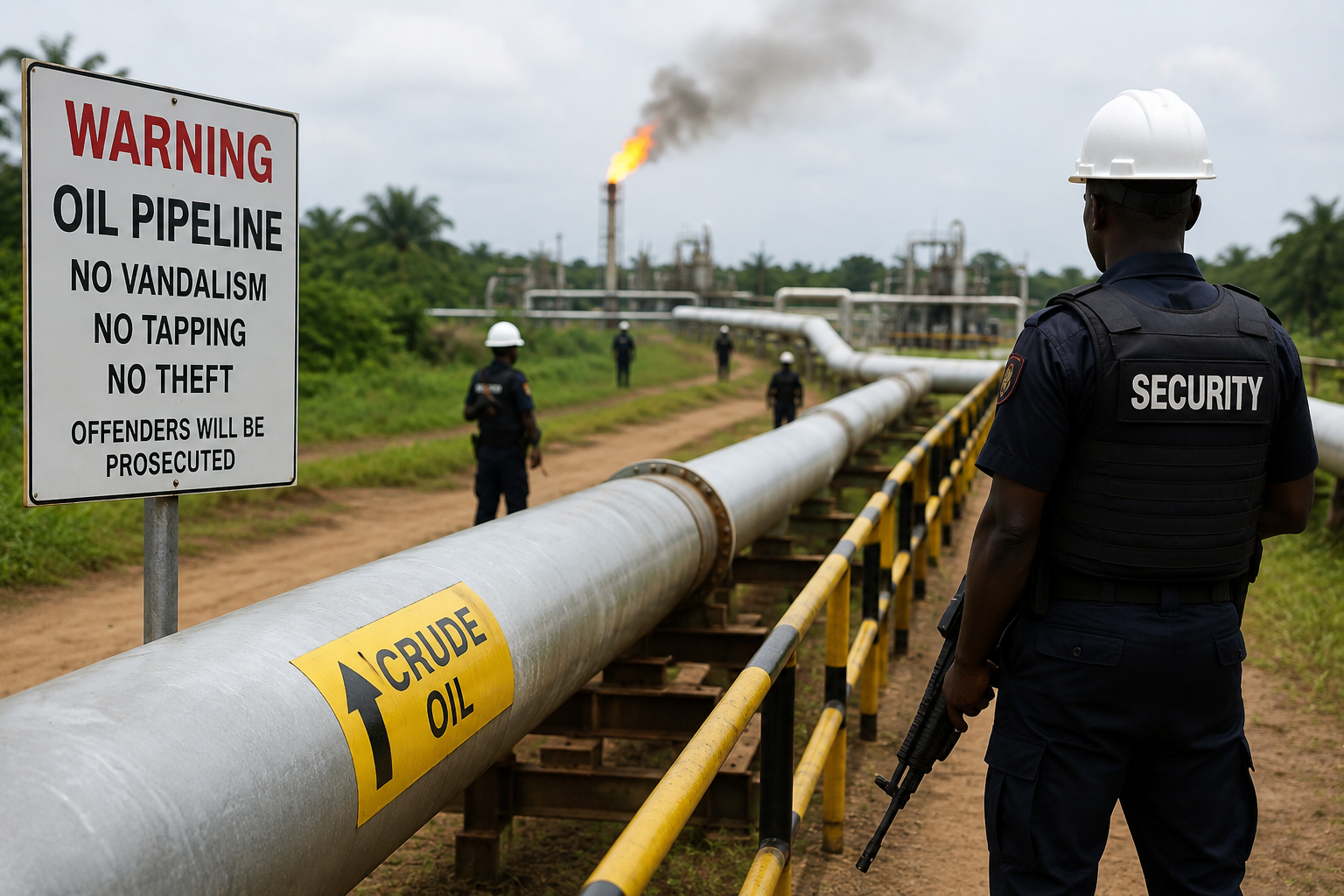
Industry stakeholders said protecting oil and gas infrastructure would be critical to achieving the investment target, particularly as pipeline vandalism, crude oil theft and insecurity have historically discouraged investors and disrupted production.
They noted that investors require confidence that facilities and pipelines connecting oil fields to terminals and other processing infrastructure can operate safely and consistently without repeated attacks or disruptions.
Effective surveillance, they said, would therefore not only protect existing infrastructure but also support higher crude oil production and provide greater certainty for companies considering long term investments in Nigeria’s upstream sector.
Pipeline vandalism and crude theft have remained major challenges for Nigeria’s petroleum industry, resulting in production losses and increased operating costs for oil companies. The problems have also affected government revenue and reduced the volume of crude available for export and domestic refining.
Stakeholders argued that the protection of pipelines should be treated as an economic priority rather than solely as a security responsibility. They said stronger collaboration among regulators, security agencies, operators and host communities would be required to safeguard critical infrastructure.
The industry has in recent years recorded improvements in crude production following increased surveillance and collaboration with security contractors and local communities. The gains have contributed to higher output and improved prospects for investment in new and existing oil fields.
The Petroleum Industry Act has also created a new regulatory framework aimed at improving transparency, attracting investment and strengthening the efficiency of Nigeria’s petroleum industry.
Stakeholders said maintaining the momentum would require sustained investment in infrastructure protection, technology and monitoring systems.
They also called for greater use of modern surveillance technologies, including drones, satellite monitoring and other digital tools capable of detecting suspicious activities along extensive pipeline networks.
Beyond security, the stakeholders said Nigeria must continue addressing other factors affecting upstream investment, including regulatory certainty, fiscal competitiveness, contracting processes and the availability of infrastructure.
The projected $50 billion investment could provide significant economic benefits if successfully realised. Increased investment would support exploration and production activities, create employment, generate government revenue and strengthen the country’s position in the global oil and gas market.
Higher upstream activity could also increase crude supply to domestic refineries, helping to strengthen the local petroleum value chain and reduce the need for imported refined products.
For Nigeria to fully benefit from the expected investment, stakeholders said the country must provide an environment where investors can operate with confidence and protect their assets over the long term.
They therefore urged the government and relevant agencies to maintain the momentum in pipeline surveillance while ensuring that communities in oil producing areas are actively involved in protecting critical infrastructure.
The stakeholders said a sustained reduction in crude theft and pipeline vandalism would send a strong signal to international and domestic investors that Nigeria is serious about rebuilding its upstream sector and unlocking the estimated $50 billion investment opportunity.









Leave a comment