


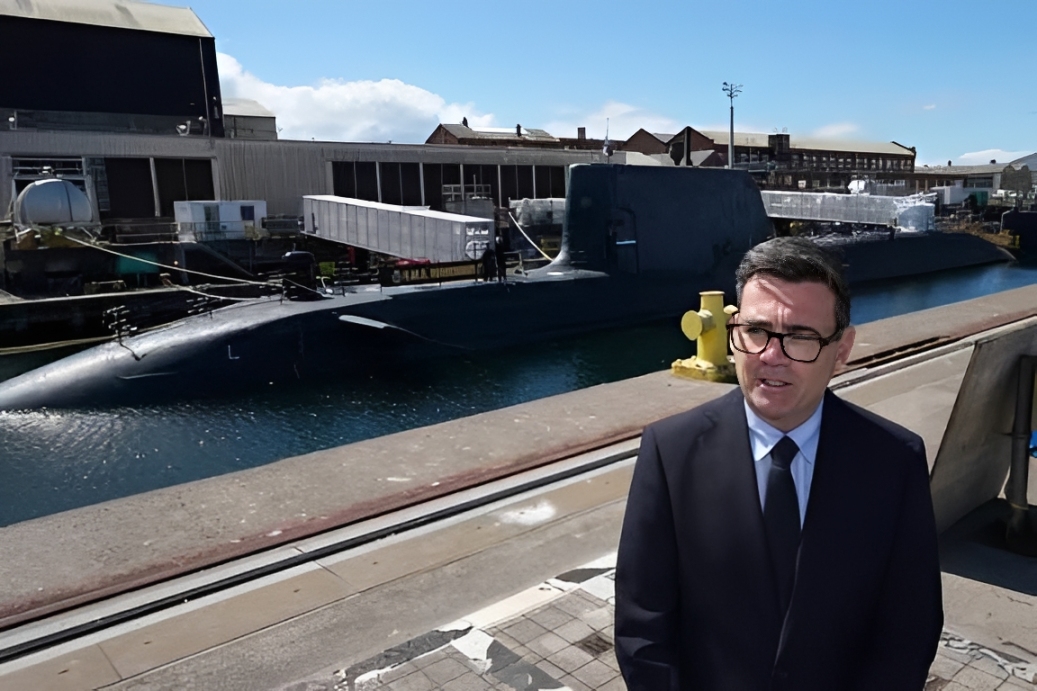
The British government has announced an £8.4 billion (€9.8 billion) investment to advance the next phase of the Dreadnought Class nuclear submarine programme, reinforcing the United Kingdom’s long-term nuclear deterrent and supporting tens of thousands of jobs across the country.
According to the UK government, defence contractor BAE Systems will receive £5.9 billion (€6.9 billion) of the funding, with the remainder allocated to companies across the wider defence supply chain involved in the programme.
The Dreadnought Class submarines are being developed to replace the Royal Navy’s ageing Vanguard Class fleet and will form the backbone of Britain’s continuous at-sea nuclear deterrent for decades to come.
Prime Minister Andy Burnham said the investment would strengthen national security while creating economic opportunities, describing it as a major commitment that will support jobs, apprenticeships and Britain’s industrial base for years to come.
The government said the programme is expected to support approximately 47,000 jobs and apprenticeships over the next decade, with work taking place across shipyards, engineering facilities and manufacturing sites throughout the United Kingdom.
The first submarine in the fleet, HMS Dreadnought, is expected to complete sea trials and enter service with the Royal Navy in the early 2030s.
Defence Secretary Wes Streeting said the funding demonstrates the government’s commitment to delivering the next generation of Britain’s nuclear deterrent while supporting domestic industry and maintaining sovereign defence capabilities.
The investment forms part of the government’s broader Defence Investment Plan, which allocates more than £63 billion over the next four years for Britain’s nuclear deterrent. The funding also supports the development of future attack submarines under the AUKUS security partnership involving the United Kingdom, Australia and the United States.
The Dreadnought programme is regarded as one of Britain’s largest and most complex defence projects, with the submarines expected to remain in service well into the second half of the century.











Leave a comment