


Nigeria has made progress in expanding access to financial services, but a significant gap remains between the number of adults who save formally and those who can obtain loans through regulated financial institutions.
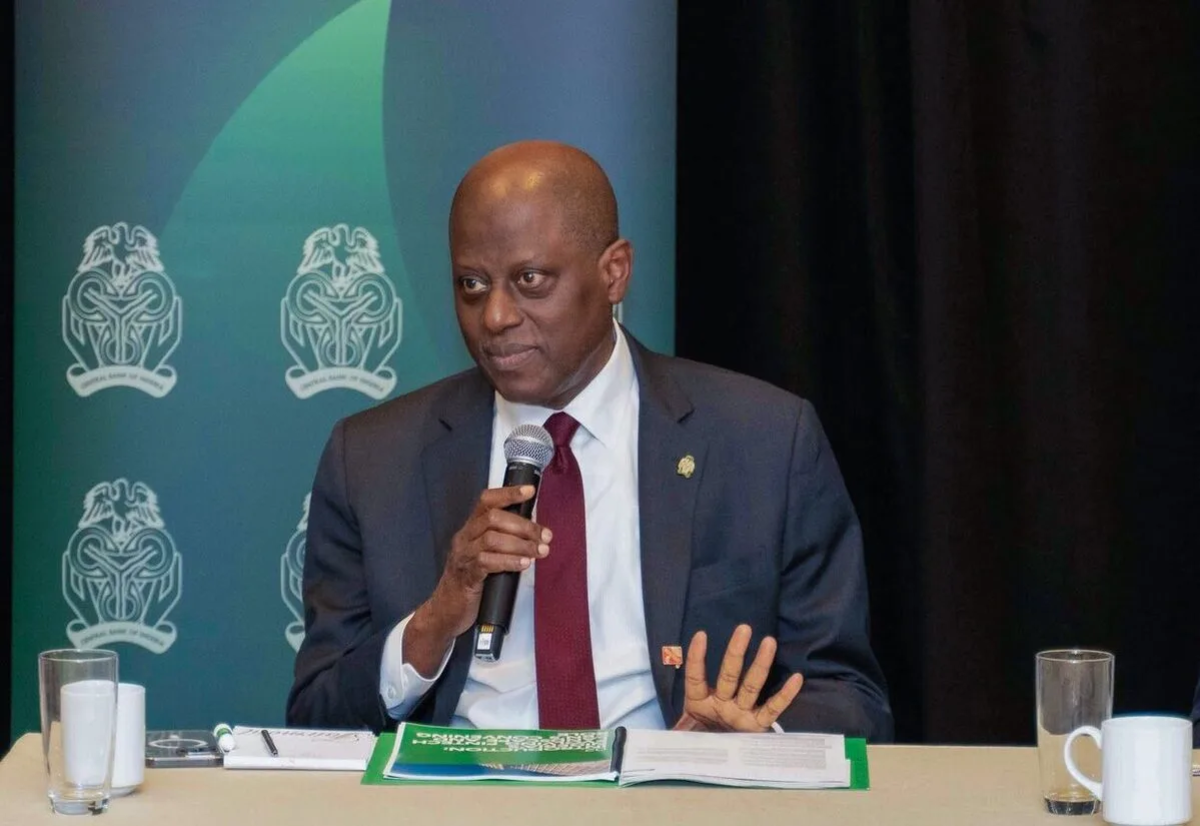
Central Bank of Nigeria (CBN) Governor Olayemi Cardoso disclosed that 53% of Nigerian adults now save through formal financial channels, while only 10% borrow through formal sources.
The figures, drawn from the 2026 Access to Financial Services Survey, highlight a major challenge facing Nigeria’s financial inclusion efforts: millions of people are participating in the financial system, but relatively few can use it to secure financing for personal needs or business expansion.
Cardoso presented the findings at the 61st Annual Bankers’ Dinner of the Chartered Institute of Bankers of Nigeria (CIBN) in Lagos on November 27, 2026.
He argued that the next phase of financial inclusion should focus on making financial services more useful in people’s daily lives rather than measuring progress mainly through account ownership and access to digital payments.
Financial Access Has Expanded, but Credit Remains Limited
The 2026 survey shows that approximately 79% of Nigerian adults use formal or informal financial services, while 64% access digital financial services.
Formal savings have also increased from 38% in 2023 to 53% in 2026, representing a 15-percentage-point improvement.
Formal borrowing rose from 6% to 10% over the same period, a four-percentage-point increase.
Although both indicators recorded improvements, the difference between savings and borrowing remains substantial.
The figures suggest that many Nigerians can deposit money, receive transfers and make electronic payments, but accessing credit through banks and other formal financial institutions remains considerably less common.
For small businesses, this gap can affect their ability to purchase inventory, expand operations, acquire equipment and manage periods of weak cash flow.
Small Businesses Struggle to Turn Transactions into Credit
Cardoso illustrated the challenge using the example of a market trader in Kano who receives approximately 200 transfers daily, saves consistently and has developed a viable business.
He argued that such a trader should be able to use her financial transaction history and savings record to demonstrate her business activity and qualify for suitable financing.
Under this approach, financial inclusion would extend beyond receiving electronic payments to providing access to financial products that support business growth.
For many small businesses, the difficulty is not necessarily the absence of commercial activity but the ability to demonstrate creditworthiness in a form that financial institutions recognise.
Limited collateral, inadequate financial records and concerns about repayment risks can make it difficult for smaller enterprises to obtain bank financing.
Cardoso acknowledged that not every household needs to borrow, but maintained that businesses with viable prospects should have access to appropriate financing.
Stronger Banks Must Translate into Better Lending
The CBN governor’s comments also place greater responsibility on Nigerian banks following the completion of the banking sector recapitalisation exercise.
The exercise, introduced in March 2024, concluded earlier in 2026, with 33 banks meeting the revised minimum capital requirements and approximately ₦4.65 trillion raised in fresh capital.
The recapitalisation strengthened banks’ capital positions, but Cardoso noted that stronger balance sheets alone would not automatically make loans cheaper or easier to obtain.
He identified inflation, elevated credit risks and weaknesses in credit assessment, collateral arrangements and enforcement infrastructure as factors affecting the cost and availability of financing.
This means that improving access to credit will require more than additional bank capital. Financial institutions must also strengthen their ability to evaluate borrowers, manage lending risks and develop products suited to different categories of customers.
Fintechs and Digital Platforms Have a Growing Role
Nigeria’s financial system increasingly includes fintech companies, payment service providers, mobile money operators and traditional banks.
Cardoso said many young Nigerians and small business owners now interact with financial services through mobile applications, payment platforms and neighbourhood agents rather than physical bank branches.
He argued that fintech companies and payment providers should complement traditional banks by improving customer access, competition and financial innovation.
The challenge is to ensure that the growing volume of digital transactions creates opportunities for more people to access useful financial products, including savings facilities and appropriate credit.
For Nigeria’s small businesses, the ability to convert reliable transaction histories into financing could become an important part of expanding access to formal credit.
Financial Inclusion Faces a New Test
The latest figures show that Nigeria’s financial inclusion challenge is changing.
Expanding access to accounts, digital payments and savings services remains important, but the next measure of progress will increasingly depend on whether individuals and businesses can use those services to improve their financial positions.
For households, this includes saving securely, managing unexpected expenses and accessing suitable financial products.
For businesses, it means obtaining financing that supports production, expansion and employment.
The gap between the 53% of adults saving formally and the 10% borrowing through formal channels therefore raises an important question for the banking industry: how effectively is the financial system converting the money Nigerians save and the transactions they make into productive economic opportunities?
Closing that gap will be an important test of whether Nigeria’s expanding financial system can deliver broader economic benefits beyond digital access and account ownership.











Leave a comment