


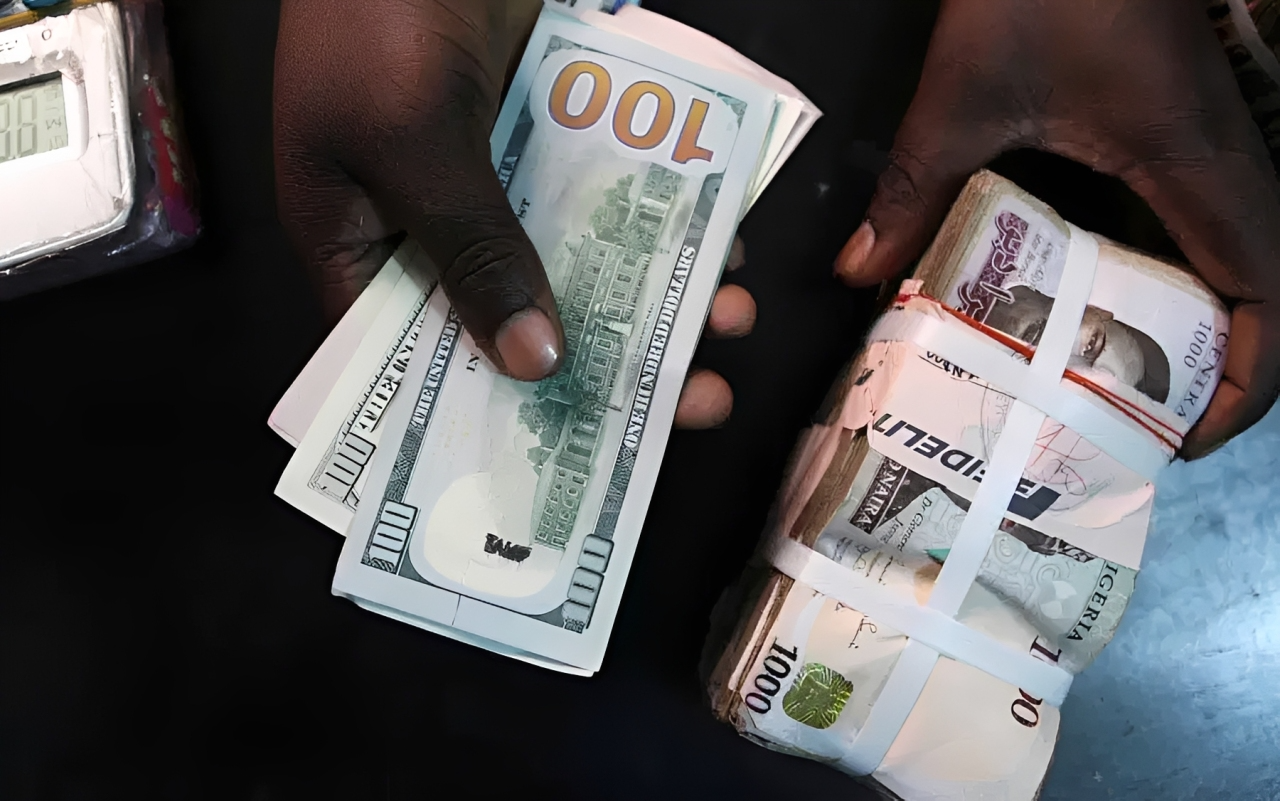
Nigeria’s foreign exchange market is showing fresh signs of potential relief after the Central Bank of Nigeria (CBN) reportedly increased weekly dollar cash allocations available to licensed Bureau De Change operators from $150,000 to $1 million through authorised dealer banks.
The intervention is expected to improve dollar availability in the retail foreign exchange market, ease pressure on the parallel-market segment and support efforts to stabilise the naira.
The development comes as the local currency recorded a modest appreciation at the official foreign exchange market on Wednesday, November 25, following nearly two weeks of depreciation.
Data published by the CBN showed that the naira strengthened to ₦1,392.25 per dollar at the Nigerian Foreign Exchange Market, compared with ₦1,394.12 recorded on Tuesday.
The improvement represented a gain of ₦1.87 against the dollar, bringing a temporary halt to the currency’s recent downward movement.
However, the parallel market remained unchanged at approximately ₦1,450 per dollar, highlighting the continuing difference between official and informal foreign exchange rates.
CBN Expands Dollar Supply to BDC Operators
Under the reported new arrangement, authorised dealer banks are permitted to sell up to $1 million in dollar cash weekly to licensed BDC operators.
The increase is substantial compared with the $150,000 weekly purchase limit introduced under the CBN’s February 2026 framework for licensed BDC participation in the official foreign exchange market.
The earlier policy allowed duly licensed operators to obtain foreign exchange through authorised dealer banks at prevailing market rates, subject to regulatory requirements, transaction monitoring and compliance checks.
The CBN’s February framework was designed to improve liquidity in the retail foreign exchange market while strengthening transparency and regulatory oversight.
The latest reported adjustment significantly expands the cash component of the arrangement, potentially improving access to physical dollars for legitimate retail transactions.
According to the BusinessDay report, the CBN communicated the new approval to banks through an email dated around November 25, with the apex bank also expected to provide additional cash liquidity to banks where necessary to facilitate the transactions.
Why the Policy Matters for the Parallel Market
The parallel foreign exchange market remains an important source of dollar access for individuals and businesses seeking foreign currency for legitimate transactions.
Limited availability of physical dollars through formal channels can increase demand in the informal market, potentially widening the gap between official and parallel exchange rates.
By expanding dollar cash availability through licensed BDC operators, the CBN is seeking to improve access to foreign exchange at the retail end of the market.
Aminu Gwadabe, president of the Association of Bureau De Change Operators of Nigeria, welcomed the reported intervention, describing it as a positive development for improving liquidity.
He said increased access to dollar cash could help BDC operators meet customer demand more effectively and moderate recent exchange-rate volatility.
The policy could also make it easier for travellers and other eligible retail customers to obtain foreign currency through regulated channels, potentially reducing pressure on informal transactions.
Analysts See Potential for Naira to Reach ₦1,360
Market analysts believe the increased supply could create room for further appreciation of the naira, although the extent of any improvement will depend on actual dollar availability and broader market conditions.
Ayodele Akinwunmi, chief economist at United Capital Plc, said the intervention could increase dollar supply and support further appreciation towards ₦1,360 per dollar.
That projection suggests potential improvement from the official rate of ₦1,392.25 recorded on Wednesday.
However, Akinwunmi cautioned that the currency’s performance would also depend on foreign portfolio investors’ activities, particularly the liquidation of securities holdings and repatriation of investment proceeds.
Ayodeji Ebo, chief executive officer of MDU Capital, similarly described the intervention as timely, noting that increased year-end demand for foreign exchange had contributed to pressure on the naira.
He said consistent dollar supply to licensed BDC operators could support a steadier exchange rate and potentially narrow the gap between the official and parallel markets.
Nevertheless, the ₦1,360 projection remains conditional on sustained supply and other factors influencing foreign exchange demand.
External Reserves Provide Additional Support
Nigeria’s external reserves remain another important factor in the country’s foreign exchange outlook.
CBN Governor Olayemi Cardoso disclosed that gross external reserves stood at $54.02 billion as of November 17, 2026, providing approximately 10.26 months of import cover for goods and services.
The reserves position provides an important buffer for managing external obligations and supporting confidence in the foreign exchange market.
Standard Chartered’s Africa and Middle East Managing Director and Chief Economist, Razia Khan, also attributed some of the recent pressure on the naira to seasonal factors.
She noted that the estimated $300 million decline in external reserves was manageable, while highlighting Nigeria’s current account surplus and a memorandum of understanding between the CBN and Nigerian National Petroleum Company Limited as developments that could support foreign exchange inflows.
These factors provide additional context for assessing the currency’s outlook, although reserve levels alone do not guarantee sustained appreciation.
Sustainability Will Depend on Consistent Dollar Supply
The CBN’s reported decision represents an attempt to address one of the persistent challenges in Nigeria’s foreign exchange market: inadequate access to physical dollars at the retail end.
However, the effectiveness of the intervention will depend on whether the increased allocation translates into consistent dollar availability, transparent distribution and improved access for legitimate end users.
The difference between the official and parallel-market rates will also remain an important indicator of whether the policy is helping to reduce market fragmentation.
For businesses, travellers and other foreign exchange users, a more liquid retail market could improve access to dollars and reduce uncertainty surrounding currency transactions.
But sustained naira stability will require more than an increase in weekly BDC allocations. Foreign investment inflows, export earnings, oil-sector performance, external reserves and confidence in monetary policy will continue to influence the currency’s direction.
For now, the naira’s modest official-market gain and the reported expansion of BDC dollar supply provide fresh developments for the foreign exchange market. Whether these measures can translae into a sustained appreciation towards ₦1,360 will become clearer as the new arrangement takes effect and market liquidity responds.
- ₦1
- 360 Exchange Rate
- BDC Operators
- Bureau De Change
- CBN
- Central Bank of Nigeria
- Dollar Supply
- Foreign Exchange Liquidity
- Foreign Portfolio Investors
- MDU Capital
- Naira Appreciation
- Naira Exchange Rate
- NFEM
- Nigeria External Reserves
- Nigerian Economy
- Nigerian Foreign Exchange Market
- Olayemi Cardoso
- Parallel Market
- United Capital










Leave a comment