


The Federal Government has commenced a £746 million (approximately ₦1.45 trillion) modernisation programme for the Lagos Port Complex, Apapa, and Tin Can Island Port, targeting the creation of at least 20,000 direct and indirect jobs.
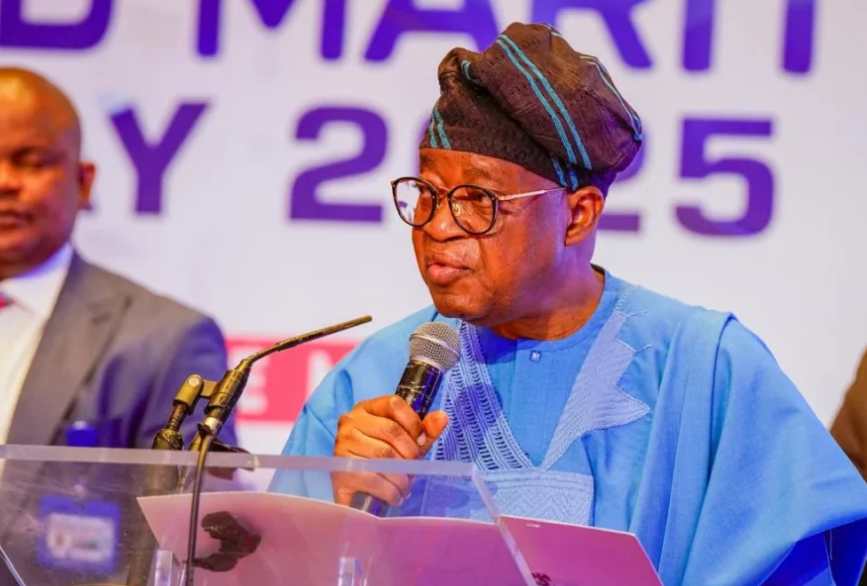
The project, flagged off on Wednesday by the Minister of Marine and Blue Economy, Adegboyega Oyetola, is designed to address longstanding infrastructure challenges, improve cargo handling, reduce shipping delays and strengthen Nigeria’s competitiveness in international trade.
The groundbreaking ceremony took place at Tin Can Island Port in Lagos, with the Minister of Finance and Coordinating Minister of the Economy, Taiwo Oyedele, and other government officials in attendance.
Oyetola’s media aide, Dr Bolaji Akinola, announced the development in a statement, describing the initiative as a major intervention in Nigeria’s maritime infrastructure.
The minister said the modernisation had become necessary because the country’s expanding population, increasing trade volumes and growing cargo traffic had placed enormous pressure on existing port facilities.
Government Targets 20,000 Employment Opportunities
Oyetola said the project was expected to generate at least 20,000 direct and indirect jobs across several sectors, including engineering, construction, dredging, transportation, logistics and port operations.
He explained that the investment would create employment opportunities while improving the operating environment for businesses involved in importation, exportation and maritime services.
The minister noted that Nigeria’s cargo throughput had increased significantly over the decades, rising from 8.11 million metric tonnes in 1977 to approximately 129.3 million metric tonnes.
He added that annual merchandise trade had also exceeded $100 billion, highlighting the growing demand for modern port infrastructure.
According to him, the existing facilities had not expanded at the same pace as economic activities, making comprehensive rehabilitation necessary.
Apapa, Tin Can Ports to Receive Major Infrastructure Overhaul
The modernisation programme will cover the rehabilitation of quay walls and berths, dredging of navigation channels, improvement of access facilities and installation of modern cargo-handling equipment.
It will also involve improvements to operational systems, with the objective of supporting more integrated, efficient and digitally enabled port operations.
Oyetola said the intervention would help attract more international shipping lines, retain Nigerian-bound cargo and expand transshipment opportunities.
He disclosed that cargo dwell time at Nigerian ports had historically ranged between 10 and 18 days, compared with three to five days at leading international ports.
The minister estimated that inefficiencies in the country’s port system cost the Nigerian economy as much as $4 billion annually through congestion, demurrage, storage charges and other operational challenges.
He warned that Nigeria risked losing maritime business to neighbouring countries investing in modern shipping and cargo-handling infrastructure.
FG Moves to Minimise Disruptions During Construction
To prevent the construction activities from worsening congestion, Oyetola said an Inter-Ministerial Committee had been approved to coordinate the implementation of the project.
The committee comprises representatives of the Federal Ministry of Marine and Blue Economy, the Nigerian Ports Authority and the Nigeria Ports Economic Regulatory Agency.
Its responsibilities include developing a Port Business Continuity and Cargo Flow Management Plan covering construction schedules, vessel movements, cargo evacuation, truck traffic and the use of alternative ports and transportation systems.
The arrangement is intended to ensure that commercial activities continue at the two ports throughout the modernisation period.
The Managing Director of the Nigerian Ports Authority, Dr Abubakar Dantsoho, assured stakeholders that the project would be executed according to approved designs, engineering standards and contractual timelines.
He also pledged that the authority would maintain technical supervision, quality assurance, safety and environmental standards during implementation.
Finance Minister Highlights Economic Benefits
The Minister of Finance, Taiwo Oyedele, described the financing arrangement as Nigeria’s largest sovereign export credit transaction since 2009.
He said the investment would help reduce the cost of doing business, improve the competitiveness of Nigerian products and support broader economic growth.
The ceremony also attracted international representatives, including Poland’s Deputy Foreign Minister, Marcin Bosacki, Polish Ambassador to Nigeria, Michal Cygan, and British Deputy High Commissioner in Lagos, Jonny Baxter.
Their participation highlighted the international financing and cooperation arrangements associated with the project.
FG Extends Port Modernisation Plans Beyond Lagos
The Federal Government said the Lagos ports upgrade forms part of a wider maritime development programme that includes the approved modernisation of Onne, Rivers, Delta and Calabar ports.
The broader initiative is intended to strengthen Nigeria’s national port network, improve cargo distribution and reduce excessive dependence on Lagos as the country’s principal maritime gateway.
For Northern Nigeria, improved port efficiency could also benefit manufacturers, agricultural producers, solid mineral exporters and businesses that depend on seaports to access international markets.
Agricultural products, processed foods, textiles and manufactured goods from the North could become more competitive if improved port operations translate into lower transportation costs and more predictable export schedules.
However, the projected benefits will depend on timely project delivery, effective cargo management and stronger connections between seaports, roads, railways and inland dry ports.
Infrastructure Investment and Nigeria’s Trade Competitiveness
The modernisation represents a major intervention in a maritime sector that has faced ageing infrastructure, congestion and high logistics costs.
Improving port efficiency could strengthen Nigeria’s participation in regional and international trade, particularly under the African Continental Free Trade Area framework.
The expected creation of 20,000 jobs also presents opportunities for workers and businesses across construction, engineering, logistics and related industries.
With the project now officially flagged off, attention will turn to implementation, completion timelines and whether the investment delivers the promised improvements in cargo handling, employment and national economic productivity.








Leave a comment