


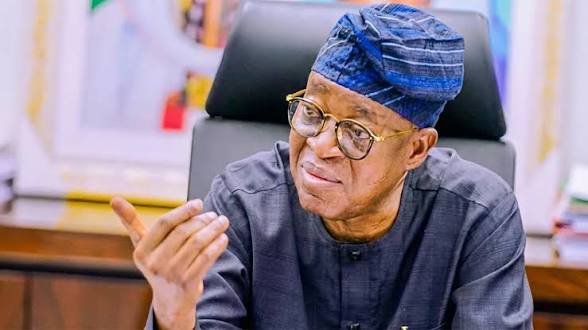
The Federal Government has commenced a £746 million (approximately ₦1.45 trillion) modernisation project covering the Lagos Port Complex, Apapa, and Tin Can Island Port, in a major effort to improve maritime infrastructure, reduce cargo delays and strengthen Nigeria’s international trade competitiveness.
The project was officially flagged off on Wednesday, November 25, 2026, at Tin Can Island Port by the Minister of Marine and Blue Economy, Adegboyega Oyetola, alongside the Minister of Finance and Coordinating Minister of the Economy, Taiwo Oyedele, and other government officials.
The initiative is expected to generate at least 20,000 direct and indirect employment opportunities across construction, engineering, dredging, logistics, transportation and port operations.
Speaking at the groundbreaking ceremony, Oyetola explained that the modernisation had become necessary due to increasing pressure on existing port facilities, which have struggled to accommodate Nigeria’s expanding trade activities.
He disclosed that cargo throughput had increased from 8.11 million metric tonnes in 1977 to approximately 129.3 million metric tonnes, highlighting the need for infrastructure capable of supporting modern maritime operations.
Project to Address Port Congestion and High Logistics Costs
The minister identified ageing infrastructure, prolonged cargo clearance, congestion and high operational expenses as major challenges affecting Nigerian ports.
According to him, cargo dwell time at Nigerian ports has historically ranged between 10 and 18 days, compared with approximately three to five days at leading international ports.
He estimated that inefficiencies associated with port operations cost the Nigerian economy as much as $4 billion annually through delays, demurrage and storage charges.
The modernisation programme will cover the rehabilitation of quay walls and berths, dredging of navigation channels, improvements to port access facilities, installation of cargo-handling equipment and upgrading of operational systems.
Oyetola said the improvements would help attract more international shipping lines, retain Nigerian-bound cargo and expand transshipment opportunities.
Government Targets Improved Trade and Employment
The minister noted that efficient port operations would strengthen the competitiveness of Nigerian agricultural products, processed foods, manufactured goods, solid minerals and other non-oil exports.
He explained that improved maritime infrastructure would reduce transportation expenses, support manufacturers and agro-processors, and create a more favourable environment for businesses seeking access to international markets.
To minimise disruptions during construction, the government has approved an inter-ministerial committee involving the Federal Ministry of Marine and Blue Economy, the Nigerian Ports Authority and the Nigeria Ports Economic Regulatory Agency.
The committee will coordinate construction activities, vessel scheduling, cargo evacuation and truck movements to ensure that port operations continue during the upgrade.
Financing Partners and Wider Maritime Development
Also speaking, Finance Minister Taiwo Oyedele described the project as a significant investment in Nigeria’s economic future, noting that improved port operations would lower business costs and strengthen the country’s position in global trade.
He disclosed that the financing arrangement was backed by UK Export Finance, with Poland’s Export Credit Insurance Corporation, KUKE, providing reinsurance support for almost half of the financing, while Citibank serves as a financing partner.
Oyedele described the transaction as Nigeria’s largest sovereign export credit transaction since 2009 and KUKE’s first project in the country.
Meanwhile, Managing Director of the Nigerian Ports Authority, Abubakar Dantsoho, assured stakeholders that the authority would ensure the project meets approved engineering standards, contractual timelines, safety requirements and environmental regulations.
The Lagos ports modernisation is part of a wider national maritime development programme that also includes proposed upgrades to Onne, Rivers, Delta and Calabar ports.
The Federal Government expects the intervention to improve Nigeria’s maritime capacity, facilitate international commerce, attract investment and create employment opportunities as the country seeks to strengthen its participation in regional and global trade.
- ₦1.45 trillion port modernisation
- 000 jobs in Nigeria
- 20
- Adegboyega Oyetola
- Apapa Port
- cargo handling
- FG Lagos ports project
- KUKE Poland
- Lagos ports upgrade
- maritime investment Nigeria
- Nigeria economic development
- Nigeria maritime development
- Nigerian Ports Authority
- port infrastructure Nigeria
- Taiwo Oyedele
- Tin Can Island Port
- UK Export Finance









Leave a comment