


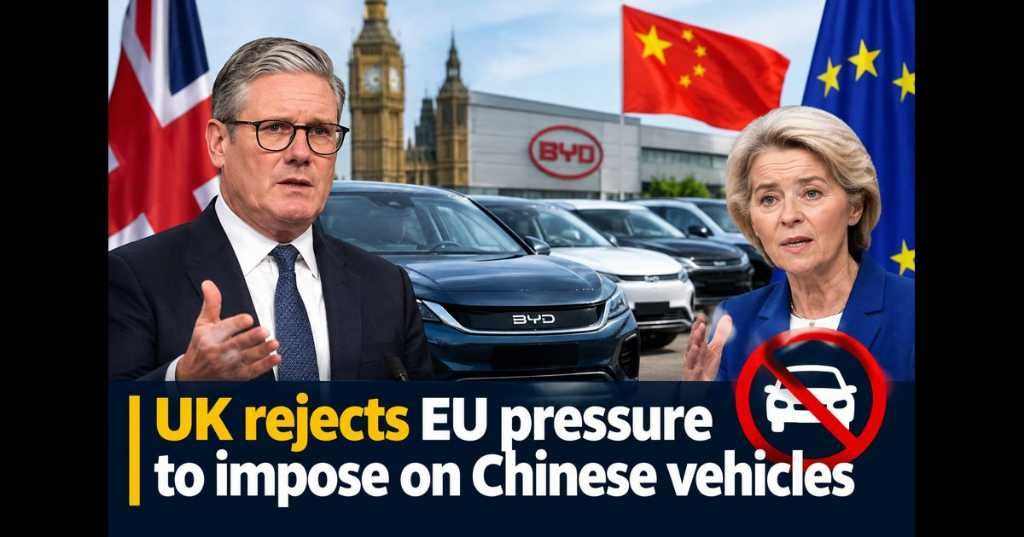
The United Kingdom has ruled out imposing tariffs on Chinese vehicles simply to satisfy European Union demands, as disagreements over trade protection threaten to complicate efforts to strengthen economic ties between Britain and the bloc.
Business Secretary Jonathan Reynolds said on Wednesday, October 14, that the government would make decisions on trade measures based on Britain’s national interests rather than pressure from Brussels.
His comments come as European governments seek stronger protection for domestic carmakers against competition from Chinese manufacturers, whose electric and hybrid vehicles have gained ground in international markets.
The EU has imposed additional duties on Chinese electric vehicles and recently agreed to restrict imports of Chinese hybrid cars through an annual quota. European officials fear growing imports could weaken domestic manufacturing and put jobs at risk.
Reynolds rejected suggestions that Britain could become a back door through which Chinese vehicles enter the European market. He argued that the UK’s automotive industry depends heavily on exports and that imposing tariffs could prompt retaliatory measures against British businesses.
The government has also maintained that its approach must reflect the needs of domestic manufacturers and consumers. Chinese brands have expanded their presence in Britain, offering a wider range of vehicles and increasing competition in the market.
The disagreement comes as London seeks closer economic cooperation with the EU and greater access for British manufacturers to European industrial supply chains.
Although Reynolds said the government would not change policy simply because of European pressure, the question of tariffs remains under review.









Leave a comment