


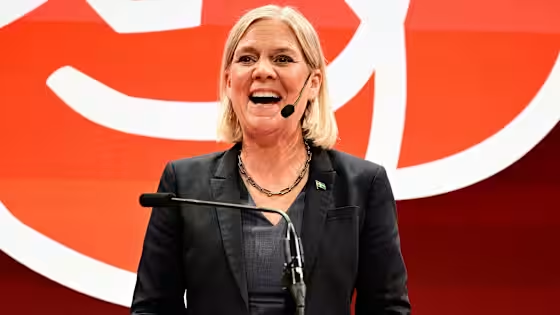
Sweden’s left-leaning opposition parties have narrowly won the country’s parliamentary election, setting the stage for Social Democratic leader Magdalena Andersson to begin difficult negotiations over the formation of a new government.
The result marks a setback for the governing centre-right bloc and puts Andersson in position to attempt a return to the premiership. However, the narrow outcome means that forming a stable coalition could prove challenging.
The election has produced a closely divided political landscape, with the balance of power dependent on negotiations among several parties. Andersson will need to build sufficient parliamentary support if she is to form a government capable of passing legislation and maintaining confidence in the legislature.
The result is also significant for Sweden’s economic direction. The incoming government will face pressure over public finances, household costs, economic growth, employment and the country’s broader approach to investment and welfare spending.
For businesses and investors, the composition of the next government will be important because coalition negotiations could determine the policy priorities of the new administration. Issues including taxation, energy, industrial policy and public spending are likely to feature prominently as parties negotiate a governing programme.
The election also comes at a time when European governments are dealing with slower growth, high fiscal demands and heightened geopolitical uncertainty. Sweden’s position as a major European economy means domestic political decisions can have implications for companies operating across the Nordic region.
Andersson previously served as Sweden’s prime minister and remains the leader of the Social Democratic Party. Her return to government would therefore represent a significant political change after the centre-right coalition took office.
The narrow result, however, means that the opposition parties cannot assume that the election automatically translates into an uncomplicated transfer of power. Coalition building and parliamentary agreements will determine how the next government is formed.
The outcome is expected to trigger negotiations among the parties in the coming days as Sweden moves towards establishing its next administration.









Leave a comment